National Tourist Site
About Ivan Vazov House Museum and Sopot Convent
At a glance
| Tourist site | No. 43, Ivan Vazov House Museum and the women’s convent, Sopot |
|---|---|
| Address | 1 Vasil Levski Street, on Ivan Vazov Square, Sopot |
| Opening hours, summer | Every day 9:00–17:00 |
| Opening hours, winter | Monday to Saturday 8:30–16:45, Sunday 9:00–16:45 |
| Stamp | At the ticket desk of the house museum |
| Phone | +359 3134 86 50; +359 878 694 734 |
Source: Bulgarian Tourist Union: Ivan Vazov House Museum (100 National Tourist Sites, in Bulgarian); Wikipedia (Bulgarian): Ivan Vazov House Museum (Sopot)1,2
The house museum
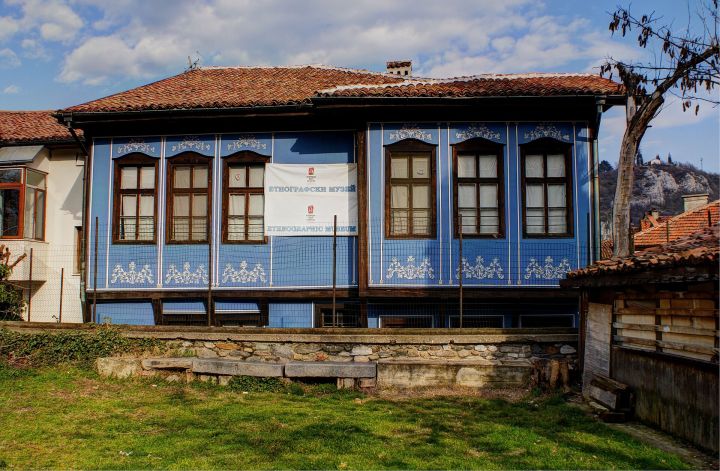
The house was built in the 18th century by Vazov’s great-grandfather and burnt in July 1877, at the height of the Russo-Turkish War. The idea of rebuilding it came in 1920, for the poet’s 70th birthday and 50 years of his writing, and a committee for a monument and house museum was founded on 24 October that year.2
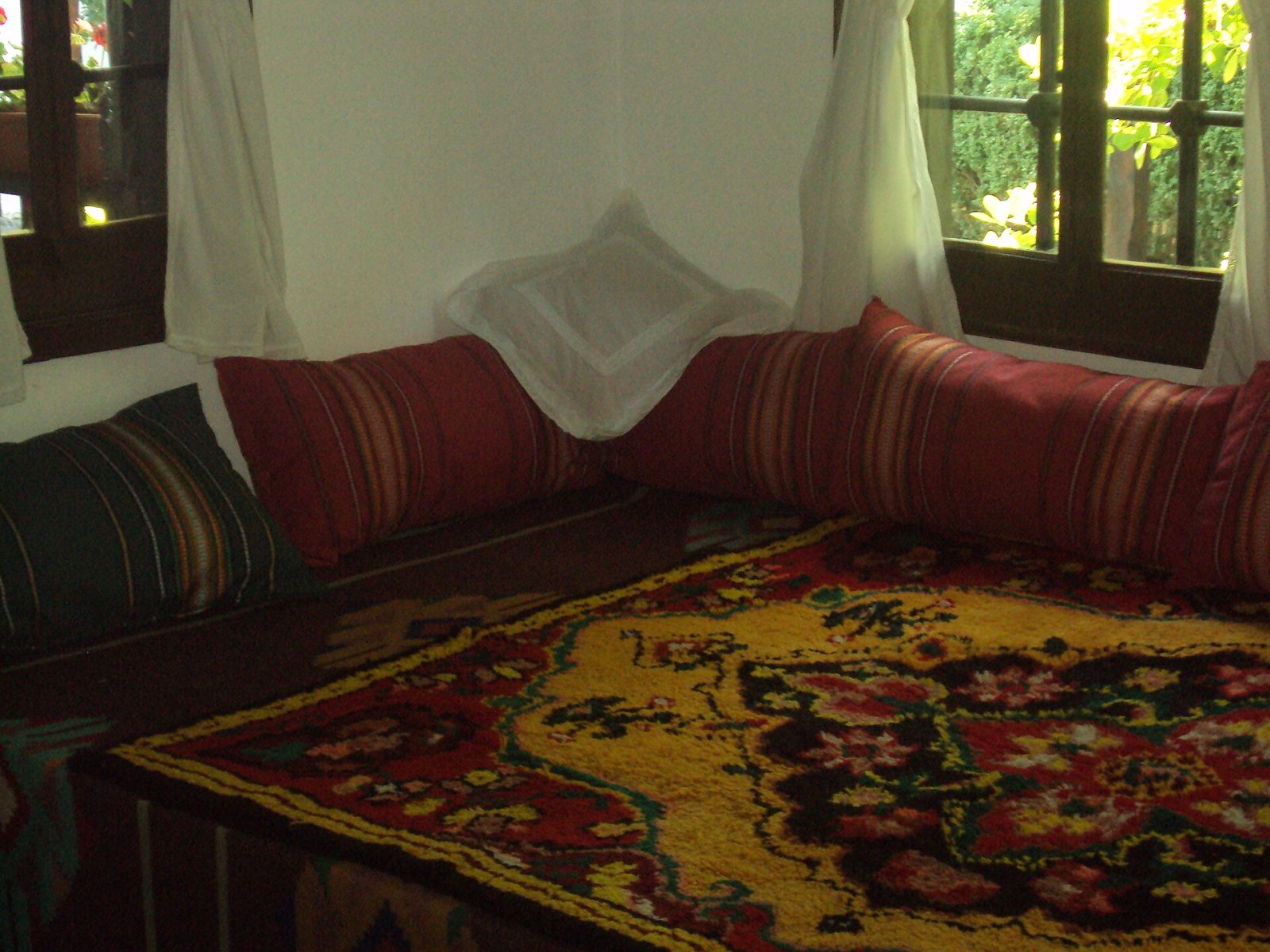
Vazov drew a sketch of the house from memory. The architect Aleksandar Rashenov made the design from details given by the writer’s brother, General Georgi Vazov, and his sister Vala Fetvadzhieva. Building ran from 1931 to 1935, 13 years after the poet’s death, and the interior was arranged under the director of the Ethnographic Museum in Sofia, St. L. Kostov, with ideas drawn from “Under the Yoke”.2
The museum opened on 6 June 1935 in the presence of Tsar Boris III, who spoke and cut the ribbon. It was declared a cultural monument of national importance in 1964. One room recreates the barber’s shop of Hadzhi Ahil with the characters of the story “Hadzhi Ahil” and the novella “Uncles”.2
Vazov’s life in the museum
The collection follows the main periods of Vazov’s life: his childhood and schooling in Sopot, his work as an assistant teacher in Kalofer under Botyo Petkov, and his studies at the diocesan school in Plovdiv under Yoakim Gruev. Manuscripts show the books he published as an émigré in Romania in 1876–1877, “Flag and Gusla” and “The Sorrows of Bulgaria”, and those of his Plovdiv years, including “Fields and Woods” with “Epic of the Forgotten” and the novellas “Mitrofan and Dormidolski”, “Outcasts” and “Uncles”.1
In Odessa, again as an émigré, he began “Under the Yoke”, which the Bulgarian Tourist Union calls the most translated Bulgarian novel. From 1889 he lived in Sofia, where he founded the magazine “Dennitsa”. He died on 22 September 1921. In BNT’s “The Big Read” of 2009, viewers chose “Under the Yoke” as their favourite novel.1
The union also stresses Vazov’s part in early Bulgarian hiking: well before the first organised ascent of Cherni Vrah in 1895, he climbed Vitosha’s highest peak from Knyazhevo with a group of Sofia’s elite, and he wrote about Rila, the Rhodopes, Sredna Gora and other mountains.1
For his life and work, see our Ivan Vazov biography.
The women’s convent
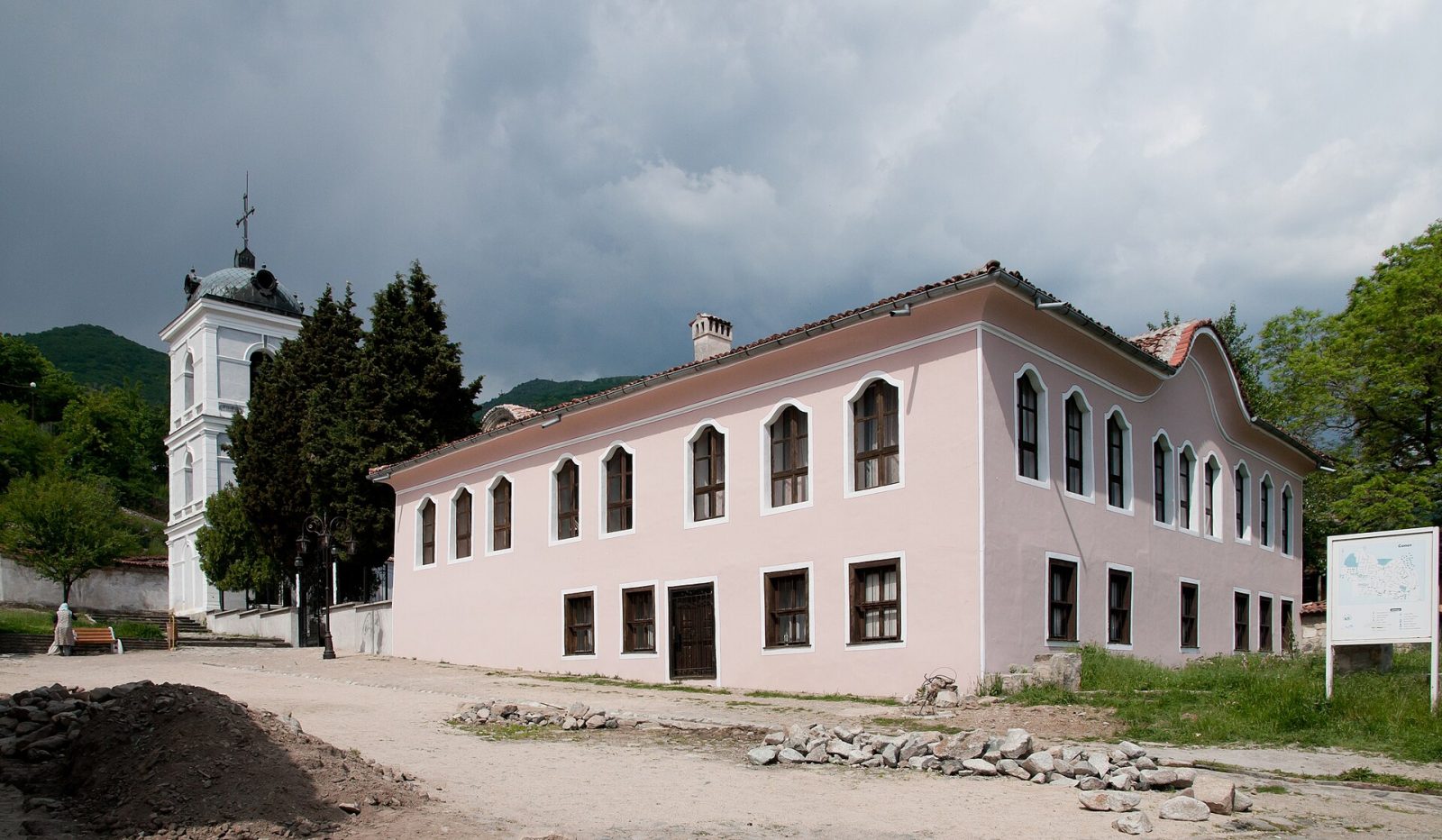
The convent of the Presentation of the Virgin is a women’s convent of the Plovdiv diocese, inside the town. It is a complex of a single-nave church with living and farm buildings, restored after the Liberation. The cell of Hadzhi Rovoama and the novice Rada Gospozhina, both characters in “Under the Yoke”, has been preserved.3,4
The church is half sunk into the ground and has no visible apse on the east side. The Bulgarian Wikipedia knows only one similar church in Bulgaria, in the village of Dobarsko near Razlog, and mentions 17th-century frescoes known as the “saints without heads”. The convent took the name “metoh” from a nearby dependency of the Hilandar Monastery, burnt by the kardzhali bands in 1794; Paisius of Hilendar is said to have brought his “Slavonic-Bulgarian History” there.3,4
The Bulgarian Tourist Union dates the church to the 15th century. The Bulgarian Wikipedia says the convent was founded in 1665 by the nun Susana, notes an unconfirmed date of 1404, and dates the surviving church to the third quarter of the 17th century.3,4
Tickets and opening hours
| Ticket | House museum only | Four sites |
|---|---|---|
| Pupils, students and pensioners | €3 (5.87 leva) | €6 (11.74 leva) |
| Adults | €6 (11.74 leva) | €12 (23.47 leva) |
| Family ticket, 2 adults with children under 18 | €12 (23.47 leva) | €24 (46.94 leva) |
Source: Bulgarian Tourist Union: Ivan Vazov House Museum (100 National Tourist Sites, in Bulgarian)1
The four-site ticket covers the house museum, the Girls’ School, the Ethnographic Centre and the Grandfather Stoyan’s Mill. A guided talk costs €10 (19.56 leva). Checked in November 2026.1
The No. 43 stamp
The house museum and the convent share No. 43 in “Know Bulgaria – 100 National Tourist Sites”, the movement the Bulgarian Tourist Union started in 1966. Walkers collect a stamp at each site in a booklet: 25 stamps earn a bronze badge, 50 a silver badge and all 100 a gold badge with a certificate.5
More stamps nearby
- No. 44: the Vasil Levski National Museum, Karlovo.
- No. 44b: the Old Karlovo tourist complex.
- No. 45: the Hristo Botev National Museum, Kalofer.
- No. 77: the Klisura History Museum.
Source: Bulgarian Tourist Union: 100 National Tourist Sites5
For the area, see the Plovdiv province page.
Frequently Asked Questions
Is this the house where Ivan Vazov was born?
It stands on the site of his birth house, which burnt in 1877. It was rebuilt in 1931–1935 from Vazov’s own sketch and opened as a museum in 1935.
How much is a ticket to the Vazov house in Sopot?
The Bulgarian Tourist Union lists €6 for adults and €3 for pupils, students and pensioners.
What links the Sopot convent to ‘Under the Yoke’?
The cell of Hadzhi Rovoama and Rada Gospozhina, two characters in the novel, survives in the convent.
Where do I get the stamp?
At the ticket desk of the Ivan Vazov House Museum.
Which tourist-site number is the Vazov house in Sopot?
No. 43 in the Bulgarian Tourist Union’s 100 National Tourist Sites.
Sources
- Bulgarian Tourist Union: Ivan Vazov House Museum (100 National Tourist Sites, in Bulgarian)
- Wikipedia (Bulgarian): Ivan Vazov House Museum (Sopot)
- Bulgarian Tourist Union: Women’s convent, Sopot (in Bulgarian)
- Wikipedia (Bulgarian): Sopot Convent of the Presentation of the Virgin
- Bulgarian Tourist Union: 100 National Tourist Sites (in Bulgarian)
Figures checked 12 November 2026. Information only, not investment, tax or legal advice.