National Tourist Site
About Roman Baths and Walls of Diocletianopolis, Hisarya
At a glance
| Tourist site | No. 67b, Roman baths, Hisarya |
|---|---|
| Where | The central town park by the Momina Salza spring, inside the walls of Diocletianopolis |
| Baths hours | Summer 9:30–13:00 and 14:00–17:30, winter 9:30–12:00 and 13:00–16:30, no closing day |
| Information | At the Archaeological Museum or on 0337 62796 |
Source: Bulgarian Tourist Union: Archaeological Museum, Hisarya, with the Roman baths (100 National Tourist Sites, in Bulgarian); Wikipedia (Bulgarian): Diocletianopolis1,2
For the town and its springs, see our Hisarya guide.
The walls and gates
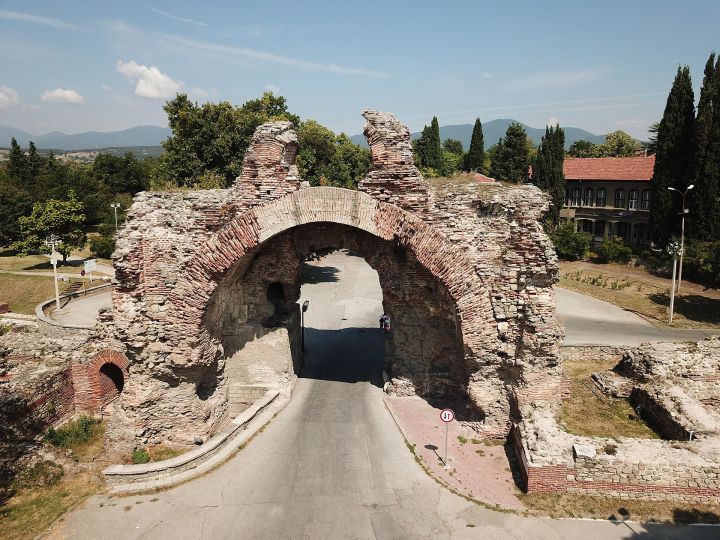
The walls of Diocletianopolis were built in the early 4th century and enclose 20 ha, with a ditch and an earth rampart in front. They are 2,327 m long, 2.60–4 m thick and up to 12.5 m high, with 44 towers, 4 main gates and 6 smaller entrances. The southern and western gates are fairly well preserved.2
The southern gate rises to 13 m. The English Wikipedia says it is known as “the Camels” because it had broken in the middle and looked like two camels facing each other before it was partly restored in the early 20th century, and calls the walls the best-preserved Roman town walls in Bulgaria.2,3
Roman barracks of the second half of the 4th century ran along the southern wall on both sides of the south gate and along part of the eastern wall. A permanent garrison of about 600 soldiers was quartered there, and the buildings west of the south gate are on display.2
The baths and the town centre
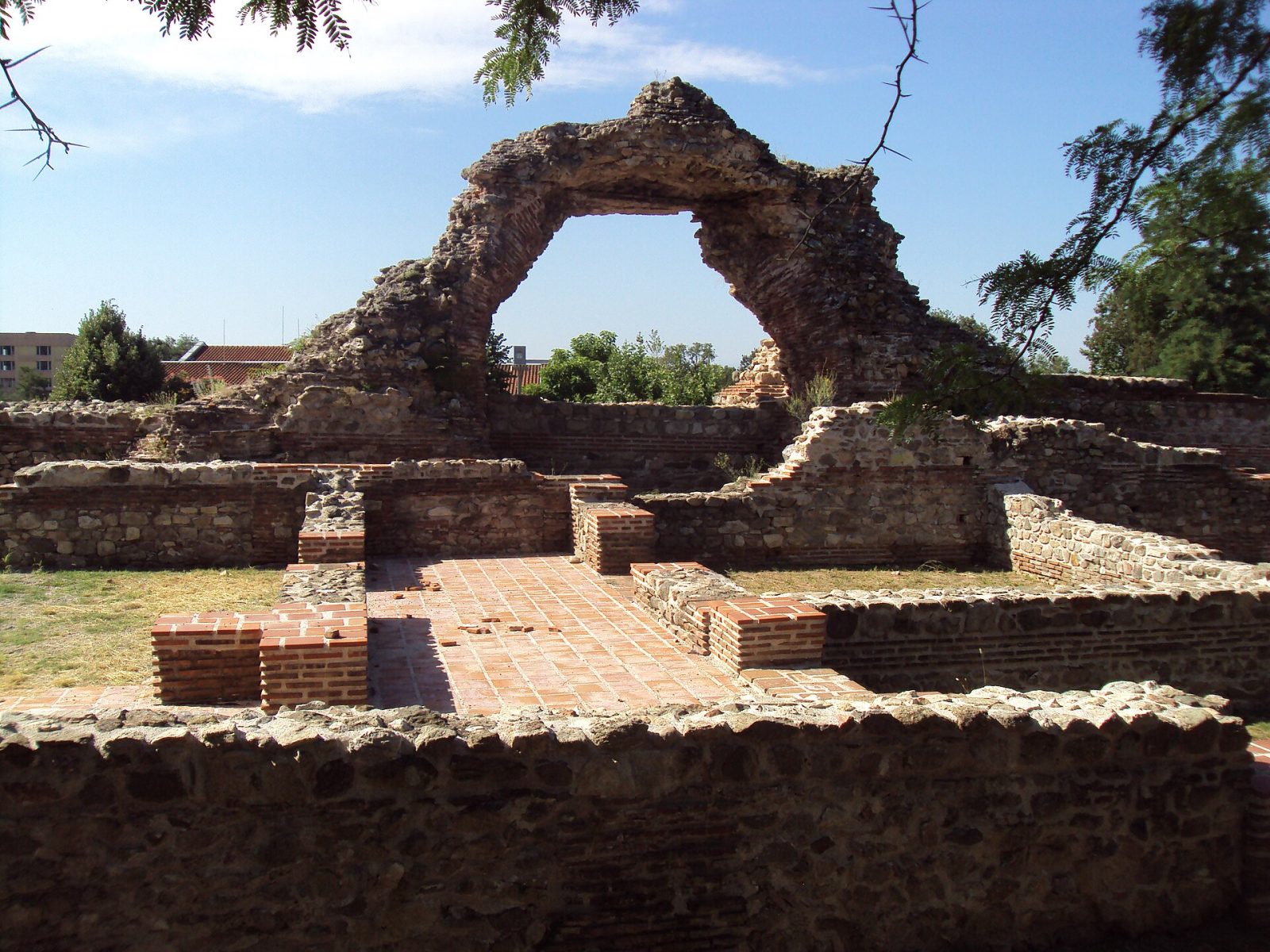
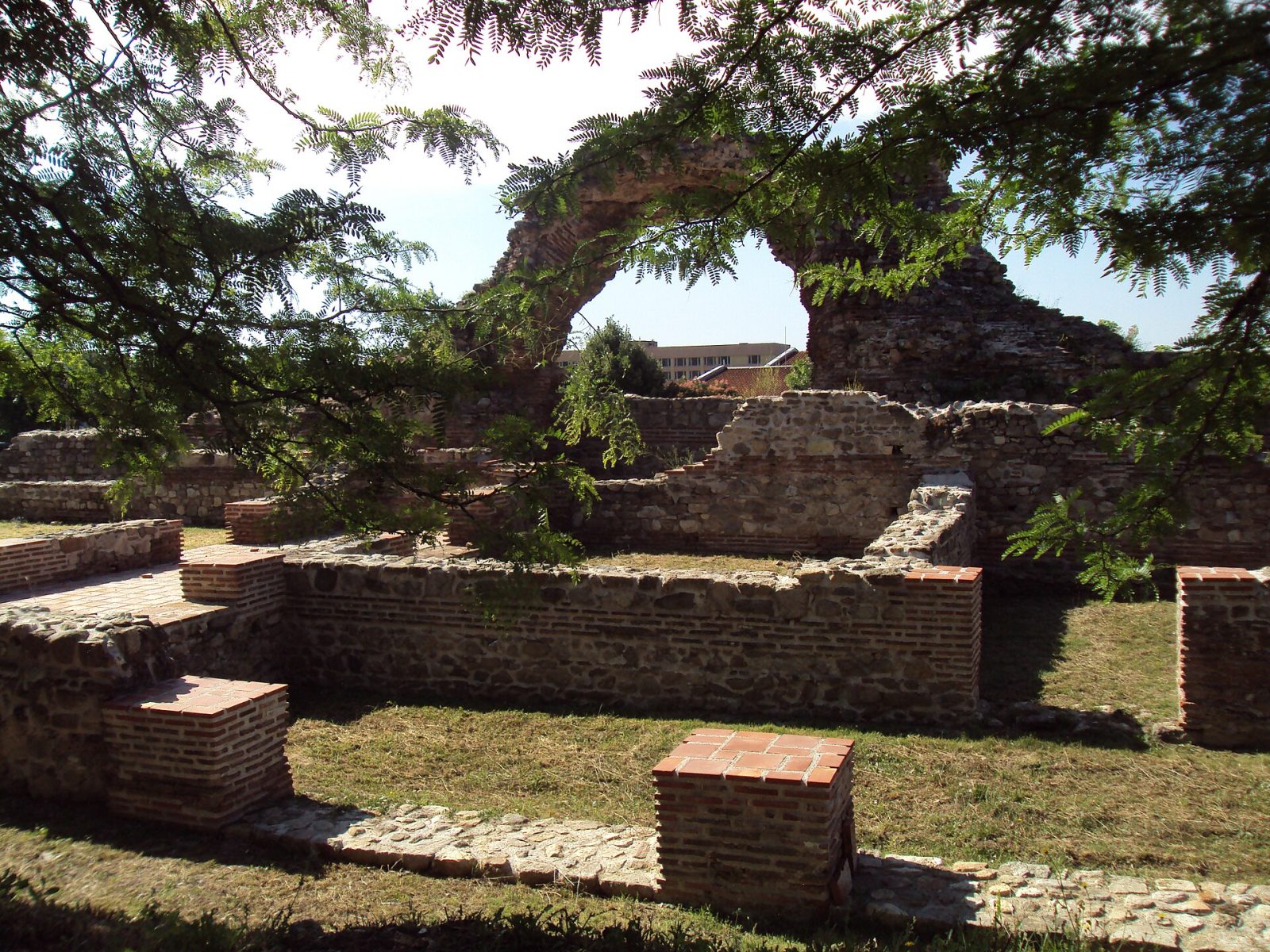
The town’s public buildings stood in the central park by the Momina Salza spring. The largest is a two-storey residence with great vaulted rooms. Next to it is the bath complex, of about 2,000 m², which the Bulgarian Wikipedia counts among the few surviving Roman baths in the Balkans where treatment with mineral water was given.2
The baths survive almost to the roof. The rooms were faced with white marble inside and heated with the mineral water. The Bulgarian Tourist Union calls them the Roman imperial baths and dates them to the 2nd–3rd centuries.1,2
The same park holds the amphitheatre, built in the 3rd century for sports and fights with animals, with its arena and service rooms well preserved.2
The Bulgarian Tourist Union dates the baths to the 2nd–3rd centuries, before the town was named Diocletianopolis in 293.1,2
Early Christian churches
After Christianity became the official religion of the empire in the early 4th century, Diocletianopolis became a bishop’s seat. The Bulgarian Wikipedia lists more than a dozen churches of the 4th–6th centuries in and around the town, among them a church by the south gate rebuilt from a barracks in the mid-5th century, the church of Saint Stephen 120 m outside the south wall, and the only two-aisled basilica found in the town.2
Tickets and opening hours
| Ticket | Adults | Pensioners and students | Family, 2 adults with children under 16 |
|---|---|---|---|
| Roman baths | €3.06 (6 leva) | €1.53 (3 leva) | €6.13 (12 leva) |
| Combined: museum, Roman tomb and baths | €6.13 (12 leva) | €3.06 (6 leva) | €12.27 (24 leva) |
Source: Bulgarian Tourist Union: Archaeological Museum, Hisarya, with the Roman baths (100 National Tourist Sites, in Bulgarian)1
The Bulgarian Wikipedia says all of Hisarya’s monuments are shown in a park setting and open to visitors. Checked in November 2026.1,2
The No. 67b stamp
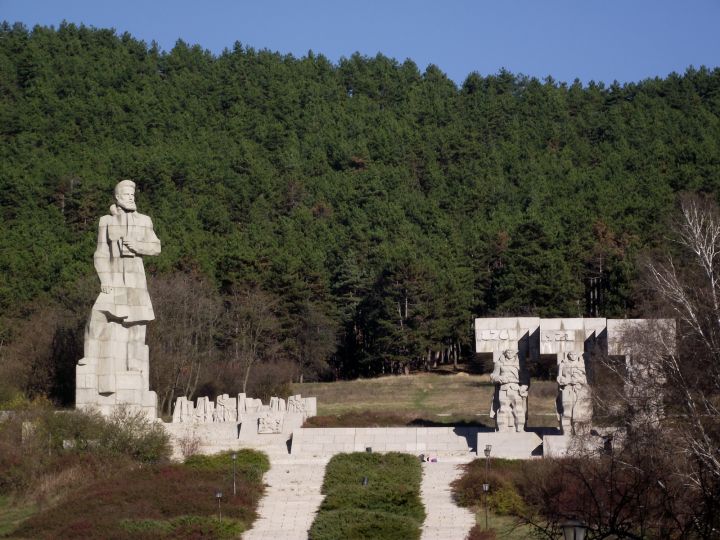
The Roman baths are site No. 67b in “Know Bulgaria – 100 National Tourist Sites”, the movement the Bulgarian Tourist Union started in 1966. Walkers collect a stamp at each site in a booklet: 25 stamps earn a bronze badge, 50 a silver badge and all 100 a gold badge with a certificate.4
More stamps nearby
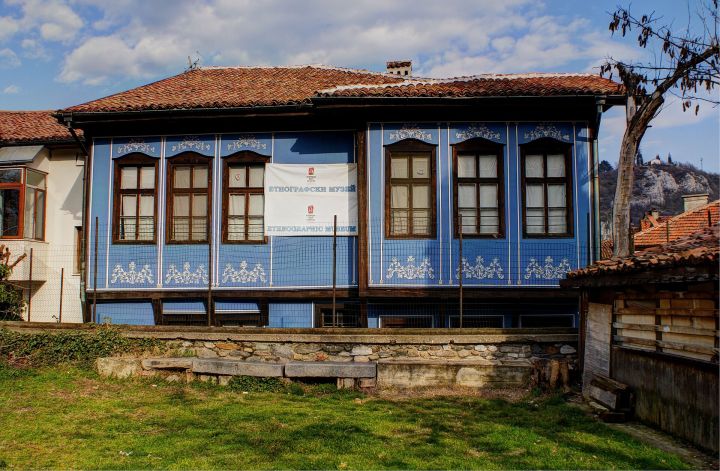
- No. 67a: the Archaeological Museum and Roman tomb, Hisarya.
- No. 67: the Starosel Thracian tomb.
- No. 44: the Vasil Levski National Museum, Karlovo.
- No. 44c: Kadrafil peak and Svezhen.
Source: Bulgarian Tourist Union: 100 National Tourist Sites4
For the area, see the Plovdiv province page.
Frequently Asked Questions
Why is the south gate called the Camels?
The English Wikipedia says it had broken in the middle and looked like two camels facing each other before it was partly restored.
How were the baths heated?
With the mineral water of the springs, according to the Bulgarian Wikipedia.
How much is a ticket to the baths?
The Bulgarian Tourist Union lists €3.06 (6 leva) for adults and €1.53 (3 leva) for pensioners and students.
How long are the Roman walls?
2,327 m, with 44 towers, enclosing 20 ha.
Which tourist-site number are the Hisarya Roman baths?
No. 67b in the Bulgarian Tourist Union’s 100 National Tourist Sites.
Sources
- Bulgarian Tourist Union: Archaeological Museum, Hisarya, with the Roman baths (100 National Tourist Sites, in Bulgarian)
- Wikipedia (Bulgarian): Diocletianopolis
- Wikipedia (English): Hisarya
- Bulgarian Tourist Union: 100 National Tourist Sites (in Bulgarian)
Figures checked 12 November 2026. Information only, not investment, tax or legal advice.