National Tourist Site
About Asen's Fortress
At a glance
| Tourist site | No. 47, Asen’s Fortress, Asenovgrad |
|---|---|
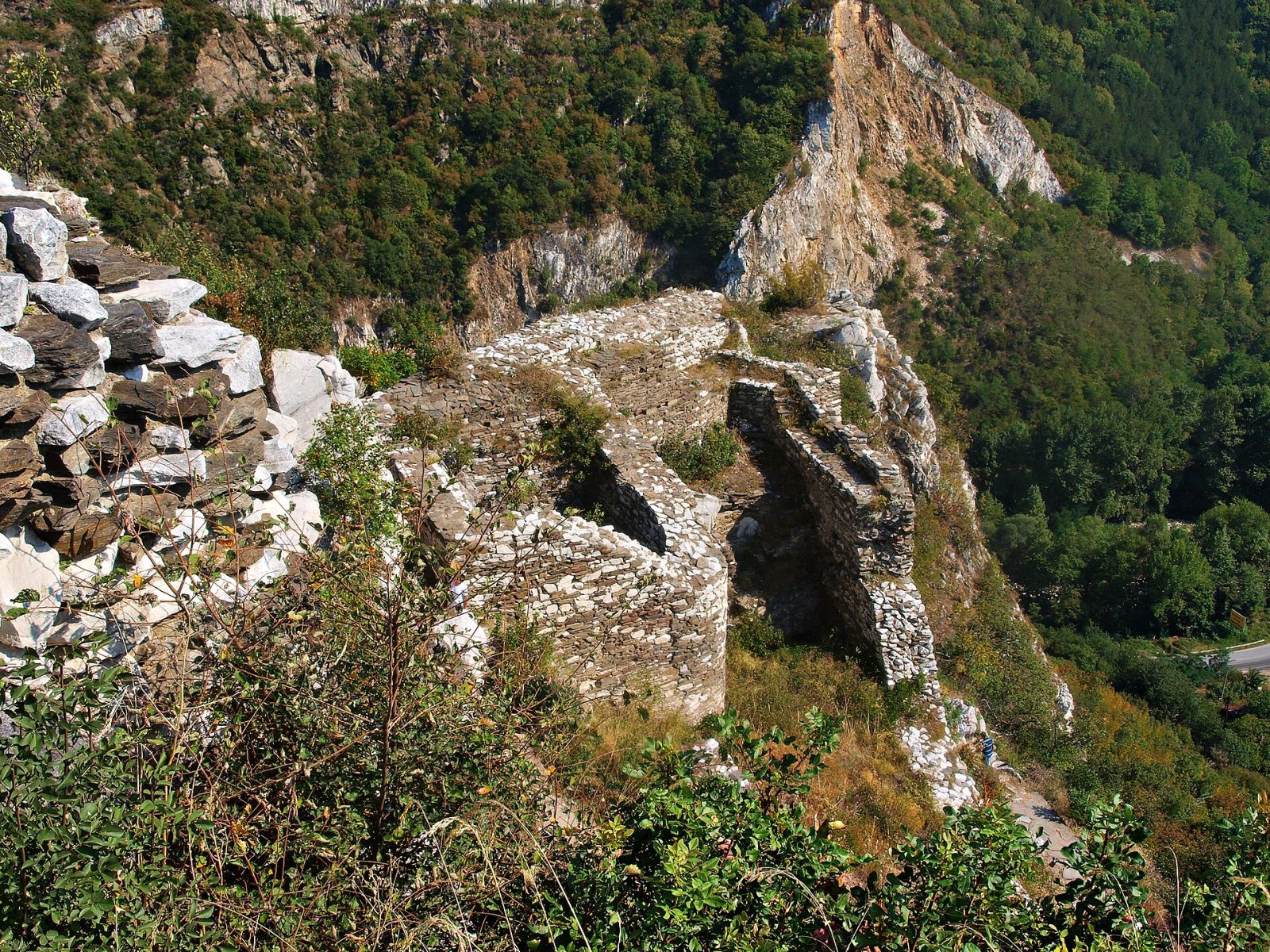
| Where | On a high rocky ridge on the left bank of the Asenitsa, 2–3 km south of Asenovgrad |
| Run by | The municipal enterprise “Tourism”, Asenovgrad |
| Opening hours | Every day 9:00–18:00; in summer 9:00–20:00, to 22:00 on Fridays and Saturdays |
| Phone | +359 884 446 256 |
Source: Bulgarian Tourist Union: Asen’s Fortress (100 National Tourist Sites, in Bulgarian); Wikipedia (English): Asen’s Fortress1,3
An asphalt road suitable for cars and coaches leads up to the fortress, and there is a car park with 15 spaces above the tourist centre. Free wi-fi covers the whole area. For the town, see our Asenovgrad guide.1
History
The oldest finds date from the Thracians, and the site was also lived in during the Roman and early Byzantine periods. The Bulgarian Wikipedia says Byzantium rebuilt the fortress in the 9th century to guard the pass to the Aegean. It is first mentioned, as Petrich, in the 11th-century statute of the Bachkovo Monastery, which shows that it had its own garrison and administration.2,3
In 1205 the Latin duke of Philippopolis, Renier of Trit, under pressure from Tsar Kaloyan, took refuge here with just 40 knights and was besieged for eleven months until the army of the Latin emperor Henry of Flanders relieved him.3
The fortress takes its name from Tsar Ivan Asen II, who repaired and strengthened it in 1231 as a border stronghold against Latin raids, as an eight-line inscription cut into the rock records. From this period archaeologists have uncovered outer walls 2.9 m thick, preserved up to 3 m and once 9–12 m high, a castle, 30 rooms and 3 water cisterns. The town of Asenovgrad, formerly Stanimaka, took its modern name from the fortress.1,2,3
The Bulgarian Wikipedia says the fortress was taken by the crusaders of the Fourth Crusade, and the English Wikipedia names the Third Crusade. The Bulgarian Wikipedia says it was destroyed by Ottoman troops in 1410, while the English Wikipedia says it was left to decay after the Ottoman conquest in the 14th century.2,3
The church of Petrich
The best preserved building is the church of the Holy Mother of God of Petrich, from the 12th–13th century. It is a two-storey, cross-domed, single-nave church with a wide narthex and a large rectangular tower, and wall paintings from the 14th century. The Bulgarian Tourist Union counts it among the most valuable works of church architecture in Bulgarian lands.1,3
The church stayed in use by local Christians after the fortress fell into ruin. Conservation and partial restoration were finished in 1991, and it is now a working Bulgarian Orthodox church.3
Finds from the digs, including kitchen, table and decorated pottery, cult objects, jewellery and weapons, are shown in the Asenovgrad History Museum, site No. 47a.5
Tickets and opening hours
| Ticket | Price |
|---|---|
| Adults | 4 leva |
| Pupils, students and pensioners | 2 leva |
| Groups of more than 10 | 3 leva each |
| Family, up to 5 people | 3 leva each |
| Guided talk in Bulgarian | 7 leva |
| Guided talk in English | 12 leva |
Source: Bulgarian Tourist Union: Asen’s Fortress (100 National Tourist Sites, in Bulgarian)1
The union lists prices in leva, the currency before the euro, so they may be out of date. Checked in November 2026.1
The No. 47 stamp
Asen’s Fortress is site No. 47 in “Know Bulgaria – 100 National Tourist Sites”, the movement the Bulgarian Tourist Union started in 1966. Walkers collect a stamp at each site in a booklet: 25 stamps earn a bronze badge, 50 a silver badge and all 100 a gold badge with a certificate.4
More stamps nearby
- No. 47a: the Asenovgrad History Museum.
- No. 47b: the Bachkovo Monastery.
- No. 41: the Roman theatre and the Old Town museums, Plovdiv.
- No. 42: the Perushtitsa History Museum.
Source: Bulgarian Tourist Union: 100 National Tourist Sites4
For the area, see the Plovdiv province page.
Frequently Asked Questions
Why is it called Asen’s Fortress?
After Tsar Ivan Asen II, who repaired it in 1231, as an inscription in the rock records.
What survives of the fortress?
Mainly the church of the Holy Mother of God of Petrich, from the 12th–13th century, and the foundations of walls, rooms and cisterns.
Can I drive up?
Yes. An asphalt road leads to the fortress, with a car park for 15 cars above the tourist centre.
How much is a ticket?
The Bulgarian Tourist Union lists 4 leva for adults and 2 leva for pupils, students and pensioners.
Which tourist-site number is Asen’s Fortress?
No. 47 in the Bulgarian Tourist Union’s 100 National Tourist Sites.
Sources
- Bulgarian Tourist Union: Asen’s Fortress (100 National Tourist Sites, in Bulgarian)
- Wikipedia (Bulgarian): Asen’s Fortress
- Wikipedia (English): Asen’s Fortress
- Bulgarian Tourist Union: 100 National Tourist Sites (in Bulgarian)
- Bulgarian Tourist Union: Asenovgrad museum page (in Bulgarian)
Figures checked 12 November 2026. Information only, not investment, tax or legal advice.