Key facts
Capital, population, currency and time zone, plus the flag, coat of arms and anthem.
6.42 m Population on 31 December 2025
Read moreType at least two letters to see matching pages.
About Bulgaria
The facts, history and everyday practicalities of the country, and the traditions, food and people that make it what it is.
Bulgaria at a glance · 2026
8 guides
Facts and symbols, history, climate, language, religion, holidays, the media and the practical things to know before you arrive.
Capital, population, currency and time zone, plus the flag, coat of arms and anthem.
6.42 m Population on 31 December 2025
Read more
From the Thracians and the medieval empires to the Liberation, communism and the EU.
681 Byzantium recognises the Bulgarian state
Read more
Four seasons, snowy mountains, hot southern summers and the Black Sea coast.
10.6 °C Mean annual temperature
Read more
A South Slavic language written in Cyrillic, the alphabet that began in medieval Bulgaria.
6.8 m First-language speakers
Read more
The Orthodox Church, Islam and smaller faiths, with 2021 census figures.
62.7% Bulgarian Orthodox, 2021 census
Read more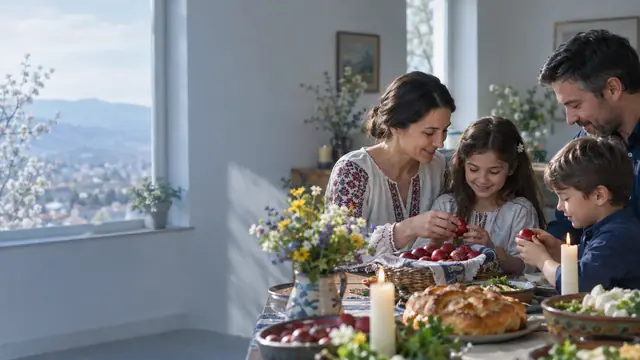
Official holidays with the 2026 and 2027 dates, Orthodox Easter and the extra days off.
3 March Liberation Day, the national holiday
Read more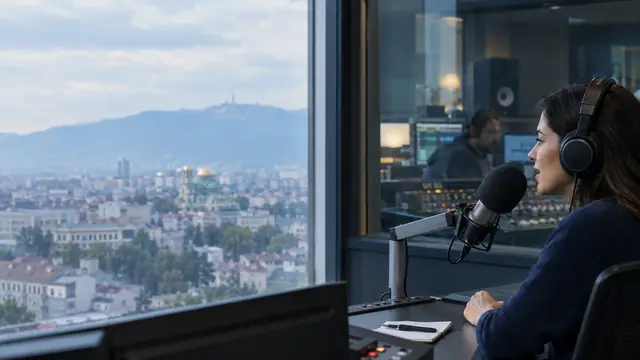
Public and private TV, newspapers, the news agency BTA, trust in news and press freedom.
71 / 180 RSF World Press Freedom Index, 2026
Read more
Money, emergency numbers, plugs, driving rules, tipping and the head nod.
112 Emergency number, free from any phone
Read moreCulture and people
Masked kukeri, red-and-white martenitsi, fire dancers and the feasts of the Orthodox year.
Salads, the grill, slow-cooked stews and the yoghurt and white cheese behind them.
Revolutionaries, scientists, artists and champions, grouped by what they are known for.
All famous BulgariansEach page was checked in October 2026, with every fact linked to its source. The figures above come from:
Bulgaria’s population was 6.42 million on 31 December 2025, based on the National Statistical Institute’s final data reported by BTA.
Bulgaria has used the euro as its currency since 1 January 2026, when it joined the euro area, as announced by the European Central Bank.
Bulgaria uses Eastern European Time, at UTC+2, and changes to UTC+3 in summer; these are the country’s standard-time and summer-time offsets.
Bulgaria’s emergency number is 112, and calls are free from any phone for anyone needing emergency help in the country.
Bulgarian is a South Slavic language written in Cyrillic, with 6.8 million first-language speakers; the alphabet began in medieval Bulgaria.
Bulgarian Orthodox Christianity is the main religion in Bulgaria: 62.7% identified as Bulgarian Orthodox in the 2021 census. Islam and smaller faiths are also part of the country’s religious picture.
Next step
The regions, towns and resorts, and the companies that can help you settle in, in the InvestBulgaria directory.
