National Tourist Site
About Episcopal Basilica, Small Basilica and Irini Building, Plovdiv
At a glance
| Site | Where | Opening hours |
|---|---|---|
| Episcopal Basilica of Philippopolis | 2 Knyaginya Maria Luiza Boulevard | Every day 9:00–18:00; last entry 17:15 |
| Small Basilica | 31 Knyaginya Maria Luiza Boulevard | Every day, November–March 9:00–17:30, April–October 9:30–18:00; lunch break 12:30–13:00 |
| Irini building | Archaeological underpass, Tsar Boris III Obedinitel Boulevard | Every day 9:00–18:00; last entry 17:15 |
Source: Bulgarian Tourist Union: Episcopal Basilica of Philippopolis (100 National Tourist Sites, in Bulgarian); Bulgarian Tourist Union: Small Early Christian Basilica; Wikipedia (Bulgarian): Small Basilica of Philippopolis1,2,3
The union notes that the Episcopal Basilica and the Irini building may close for events.1,2
The Episcopal Basilica
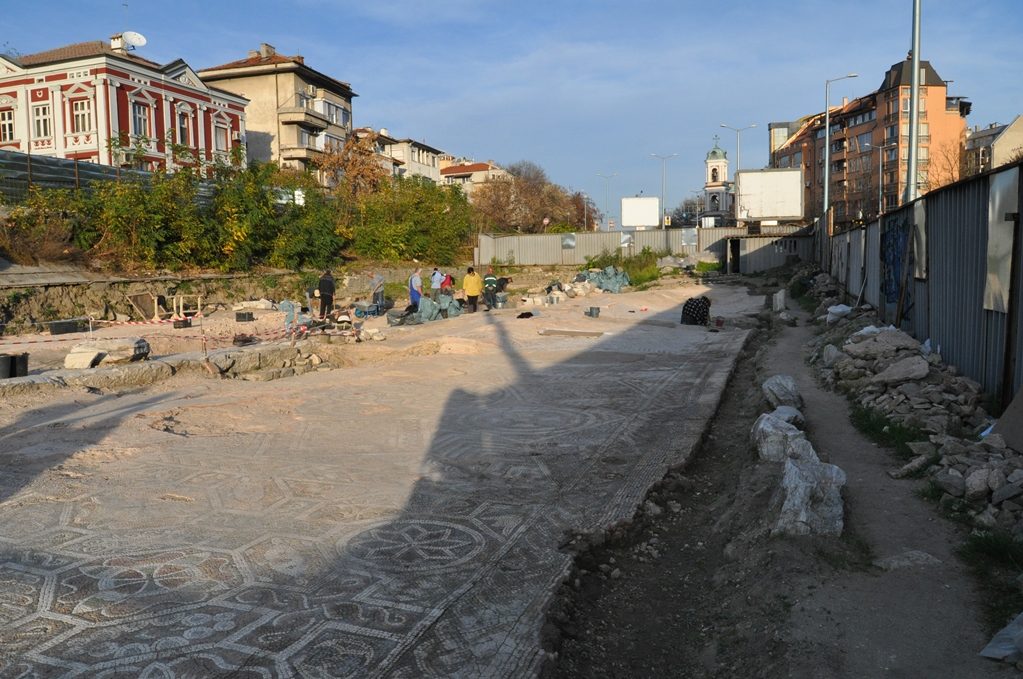
The Episcopal Basilica was found during rescue excavations in 1982–1986 and fully uncovered in 2016–2017. It is a three-aisled basilica with one apse, a narthex and an atrium, about 83 m long and 36 m wide, built over earlier monumental buildings. In the Middle Ages a Christian cemetery grew over its ruins.1
Its floors are covered by two layers of polychrome mosaics with a total area of more than 2,000 sq m. The Bulgarian Tourist Union writes that they combine outside influences with local traditions and materials, and add to what is known about the spread of mosaic art in late antiquity.1
The Bulgarian Tourist Union calls the Episcopal Basilica the largest basilica of the 4th–6th centuries in Bulgaria and one of the largest in the Balkans. That is the union’s description.1
The Small Basilica
The Small Basilica stands at the eastern edge of the ancient city, next to the outer wall and a tower of the 2nd–4th century, near the eastern cemetery and the martyrium of the 37 martyrs of Philippopolis on the road to Constantinople. It is about 20 m long with the apse and 13 m wide, with three aisles, one apse and a narthex, a small chapel on the south side and a baptistery against the north aisle.2,3
According to the Bulgarian Wikipedia, it was built in the second half of the 5th century in honour of Flavius Basiliscus, the commander in Thrace who drove rebel Goths away from the city in 471. A six-line donor inscription praising him was set in the mosaic in front of the altar. When Basiliscus, emperor from 475, was deposed after 20 months by Zeno, the first lines of the inscription were removed.3
Soon afterwards the church burnt down. It was rebuilt with a brick floor about 0.70 m higher, and the baptistery was added, with a cross-shaped font and a mosaic of a deer, doves and other Christian symbols. The church was abandoned at the end of the 6th century and long used as a source of building stone.3
The archaeologist Mina Bospachieva excavated it in 1988–1989 during the construction of a block of flats, and named it the Small Basilica because two larger basilicas stand nearby. It was restored in 2010–2013 by Plovdiv Municipality, the Ministry of Culture and the America for Bulgaria Foundation and opened to visitors on 1 May 2014.3
The union says the mosaics of the Small Basilica are believed to be among the finest made by the Philippopolis school of mosaicists.2
The Irini building
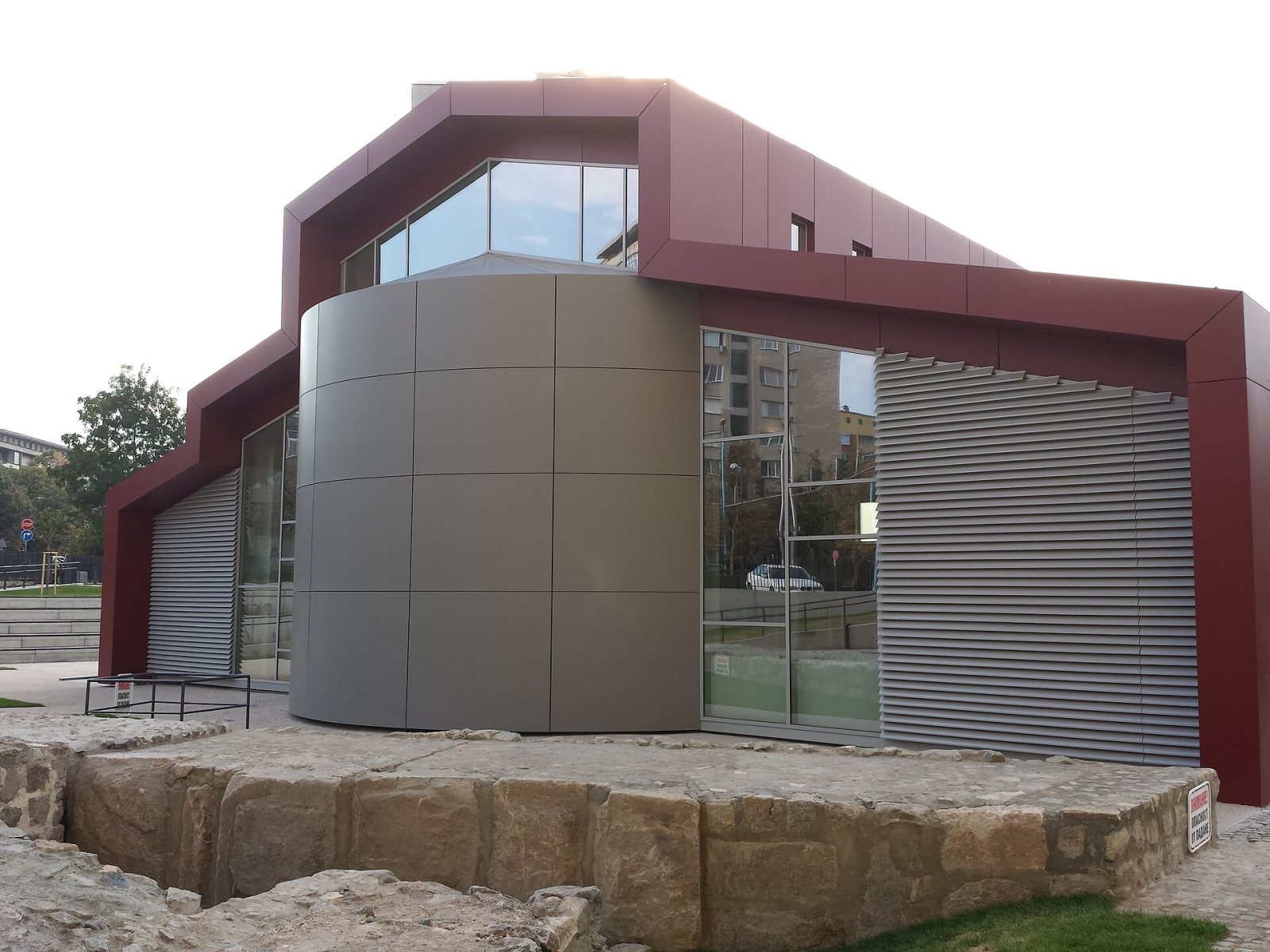
The late Roman house known as Irini was found during rescue excavations in 1983–1984 next to the Episcopal Basilica. With part of the ancient street network, it is kept in place in the Archaeological pedestrian underpass. Its reception part, a colonnaded courtyard and several rooms with floor mosaics, dates from the 4th–5th century.4
The polychrome mosaics cover 160 sq m with plant and figural scenes. A series of greeting inscriptions leads the visitor from the entrance through the portico to the banqueting hall and the reception room. The banqueting hall floor centres on the image of a woman with the inscription EIPHNH, “peace”, which gave the building its name.4
A street (cardo) was laid when the Episcopal Basilica was built to link the two buildings directly. The union writes that the accepted view is that Irini was the residence of the bishop of Philippopolis.4
Tickets and opening hours
| Ticket | Episcopal Basilica | Small Basilica and Irini |
|---|---|---|
| Adults | €7.67 | €3.58 |
| Students and visitors over 65 | €3.58 | €1.53 |
| Family ticket (parents with children aged 7–16) | €15.34 | €7.16 |
| Groups of more than 10, per person | €6.14 | €3.07 |
| Groups of students or over-65s, per person | €2.56 | €1.02 |
Source: Bulgarian Tourist Union: Episcopal Basilica of Philippopolis (100 National Tourist Sites, in Bulgarian); Bulgarian Tourist Union: Small Early Christian Basilica; Bulgarian Tourist Union: Late antique building Irini1,2,4
All three sites are run by the municipal institute Old Plovdiv. They are free for students and pensioners on the first Thursday of each month, on 6 September, the day of the Unification and of the city of Plovdiv, and during the European and the Plovdiv nights of museums and galleries. Phones: Episcopal Basilica +359 876 662 900; Small Basilica +359 876 192 700 and +359 32 62 70 82. Checked in November 2026.1,2
The No. 41b stamp
The three buildings share No. 41b in “Know Bulgaria – 100 National Tourist Sites”, the movement the Bulgarian Tourist Union started in 1966. Walkers collect a stamp at each site in a booklet: 25 stamps earn a bronze badge, 50 a silver badge and all 100 a gold badge with a certificate.6
Since 2018 the Episcopal Basilica, the Small Basilica and the Irini building have been on Bulgaria’s UNESCO tentative list as one serial site, “The Episcopal Basilica and the late antique mosaics of Philippopolis, Roman province of Thrace”. A tentative list is a list of sites a country intends to nominate; it is not World Heritage status.1,4
More stamps nearby
- No. 41: the Roman theatre and the Old Town museums.
- No. 41a: the Roman stadium of Philippopolis.
- No. 42: the Perushtitsa History Museum.
- No. 47a: the Asenovgrad History Museum.
Source: Bulgarian Tourist Union: 100 National Tourist Sites6
For the city itself, see our Plovdiv city guide and the Plovdiv province page.
Frequently Asked Questions
How big is the Episcopal Basilica of Plovdiv?
About 83 m long and 36 m wide, with more than 2,000 sq m of floor mosaics in two layers.
How much is a ticket to the Episcopal Basilica?
The Bulgarian Tourist Union lists €7.67 for adults and €3.58 for students and visitors over 65.
Where is the Irini building?
In the Archaeological pedestrian underpass on Tsar Boris III Obedinitel Boulevard, next to the Episcopal Basilica.
Are the Plovdiv basilicas a UNESCO World Heritage Site?
No. Since 2018 they have been on Bulgaria’s UNESCO tentative list, the list of sites it intends to nominate.
Which tourist-site number are the Plovdiv basilicas?
No. 41b in the Bulgarian Tourist Union’s 100 National Tourist Sites.
Sources
- Bulgarian Tourist Union: Episcopal Basilica of Philippopolis (100 National Tourist Sites, in Bulgarian)
- Bulgarian Tourist Union: Small Early Christian Basilica (in Bulgarian)
- Wikipedia (Bulgarian): Small Basilica of Philippopolis
- Bulgarian Tourist Union: Late antique building Irini (in Bulgarian)
- Bulgarian Tourist Union: Roman theatre, with the Old Plovdiv prices (in Bulgarian)
- Bulgarian Tourist Union: 100 National Tourist Sites (in Bulgarian)
Figures checked 12 November 2026. Information only, not investment, tax or legal advice.