National Tourist Site
About Hisarya Archaeological Museum and Roman Tomb
At a glance
| Tourist site | No. 67a, Archaeological Museum and Roman tomb, Hisarya |
|---|---|
| Address | 8 Aleksandar Stamboliyski Street, Hisarya |
| Museum hours | Summer 9:00–17:30, winter 8:00–16:30, no closing day |
| Roman tomb | About 300 m south of the walls of the Roman town |
| Phone | 0337 620 68; 0887 51 86 98 |
Source: Bulgarian Tourist Union: Archaeological Museum, Hisarya (100 National Tourist Sites, in Bulgarian); Wikipedia (Bulgarian): Diocletianopolis1,2
For the town and its springs, see our Hisarya guide.
The Roman town
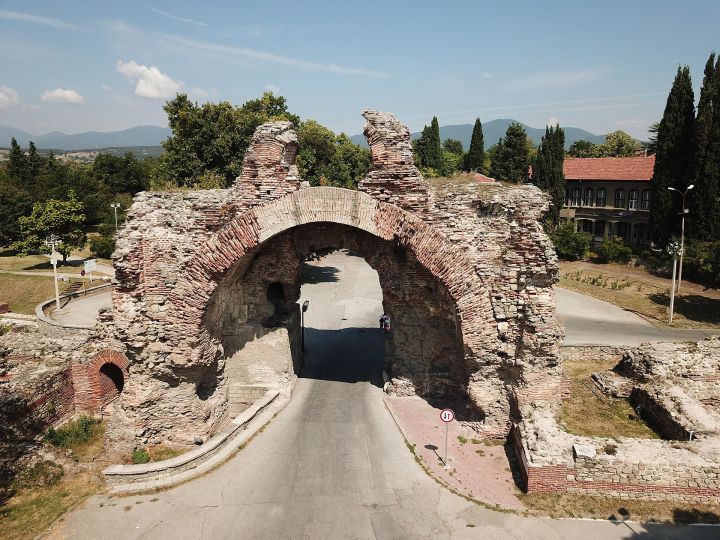
The Bulgarian Wikipedia says the site has been lived in since the 6th millennium BC. After Rome took Thrace in the 1st century AD it grew into a Roman town, and in 293 it received its status from the emperor Diocletian and was named Diocletianopolis after him; the article says he settled here for the healing mineral waters. Walls were built around it in the early 4th century, and it became a bishop’s seat.2
Historical sources quoted by the Bulgarian Wikipedia rank it as the third largest town of the province of Thrace, after Philippopolis (Plovdiv) and Beroe (Stara Zagora). It was destroyed by Avars and Slavs at the end of the 6th or start of the 7th century, and a Bulgarian village grew on its ruins around the 9th century. The name Hisarya comes from “hisar”, a fortress.2
The walls, the baths and the barracks are described in our guide to the Roman baths and walls of Diocletianopolis, site No. 67b.
The museum
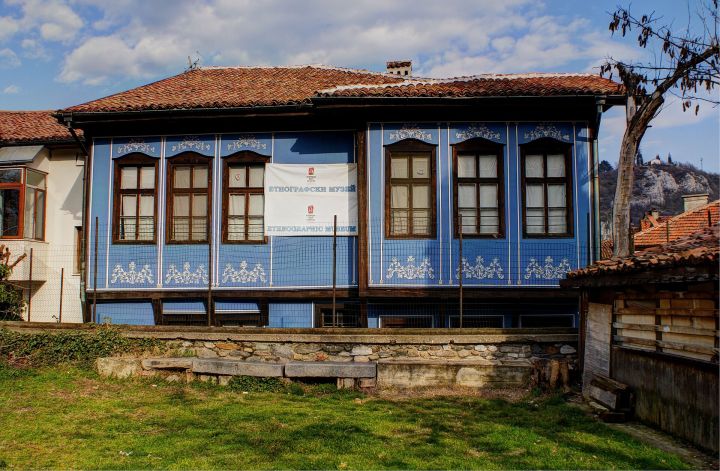
The museum has an archaeology department with two halls, a lapidarium and a courtyard, and a permanent ethnographic exhibition on life, customs and trades in the Hisarya area from the National Revival to today. The finds run from the 5th–4th millennium BC to the 14th century.1
| Period | What is shown |
|---|---|
| Neolithic | Pots, clay idols, stone axes, flint knives and war balls from the settlements at Hisarya and Chernichevo |
| Thracian | Imported Greek pottery and coins of Thasos, Cyzicus, Aenus and Neapolis, showing trade with the Greek colonies on the Aegean |
| Roman | The largest part of the exhibition, on Diocletianopolis as a spa and healing town of the 4th–6th centuries |
Source: Bulgarian Tourist Union: Archaeological Museum, Hisarya (100 National Tourist Sites, in Bulgarian)1
The museum offers guided talks in Bulgarian, English and Russian, and guided walks to the main monuments of the Hisarya archaeological reserve.1
The Roman tomb
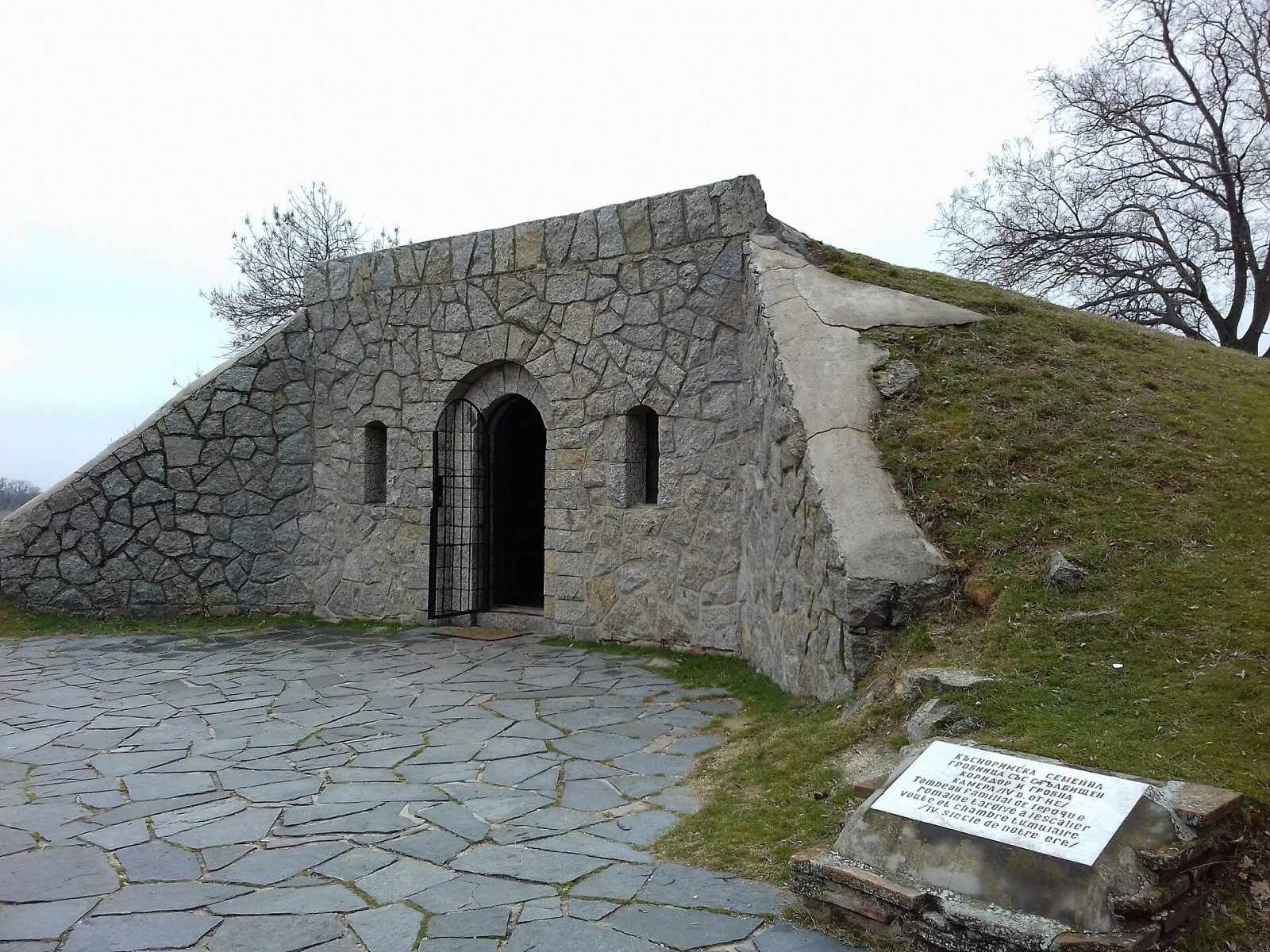
The tomb dates from the 4th century. It has a stepped corridor leading down to a burial chamber 7 m below ground, and is shown in its original state, with a well-preserved, colourful Roman mosaic on the floor. Like the other burial grounds of Diocletianopolis, it lies outside the walls, about 300 m south of the fortified town.1,2
Tickets and opening hours
| Ticket | Adults | Pensioners and students | Family, 2 adults with children under 16 |
|---|---|---|---|
| Archaeological Museum | €3.06 (6 leva) | €1.53 (3 leva) | €6.13 (12 leva) |
| Roman tomb | €2.55 (5 leva) | €1.53 (3 leva) | €5.11 (10 leva) |
| Roman baths | €3.06 (6 leva) | €1.53 (3 leva) | €6.13 (12 leva) |
| Combined, all three | €6.13 (12 leva) | €3.06 (6 leva) | €12.27 (24 leva) |
Source: Bulgarian Tourist Union: Archaeological Museum, Hisarya (100 National Tourist Sites, in Bulgarian)1
The Bulgarian Tourist Union lists museum hours of 9:00–17:30 in summer and 8:00–16:30 in winter, with no closing day. Checked in November 2026.1
The No. 67a stamp
The museum and the tomb are site No. 67a in “Know Bulgaria – 100 National Tourist Sites”, the movement the Bulgarian Tourist Union started in 1966. Walkers collect a stamp at each site in a booklet: 25 stamps earn a bronze badge, 50 a silver badge and all 100 a gold badge with a certificate.3
More stamps nearby
- No. 67b: the Roman baths and walls of Diocletianopolis, Hisarya.
- No. 67: the Starosel Thracian tomb.
- No. 44: the Vasil Levski National Museum, Karlovo.
- No. 44c: Kadrafil peak and Svezhen.
Source: Bulgarian Tourist Union: 100 National Tourist Sites3
For the area, see the Plovdiv province page.
Frequently Asked Questions
What is special about the Roman tomb in Hisarya?
It is a 4th-century tomb shown in its original state, with a burial chamber 7 m underground and a colourful floor mosaic.
Is there a combined ticket?
Yes. The Bulgarian Tourist Union lists €6.13 (12 leva) for adults for the museum, the tomb and the Roman baths.
Does the museum close one day a week?
No. The union says it has no closing day.
Can I book a guide in English?
Yes. The museum offers guided talks in Bulgarian, English and Russian.
Which tourist-site number is the Hisarya museum?
No. 67a in the Bulgarian Tourist Union’s 100 National Tourist Sites.
Sources
- Bulgarian Tourist Union: Archaeological Museum, Hisarya (100 National Tourist Sites, in Bulgarian)
- Wikipedia (Bulgarian): Diocletianopolis
- Bulgarian Tourist Union: 100 National Tourist Sites (in Bulgarian)
Figures checked 12 November 2026. Information only, not investment, tax or legal advice.