
01
Cost of Doing Business
Labour, offices, energy and fuel cost less than in most of the EU. Twelve pages, one per cost, in euro.
63 Price level for household consumption, 2025 (EU = 100), the lowest in the EU
Read moreType at least two letters to see matching pages.

Why Bulgaria
Bulgaria combines full membership of Europe's single market, currency and border-free area with some of the lowest flat tax rates in the EU. Here is what that means in practice.
Bulgaria at a glance · Checked October 2026
All Macroeconomic Data and ChartsFour reasons
The membership dates and rates investors ask about most. The sources are listed at the foot of the page.
Full access to the single market, under EU rules on goods, services and capital.
No currency conversion for trade and investment with the rest of the euro area.
No border checks with the other Schengen countries, by land, sea or air.
Among the lowest standard corporate and personal income-tax rates in the EU.
Bulgaria’s advantages
Each page sets out the current figures, how Bulgaria compares with the rest of the EU and what to weigh, with every number linked to its source.
01
Labour, offices, energy and fuel cost less than in most of the EU. Twelve pages, one per cost, in euro.
63 Price level for household consumption, 2025 (EU = 100), the lowest in the EU
Read more
02
About 3 million people in work, unemployment of 3.5% and a growing pool of IT specialists, at the lowest labour cost in the EU.
3.04 m People in work, 2025
Read more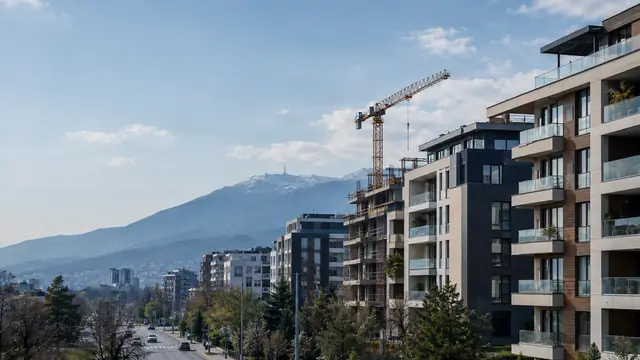
03
Farmland at about €8,400 a hectare, new flats in Sofia at about €2,070 per m² and some of the EU’s lowest building costs.
€8,426 Average price of farmland per hectare, 2025
Read more
04
51 universities and colleges, about 203,000 students and a strong tradition in engineering, medicine and mathematics.
51 Accredited higher education institutions
Read more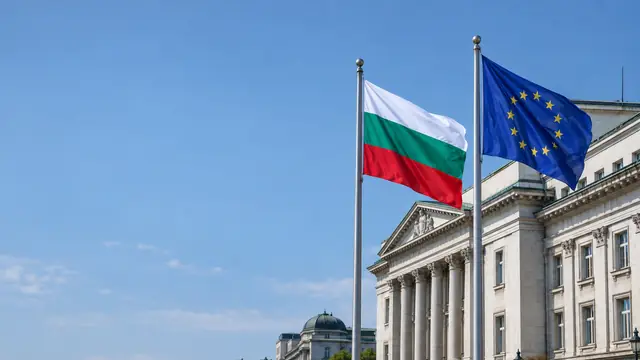
05
NATO since 2004, the EU since 2007, Schengen since 2025 and the euro since January 2026.
2004 NATO member, since 29 March
Read more
06
GDP growth of 3.1% in 2025, public debt under 30% of GDP and income catching up with the EU average.
€116.0 bn GDP in 2025 (preliminary)
Read more
07
A flat 10% on company profits and personal income, the second-lowest corporate rate in the EU.
10% Corporate income tax
Read more
08
€58 billion of foreign direct investment, inflows by year, country, sector and type, and who is investing now.
€58.3 bn Stock of foreign direct investment, end of March 2026
Read more
09
Inside the EU and Schengen, on the Black Sea and the Danube, between Central Europe, Greece and Turkey.
452 m People in the EU single market, 1 January 2026
Read more
10
Airports, Black Sea ports, railways, motorways, border crossings and the Sofia metro.
12.3 m Passengers at Bulgarian airports, 2025
Read more
11
A parliamentary republic in the EU and NATO, with a single-party majority government since May 2026.
240 Members of the National Assembly
Read more
12
The lowest prices in the EU, mountains and the Black Sea close at hand, and a capital most residents are happy with.
63 Price level of consumer goods and services, 2025 (EU = 100), the lowest in the EU
Read moreCost of doing business
From registering a company to heating an office and shipping a truck to Germany, in euro, for October 2026.
Compare
Tax rates and labour costs in Bulgaria and four other EU countries in the region, from the latest comparable data.
| Measure | Bulgaria | Romania | Hungary | Poland | Czechia |
|---|---|---|---|---|---|
| Corporate income tax, 20261 | 10% | 16% | 9% | 19% | 21% |
| Top personal income tax, 20262 | 10% | 10% | 15% | 36% | 23% |
| Standard VAT rate, 20263 | 20% | 21% | 27% | 23% | 21% |
| Labour cost per hour worked, 20254 | €12.0 | €13.6 | €15.2 | €19.1 | €19.8 |
| Net annual earnings, average single worker, 20255 | €14,450 | €13,877 | €15,432 | €19,086 | €20,901 |
| Statutory minimum wage a month, July 20266 | €620 | €825 | €906 | €1,119 | €923 |
Bulgaria has been an EU member since 2007, a full Schengen member since 1 January 2025, and has used the euro as its official currency since 1 January 2026.
Bulgaria’s corporate income tax and personal income tax rates are both 10%. The corporate rate is the second-lowest in the EU.
Bulgaria’s labour cost was €12.0 per hour in 2025, compared with €34.9 across the EU. Bulgaria has the EU’s lowest labour cost.
Bulgaria received €2.18bn in foreign direct investment in H1 2026. Its stock of foreign direct investment was €58.3bn at the end of March 2026.
In October 2026, monthly rent for Class A office space in Sofia ranged from €14 to €18 per square metre.
The average asking price for new residential flats in Sofia was €2,070 per square metre, excluding VAT, in October 2026.
Next step
Lawyers, accountants, translators and recruiters who work with international investors, in the InvestBulgaria directory.
