Bulgarian Food
The basics
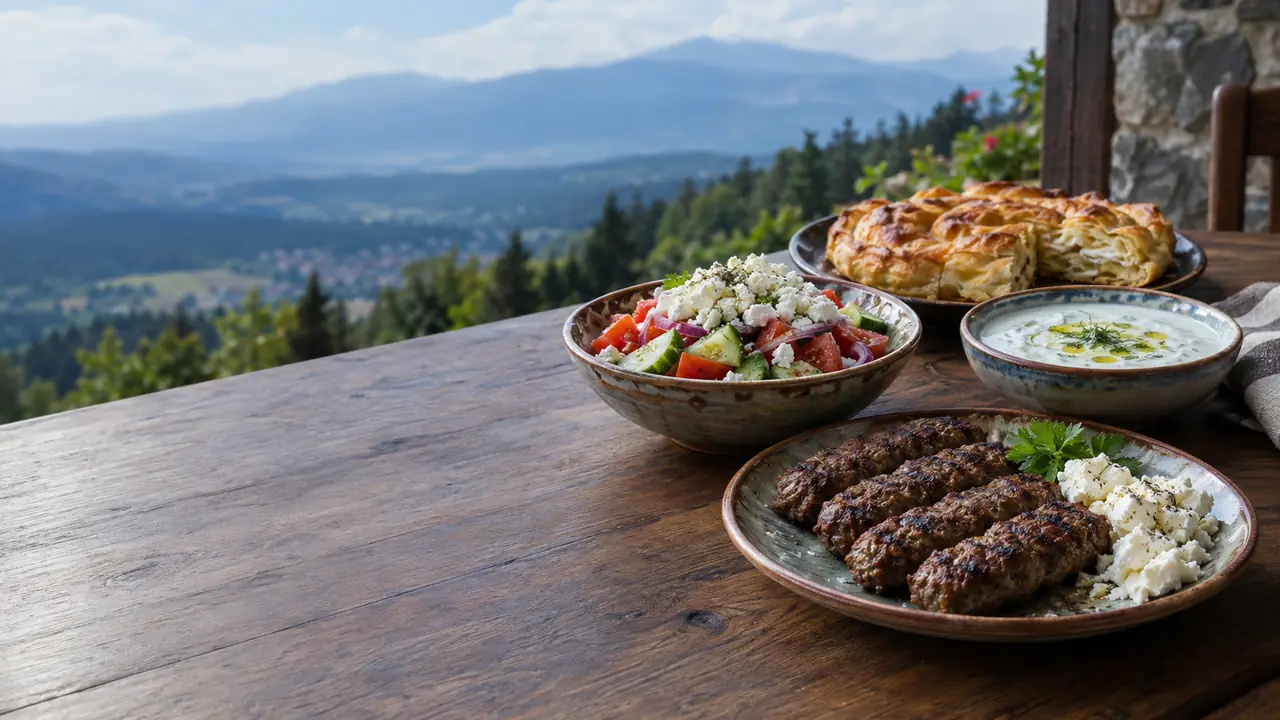
- Salads to start: shopska salad of tomatoes, cucumbers, peppers, onion and grated white cheese, or the yoghurt-and-cucumber snezhanka.
- Yoghurt (kiselo mlyako): Bulgarians traditionally eat more yoghurt than the rest of Europe, and the bacterium Lactobacillus bulgaricus takes its name from the country. It is the base of the cold soup tarator.
- Cheese: sirene, a white brined cheese similar to feta, and kashkaval, a hard yellow cheese.
- The grill (skara): kebapche, kyufte and shishche, often served together as a mixed grill, meshana skara.
- Stews: main courses are very often stews of vegetables or meat, such as gyuvech, cooked in a clay pot; see kavarma and vinen kebap.
- Pastry: banitsa, layers of filo with eggs and white cheese, is the most popular pastry in Bulgaria.
Source: Wikipedia: Bulgarian cuisine1
Food for the feasts
Holidays have their own dishes. Christmas Eve brings meatless stuffed peppers and sarmi, cabbage dishes appear at New Year, Nikulden on 6 December is the day for fish, usually carp, and St George’s Day on 6 May for roast lamb. Bulgaria is also known for its wines, such as Mavrud, Melnik and Dimyat, and for rakia.1
Frequently Asked Questions
What is Shopska salad in Bulgaria?
Shopska salad is made with tomatoes, cucumbers, peppers and onion, topped with grated white cheese. In 1956, Balkantourist named its version Shopska salad.
What is Snezhanka salad in Bulgaria?
Snezhanka is a cool Bulgarian salad made with strained yoghurt and cucumber. It was developed as a Balkantourist product in the late 1970s.
What foods are eaten on Bulgarian holidays?
Bulgarian holiday foods include meatless stuffed peppers and sarmi on Christmas Eve, cabbage dishes at New Year, carp for Nikulden on 6 December and roast lamb for St George’s Day on 6 May.
The dishes
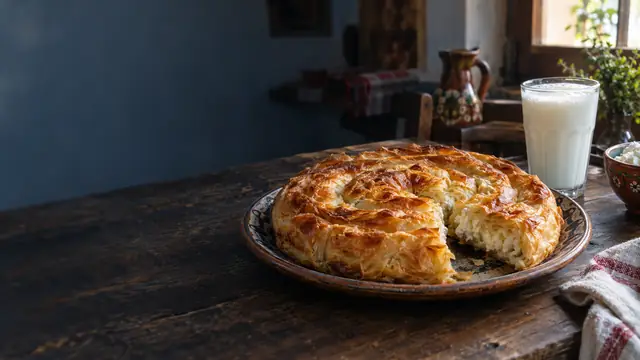
Banitsa
A layered Bulgarian pie, traditionally filled with cheese, eggs and yoghurt.
Read more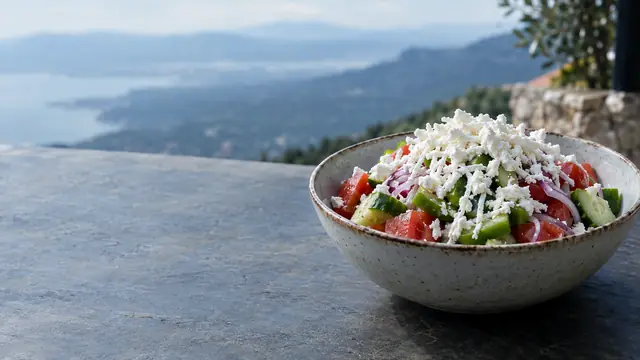
Shopska salad
A Bulgarian salad of fresh vegetables topped with sirene cheese.
1956 Balkantourist named its version Shopska salad
Read more
Snezhanka salad
A cool Bulgarian salad made with strained yoghurt and cucumber.
Late 1970s Developed as a Balkantourist product
Read more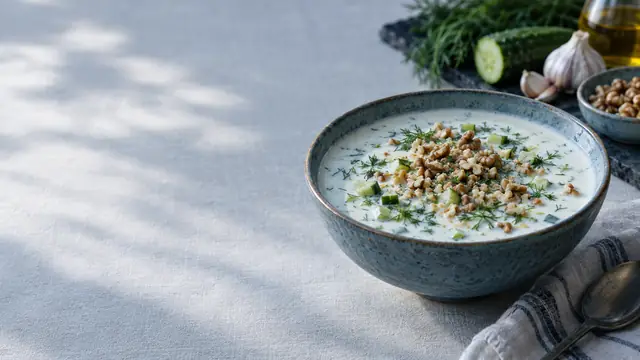
Tarator
A refreshing Bulgarian summer soup made with yoghurt and cucumber.
Read more
Sirene po shopski
Bulgarian cheese baked with vegetables in a clay pot.
Read more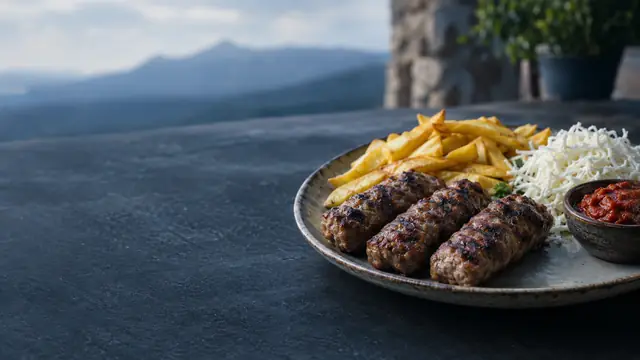
Kebapche
Grilled minced meat shaped into a seasoned, casing-free roll.
Read more
Kyufte
Bulgarian meatballs made with minced meat, onion and seasoning.
Read more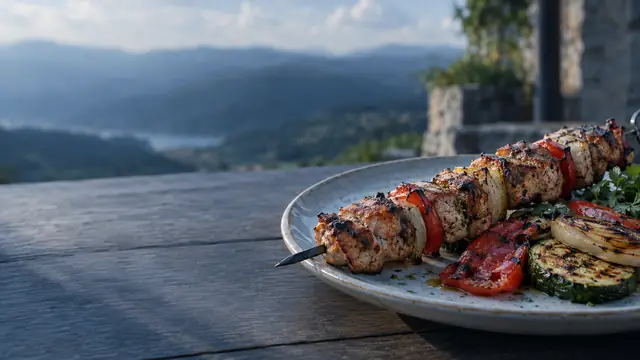
Shish kebap
Marinated pork or chicken grilled on a skewer with peppers and onions.
Read more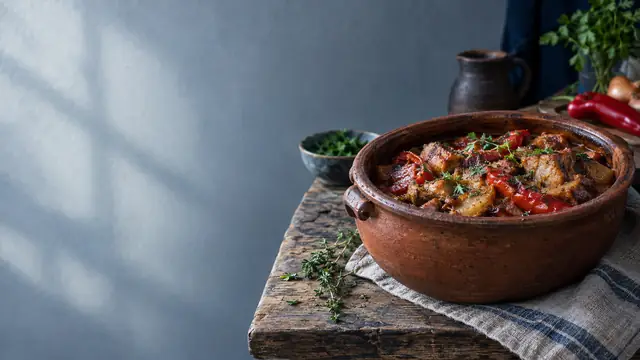
Kavarma
A slow-cooked Bulgarian stew of pork and vegetables.
Read more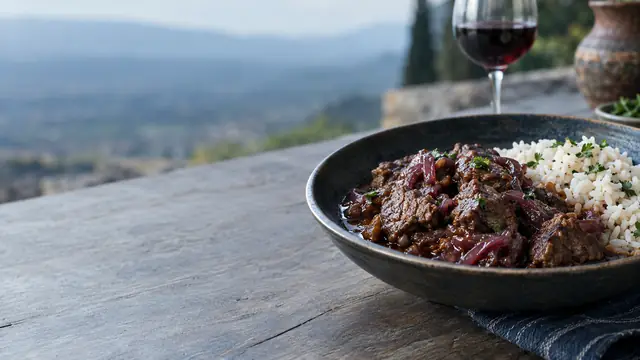
Vinen kebap
A Bulgarian stew of meat simmered slowly in wine and spices.
Read more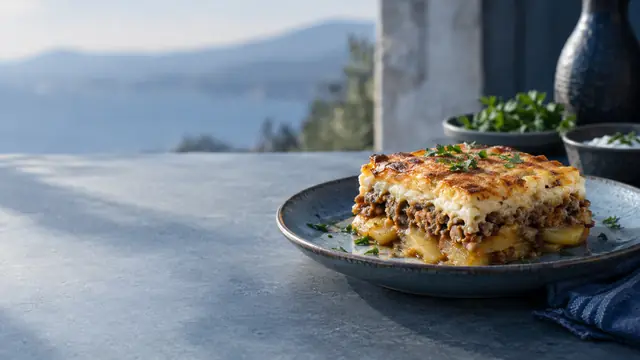
Moussaka
A layered potato and minced-meat dish, baked with a milk-and-egg topping.
Read more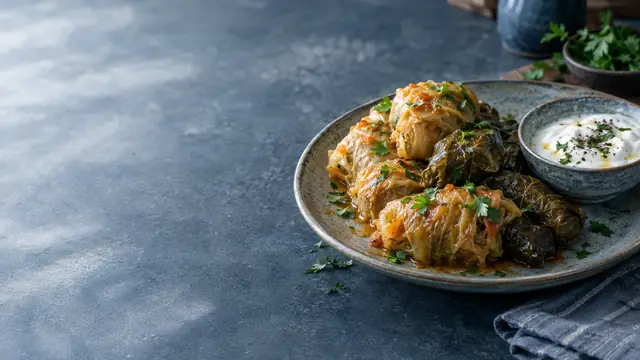
Sarmi
Bulgarian rolls of cabbage or vine leaves with savoury fillings.
Read more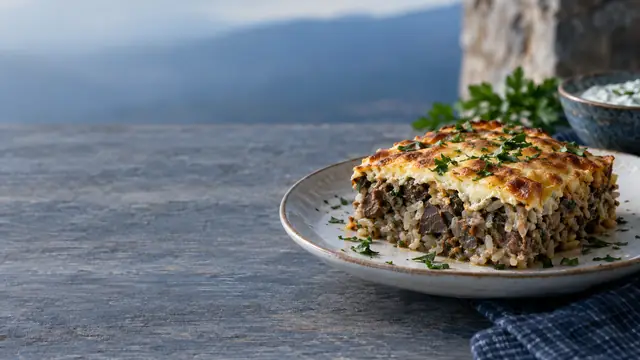
Drob sarma
A warm baked dish of lamb offal, rice and herbs.
Read more
Sources
Facts checked 13 October 2026. Prepared by InvestBulgaria for general information.
