National Tourist Site
About Hristo Botev National Museum, Kalofer
At a glance
| Tourist site | No. 45, Hristo Botev National Museum, Kalofer |
|---|---|
| Address | 5 Hristo Botev Street, Kalofer, in the Botev Garden park |
| What it covers | The memorial house, the exhibition hall, and the monuments to Hristo Botev and to his mother Ivanka Boteva |
| Opening hours | Summer 8:30–17:30, winter 8:30–17:00, every day |
| Phone | +359 3133 5271 |
Source: Bulgarian Tourist Union: Hristo Botev National Museum (100 National Tourist Sites, in Bulgarian); Wikipedia (Bulgarian): Hristo Botev National Museum1,2
The ticket desk closes half an hour before the museum. The whole ensemble is a listed cultural monument. For the town, see our Kalofer guide.1,2
Botev’s Kalofer
Kalofer lies on the Tundzha between the Balkan Mountains and Sredna Gora. The English Wikipedia dates the town to 1533 and says it grew as a centre of crafts, above all braid making, with some 1,200 braid looms at its peak. A legend told by the Bulgarian Tourist Union says it took its name from the rebel leader Kalifer, whose band of 40 men the sultan allowed to settle in the forest if they stopped their raids.1,3
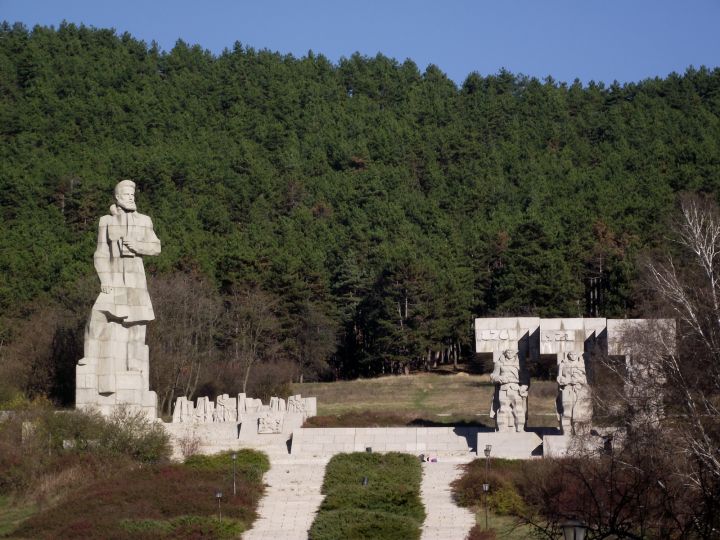
In the centre are the restored school of Daskal Botyo and the Revival church of the Virgin. A plaque in the churchyard marks the cell where Botyo Petkov lived when he came to teach in the town, and where Hristo Botev was born in 1848. From the centre a monumental stairway climbs to the memorial complex with the granite monument to Botev.1
In July 1877 the town was burnt again and, according to the English Wikipedia, 618 Bulgarians from Kalofer and nearby villages were killed. On 2 June, Botev Day, the town remembers the poet, and on 6 January men dance the horo in the icy river.3
For his life and work, see our Hristo Botev biography.
The museum
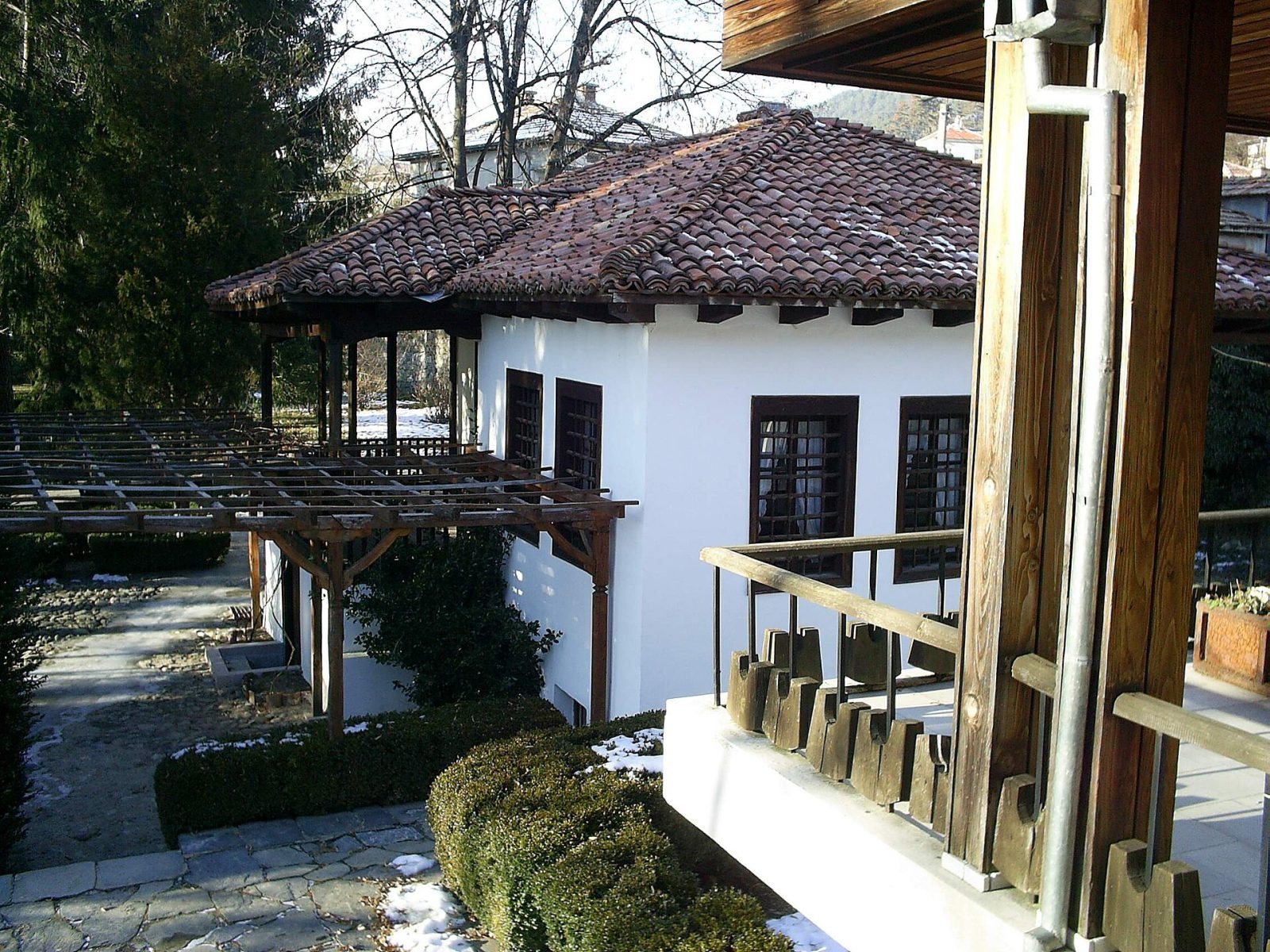
After almost ten years of research, Professor Tachev found that the Botev family had lived in two houses in Kalofer and drew plans to rebuild one of them, which were not carried out. After his death the archaeologist Baltadzhiev built the museum to his own design. It was finished in 1944, opened to visitors on 24 May and officially on 2 June. The modern exhibition building next to it opened on 6 January 1973.2
| Item | Where |
|---|---|
| Botev’s pocket watch and writing set, a glass inkwell and a horseshoe pen stand, his only surviving personal belongings | Exhibition hall |
| The spinning wheel and sewing machine of his mother, Ivanka | Museum collection |
| A brass mortar with the name of his wife Veneta and a monogrammed cloth of his daughter Ivanka | Exhibition hall |
| The press on which the newspaper “Zname” was printed, and Botev’s last newspaper, “Nova Bulgaria” | Basement |
Source: Bulgarian Tourist Union: Hristo Botev National Museum (100 National Tourist Sites, in Bulgarian); Wikipedia (Bulgarian): Hristo Botev National Museum1,2
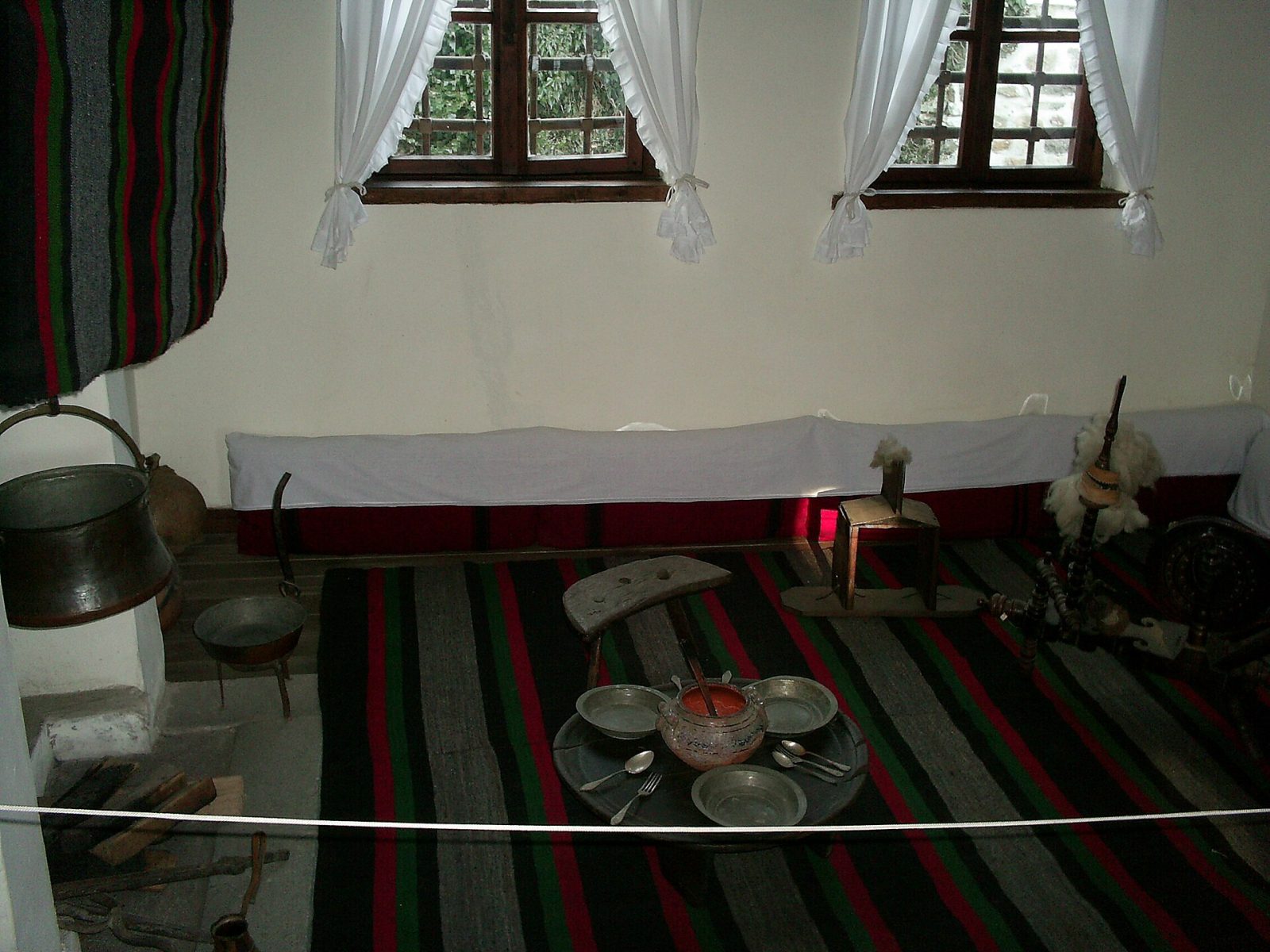
The house shows the setting in which the family lived. Veneta Rasheva-Bozhinova, a granddaughter of Botev’s wife Veneta, gave a volume of his works with notes and the signature of his daughter, and the Rashev family gave other objects, photographs and letters.2
Tickets and opening hours
| Ticket | Price |
|---|---|
| Adults | 4 leva |
| Pupils and students | 2 leva |
| Pensioners | 2 leva |
| Family, parents with school-age children | 9 leva |
| Guided talk, up to 30 minutes | 15 leva |
Source: Bulgarian Tourist Union: Hristo Botev National Museum (100 National Tourist Sites, in Bulgarian)1
Children under 7 and people with disabilities go free. The museum has no closing day.1
The union lists prices in leva, the currency before the euro, so they may be out of date. Checked in November 2026.1
The No. 45 stamp
The museum is site No. 45 in “Know Bulgaria – 100 National Tourist Sites”, the movement the Bulgarian Tourist Union started in 1966. Walkers collect a stamp at each site in a booklet: 25 stamps earn a bronze badge, 50 a silver badge and all 100 a gold badge with a certificate.4
More stamps nearby
- No. 45a: Botev Peak, above Kalofer.
- No. 45b: the Raysko Praskalo waterfall.
- No. 44: the Vasil Levski National Museum, Karlovo.
- No. 77: the Klisura History Museum.
Source: Bulgarian Tourist Union: 100 National Tourist Sites4
For the area, see the Plovdiv province page.
Frequently Asked Questions
Was Hristo Botev born in this house?
A plaque in the yard of the church of the Virgin marks the cell where he was born in 1848; the museum house was rebuilt in 1944 on one of the family’s two Kalofer homes.
What personal belongings of Botev survive?
His pocket watch and writing set, a glass inkwell and a horseshoe pen stand, shown in the exhibition hall.
How much is a ticket?
The Bulgarian Tourist Union lists 4 leva for adults and 2 leva for pupils, students and pensioners.
Is the museum open every day?
Yes. The union says it has no closing day.
Which tourist-site number is the Botev museum?
No. 45 in the Bulgarian Tourist Union’s 100 National Tourist Sites.
Sources
- Bulgarian Tourist Union: Hristo Botev National Museum (100 National Tourist Sites, in Bulgarian)
- Wikipedia (Bulgarian): Hristo Botev National Museum
- Wikipedia (English): Kalofer
- Bulgarian Tourist Union: 100 National Tourist Sites (in Bulgarian)
Figures checked 12 November 2026. Information only, not investment, tax or legal advice.