National Tourist Site
About Perushtitsa History Museum
At a glance
| Tourist site | No. 42, “History Museum”, Perushtitsa |
|---|---|
| Address | 1 Petar Bonev Street, Perushtitsa |
| Sites in the complex | The museum, the church of the Archangel Michael, the Danov school and the Red Church |
| Opening hours | 1 June–30 September: Monday to Friday 9:30–18:00, weekends 10:00–18:00. 1 October–31 May: Monday to Friday 8:30–17:00, weekends 9:00–17:00 |
| Phone | +359 3143 2205; Red Church 0877 644 331 |
Source: Bulgarian Tourist Union: History Museum, Perushtitsa (100 National Tourist Sites, in Bulgarian)1
The museum is closed on 1 January, 24 and 25 December and on the two days of Easter. It announces other closing days on its Facebook page.1
The town before the uprising
Long before the Romans, the Thracians settled around a karst spring near the old Pastusha quarter. Twenty-nine burial mounds have been found in the area, the best known being Duhova and Tabanova. The finds from Duhova mound, now shown in the museum, include Thracian war chariots, a marble head of a man, statues of ancient gods, votive tablets and coins struck in Philippopolis.1,3
The Bulgarian Tourist Union writes that the present town is believed to descend from the medieval village of Dragovets, destroyed in 1364 by the Ottoman army of Lala Shahin. In the 15th century refugees came here from the western Balkans, from present-day Albania and Epirus, and in 1794 the village was burnt again by the kardzhali bands of Mehmed Sinap.1
During the National Revival the teachers and revolutionaries Petar Bonev, Spas Ginov, Vasil Sokolski, known as “the Doctor”, and Kocho Chestimenski lived here. In 1869 Vasil Levski founded a secret revolutionary committee in the town school; Georgi Benkovski revived it seven years later.1,3
The April Uprising of 1876
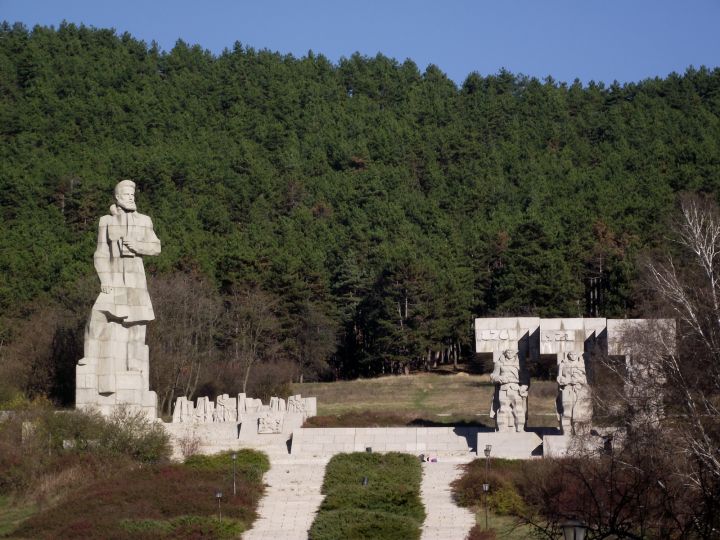
Perushtitsa rose on 23 April 1876. For seven days its people held off the attacks of a far larger force of irregulars led by Adil Aga of Tamrash. Their last refuge was the church of the Archangel Michael, where about 600 old people, women and children had gathered. When the defence could hold no longer, many men took the lives of their own wives and children and then their own rather than surrender. 347 people died in the church, among them the priest Tilev, Dr Vasil Sokolski and the leader of the uprising in the town, Petar Bonev. The town was burnt to the ground.1,3
The Bulgarian Wikipedia cites the French journalist Ivan de Vestin, who visited in July 1876 and reported that 150 old people and children were left of a population of more than 2,000. The town was freed from Ottoman rule on 3 January 1878. Ivan Vazov honoured it in his cycle “Epic of the Forgotten”; his poem “Kocho” opens with the lines “Pale Perushtitsa, nest of heroes, glory!”.1,3
What to see
| Site | What it is |
|---|---|
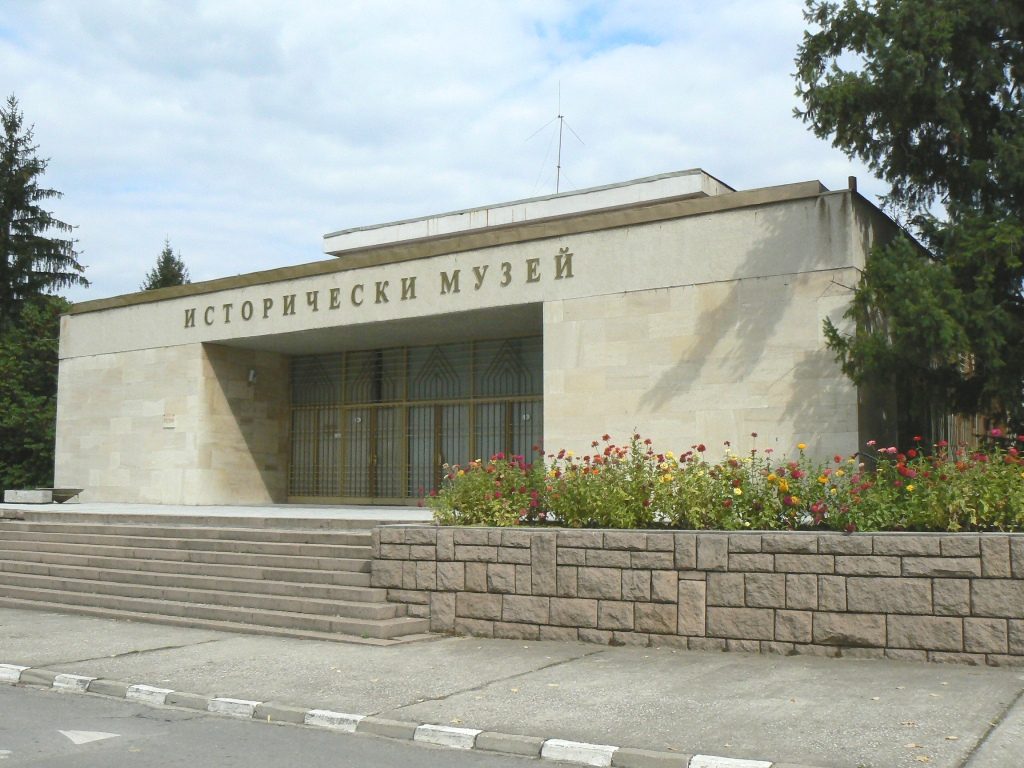
| History Museum | Founded in 1955; about 7,000 items on the Thracian, Roman, Byzantine and Revival periods and the April Uprising, with the Duhova mound finds |
| Church of the Archangel Michael | The memorial church of the 1876 defence, where the bones of the dead were later buried; part of the museum |
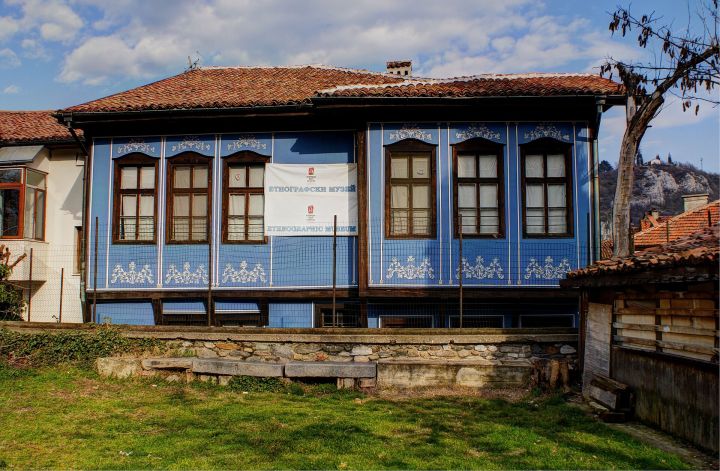
| Danov school, “Saints Cyril and Methodius” | The Revival-period school of the town |
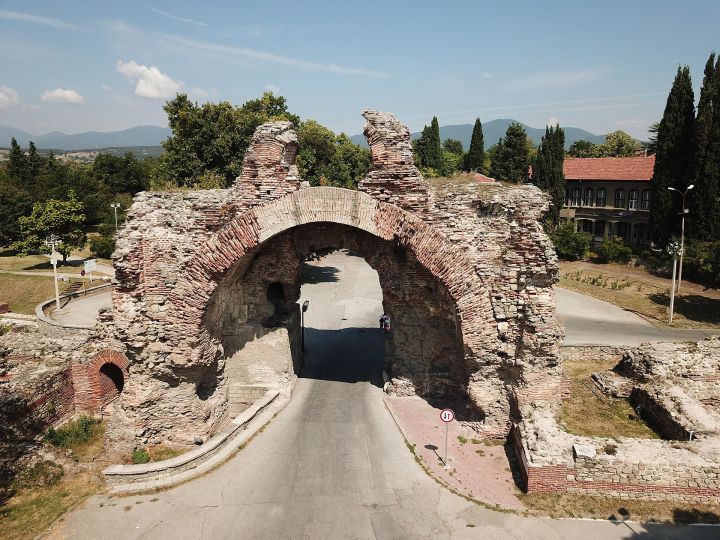
| Red Church | An early Christian church of the 4th–6th century; frescoes from it are shown in the museum |
Source: Bulgarian Tourist Union: History Museum, Perushtitsa (100 National Tourist Sites, in Bulgarian); Wikipedia (Bulgarian): History Museum (Perushtitsa); Wikipedia (Bulgarian): Perushtitsa1,2,3
The Bulgarian Tourist Union calls the church “Saint Archangel Michael”; the Bulgarian Wikipedia article on the town gives its full name as “Saints Archangels Gabriel and Michael”.1,3
Tickets and opening hours
| Ticket | Adults | Pupils, students and pensioners |
|---|---|---|
| One site of your choice | €3 | €2 |
| Three sites (museum, church and Danov school) | €7 | €3 |
| All four sites, with the Red Church | €8 | €4 |
| Red Church only | €3 | €2 |
Source: Bulgarian Tourist Union: History Museum, Perushtitsa (100 National Tourist Sites, in Bulgarian)1
Groups of more than 20 pay €5 per person for three sites, €4 for all four and €2 for the Red Church. Checked in November 2026.1
The union lists €4 for students and pensioners for all four sites, the same as for groups, and more than its price for three sites. That is how the union gives it.1
The No. 42 stamp
The museum is site No. 42 in “Know Bulgaria – 100 National Tourist Sites”, the movement the Bulgarian Tourist Union started in 1966. Walkers collect a stamp at each site in a booklet: 25 stamps earn a bronze badge, 50 a silver badge and all 100 a gold badge with a certificate.4
More stamps nearby
- No. 41: the Roman theatre and the Old Town museums, Plovdiv.
- No. 41b: the Episcopal Basilica, Small Basilica and Irini building, Plovdiv.
- No. 47: Asen’s Fortress, above Asenovgrad.
- No. 38: the Batak History Museum, on the other great site of the 1876 uprising.
Source: Bulgarian Tourist Union: 100 National Tourist Sites4
For the area, see the Plovdiv province page.
Frequently Asked Questions
What happened in Perushtitsa in 1876?
The town rose in the April Uprising on 23 April 1876 and held out for seven days; 347 people died in the church of the Archangel Michael, and the town was burnt.
What is the Red Church?
An early Christian church of the 4th–6th century in Perushtitsa, now part of the museum complex.
How much is a ticket for all four sites?
The Bulgarian Tourist Union lists €8 for adults and €4 for pupils, students and pensioners.
Is the museum open at weekends?
Yes. In summer 10:00–18:00 and from October to May 9:00–17:00.
Which tourist-site number is the Perushtitsa museum?
No. 42 in the Bulgarian Tourist Union’s 100 National Tourist Sites.
Sources
- Bulgarian Tourist Union: History Museum, Perushtitsa (100 National Tourist Sites, in Bulgarian)
- Wikipedia (Bulgarian): History Museum (Perushtitsa)
- Wikipedia (Bulgarian): Perushtitsa
- Bulgarian Tourist Union: 100 National Tourist Sites (in Bulgarian)
Figures checked 12 November 2026. Information only, not investment, tax or legal advice.