National Tourist Site
About Seven Altars Monastery
At a glance
| Official name | Monastery of the Holy Mother of God (Sveta Bogoroditsa), also called the Osenovlag Monastery |
|---|---|
| Where | Valley of the Gabrovnitsa river near Osenovlag, Sofia Province, at the foot of Izdremets peak (1,492 m) |
| Diocese | Eparchy of Sofia of the Bulgarian Orthodox Church |
| Hours | Every day 8:30–16:30, all year |
| Entry and talks | Free |
| Phone | +359 888295471 |
Source: Bulgarian Tourist Union: Seven Altars Monastery (100 National Tourist Sites, in Bulgarian); Wikipedia: Seven Altars Monastery1,2
History and legends
No exact date of founding is known. Tradition links the monastery to the reign of Peter Delyan in the 11th century: his brother, Prince Georgi, is said to have founded it, taken monastic vows and become its first abbot. The English Wikipedia adds that there is evidence of the monastery in the 16th century.1,2
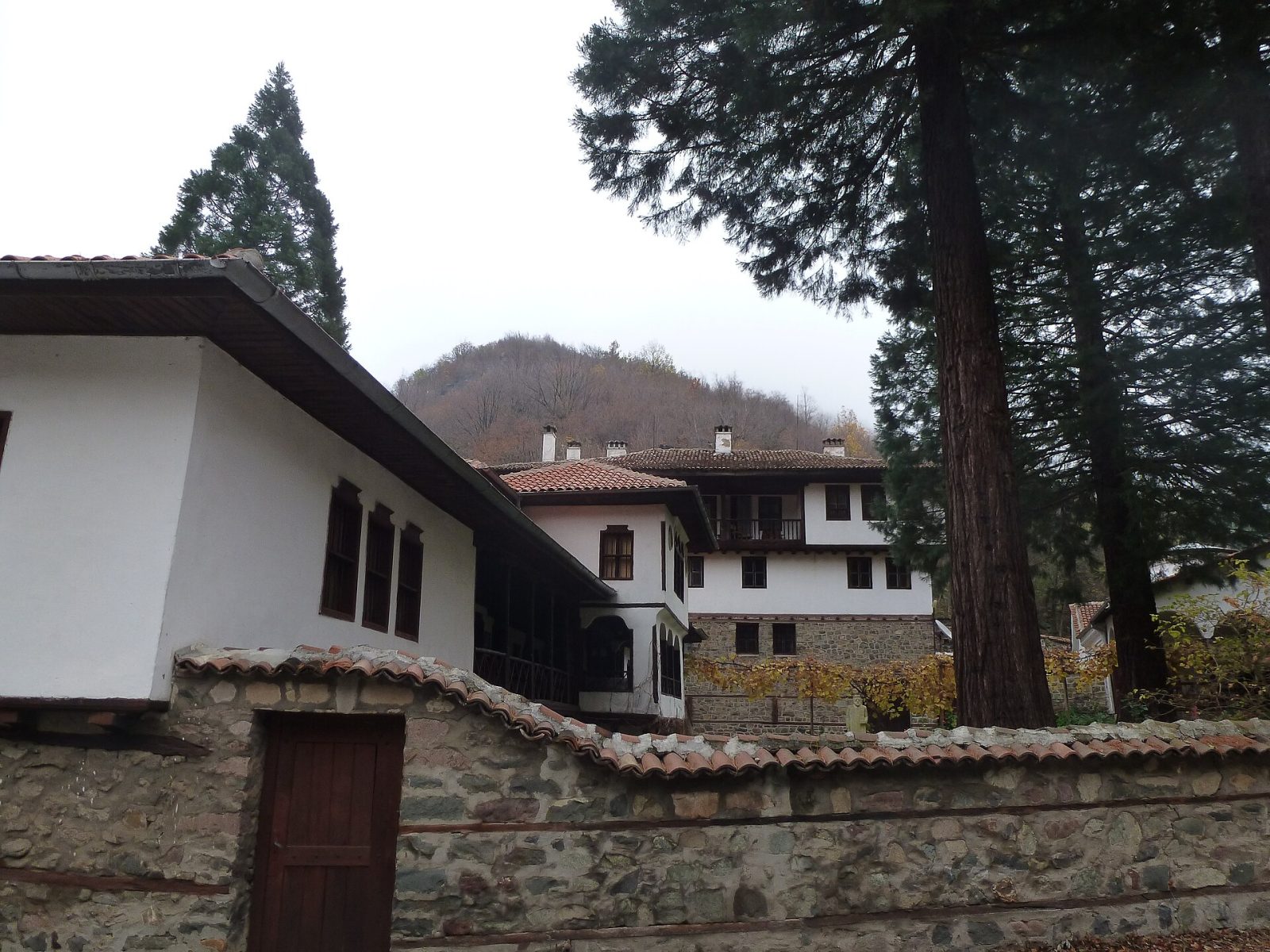
In 1737 Sultan Mahmud I ordered many churches destroyed, the Seven Altars among them. The monastery was restored in 1769, and in 1848 the hieromonk Hristofor opened a cell school here. Sophronius of Vratsa, in whose diocese the monastery then lay, sheltered here. In 1877 local masters raised a four-storey building, with the monks’ cells on its two upper floors and religious and everyday scenes painted on its facade.1,2
Legends explain the name in different ways: seven boyars or brothers who founded seven nearby villages, or seven voivodes led by Valchan Voivoda of Osenovlag, whose buried treasure people still look for. The Bulgarian Tourist Union says the name most likely comes from the church itself. The English Wikipedia article on the monastery is marked as needing more sources.1,2
What to see
- The church of 1815, with seven altars. Each is dedicated to a Bulgarian saint and forms a separate chapel with its own iconostasis and wall paintings; the four main altars form a cross and are separated from the main hall by inner walls.
- Icons and woodcarving of the 17th–18th centuries by local masters such as Pop Nikola of Teteven, Daskal Urosh and Stoyu of Troyan, and two large 19th-century icons probably by the Vitanovi painters of Tryavna.
- The miracle-working icon of the Nativity of the Virgin, said to have been brought from Mount Athos by the first abbot.
- The carved chandelier called the “Horo”, made of fifteen parts.
- The wooden and metal semantrons: in July 1899 the monastery inspired Ivan Vazov to write his ballad “Klepaloto bie”.
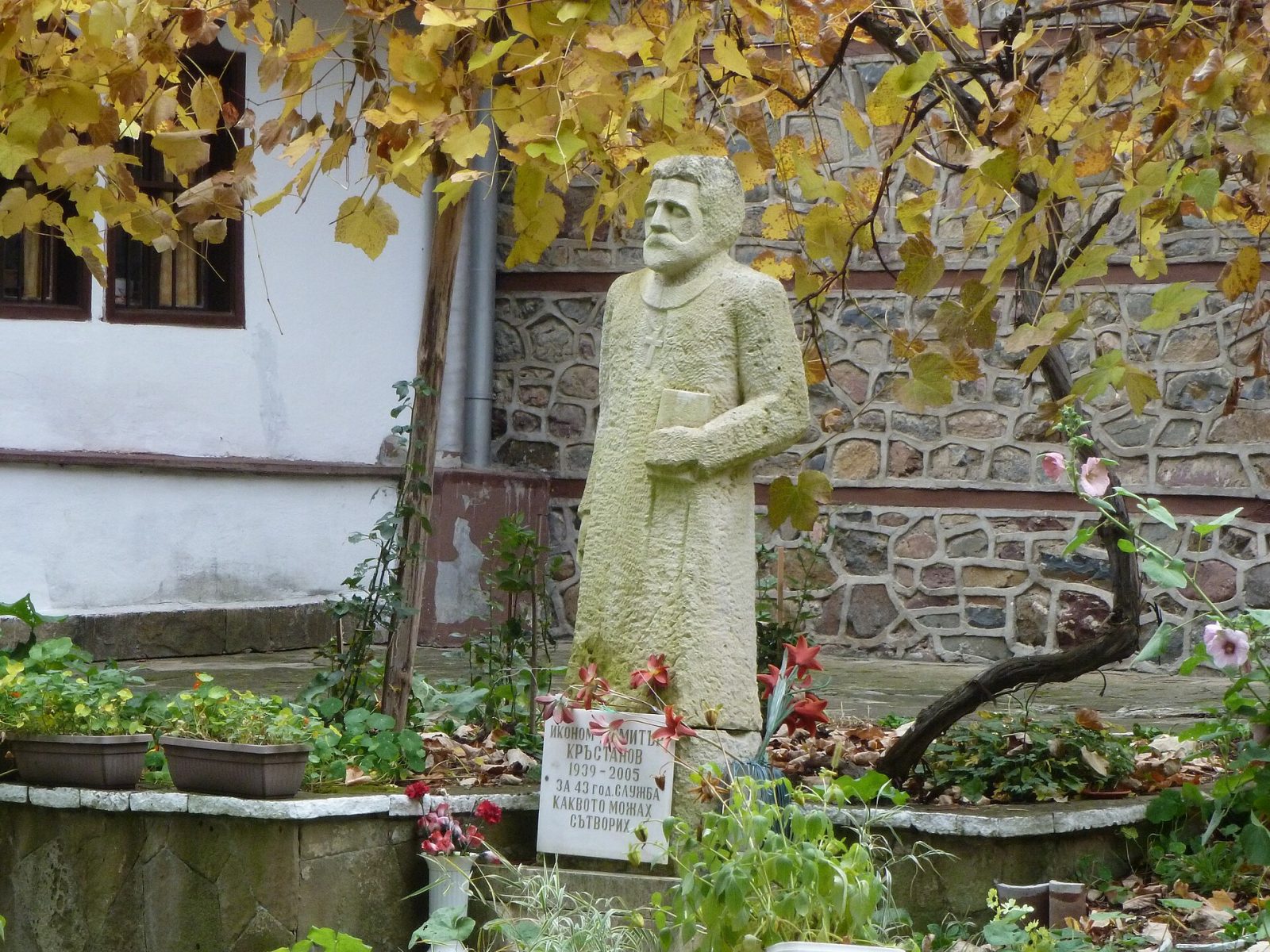
- A sequoia, rare in Bulgaria, in the small yard, and behind the church the grave of the children’s writer Zmey Goryanin (Svetozar Dimitrov, 1905–1958).
- Ruins of a fortress, called the “Latin Stronghold” by local people, on the north side; its walls can be seen from the steep path above the monastery.
Source: Bulgarian Tourist Union: Seven Altars Monastery (100 National Tourist Sites, in Bulgarian); Wikipedia: Seven Altars Monastery1,2
The Bulgarian Tourist Union calls the seven-altar church unique for Bulgaria and for Europe; the English Wikipedia says that experts claim there is no other Bulgarian church of this kind. The union also says the library keeps old Orthodox books, one of them a gift from the Russian Empress Catherine.1,2
Getting there
The usual route is by car from Eliseyna in the Iskar Gorge, 42 km from Sofia and 46 km from Mezdra. The road runs through the middle of Eliseyna, across the railway, and continues for about 10–12 km to the monastery; it is narrow but asphalted. Only passenger trains stop at Eliseyna station.2
Tickets and opening hours
The Bulgarian Tourist Union lists the monastery as open every day from 8:30 to 16:30 all year, with no entry fee and free talks. Phone: +359 888295471.1
The English Wikipedia mentions camping facilities and a large dining room. We have not found these confirmed on an official page, so ask the monastery before planning an overnight stay. Checked in November 2026.2
The No. 78 stamp
The Seven Altars Monastery is site No. 78 in “Know Bulgaria – 100 National Tourist Sites”, the movement the Bulgarian Tourist Union started in 1966. Walkers collect a stamp at each site in a booklet: 25 stamps earn a bronze badge, 50 a silver badge and all 100 a gold badge with a certificate.3
More stamps nearby
- No. 82: the Botev ossuary at Skravena.
- No. 82a: the Botevgrad clock tower and museum.
- No. 63: the Etropole museum and monastery.
Source: Bulgarian Tourist Union: 100 National Tourist Sites3
See also the Sofia Province page.
Frequently Asked Questions
Why is it called the Seven Altars?
Its church of 1815 has seven altars, each dedicated to a Bulgarian saint and forming a separate chapel with its own iconostasis.
Is there an entry fee?
No. The Bulgarian Tourist Union lists free entry and free talks, every day from 8:30 to 16:30.
How do I get there?
By car from Eliseyna in the Iskar Gorge, about 10–12 km on a narrow asphalt road; the monastery is about 86 km from Sofia.
Who is buried in the yard?
The children’s writer Zmey Goryanin, the pen name of Svetozar Dimitrov (1905–1958).
Which tourist-site number is the Seven Altars Monastery?
No. 78 in the Bulgarian Tourist Union’s 100 National Tourist Sites.
Sources
- Bulgarian Tourist Union: Seven Altars Monastery (100 National Tourist Sites, in Bulgarian)
- Wikipedia: Seven Altars Monastery
- Bulgarian Tourist Union: 100 National Tourist Sites (in Bulgarian)
Figures checked 12 November 2026. Information only, not investment, tax or legal advice.