National Tourist Site
About Etropole: History Museum, Clock Tower and Holy Trinity Monastery
At a glance
| Site | Where | Hours listed by the Bulgarian Tourist Union |
|---|---|---|
| History Museum | 105 Ruski Boulevard, Etropole | Monday to Saturday 8:00–12:00 and 13:00–17:00; Sunday 9:00–15:00 |
| Clock tower | Centre of Etropole | Same hours as the museum |
| Holy Trinity Monastery (Varovitets) | 5 km north-east of Etropole | April–October 7:00–19:00; November–March 8:00–17:00 |
Source: Bulgarian Tourist Union: History Museum, Etropole (100 National Tourist Sites, in Bulgarian); Bulgarian Tourist Union: The clock tower, Etropole; Bulgarian Tourist Union: Holy Trinity Monastery1,2,3
The History Museum
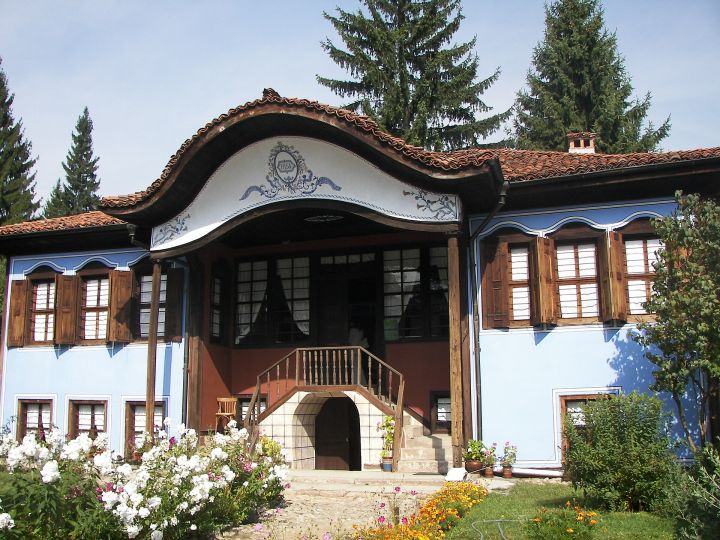
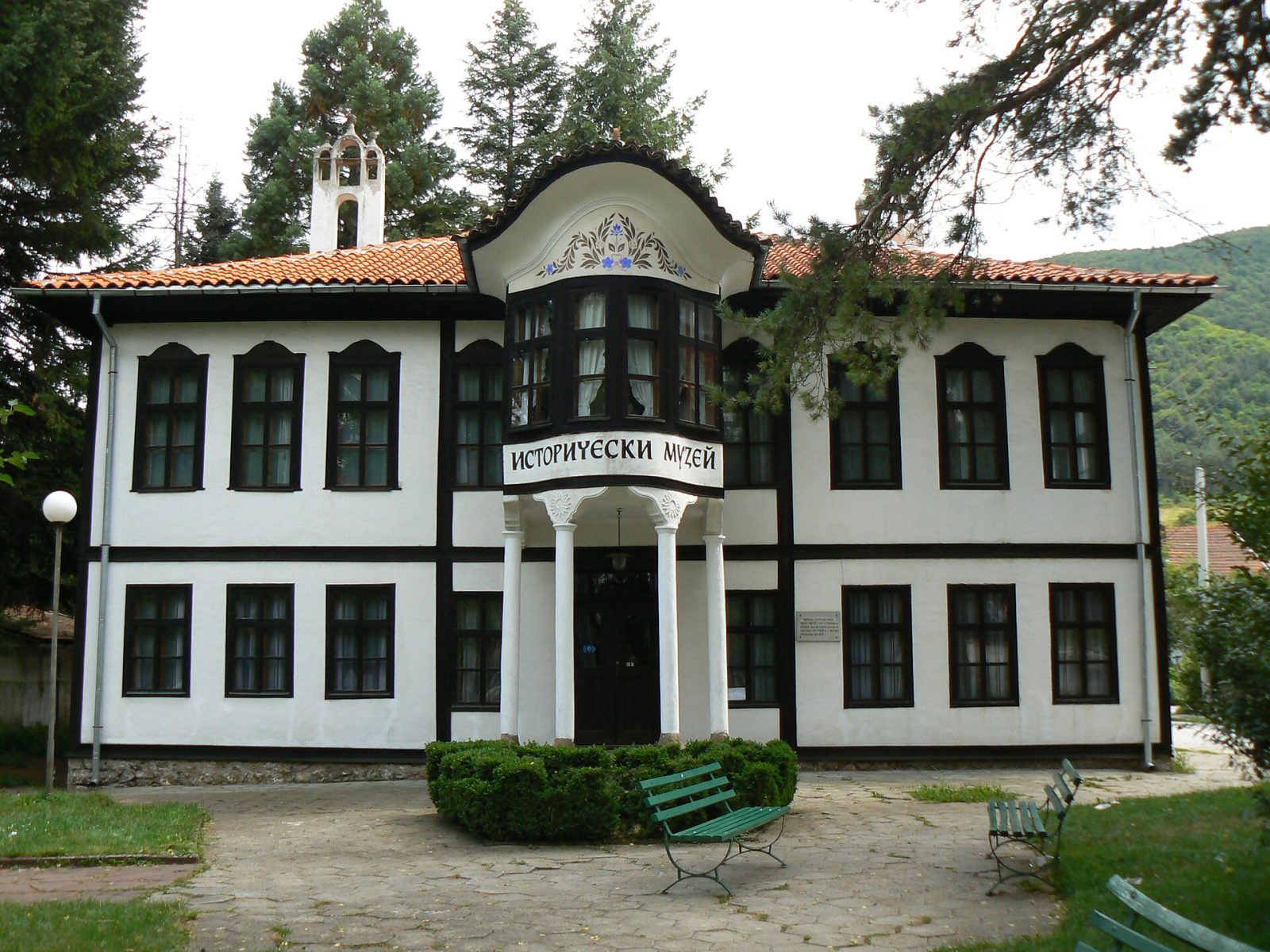
The museum opened on 7 December 1958, first in the old cell school in the yard of St George’s church. Since 30 December 1968 it has been in the restored former konak, built in 1853–1870 by the Etropole masters Deno and Tsvetko; after the clock tower, it is the oldest surviving public building in the town.1,6
Etropole grew from a Thracian settlement of the 7th–6th centuries BC into a medieval mining and craft centre. More than 1,200 original exhibits and 120 photographs and documents fill ten halls: archaeology, ethnography, three halls of crafts from the 16th to the mid-20th century, education, the Etropole literary school, the national liberation struggle, notable people of Etropole and benefactors. The Arnaudova house is a branch of the museum.1,6
The clock tower
Master Todor built the tower in 1710 as a watch and defence tower, as its loopholes on three sides show. It is 20 metres tall, of river stone and tufa. In 1821 it was converted into a clock tower: master Dido made the mechanism, and the bell was taken from the ruined St Atanas monastery. A stone clock face on the west side bears the year of construction. It is an architectural monument.2,5
The Bulgarian Tourist Union and the Bulgarian Wikipedia call it one of the oldest clock towers in Bulgaria. The Wikipedia article itself is marked as having no cited sources.2,5
The Holy Trinity Monastery
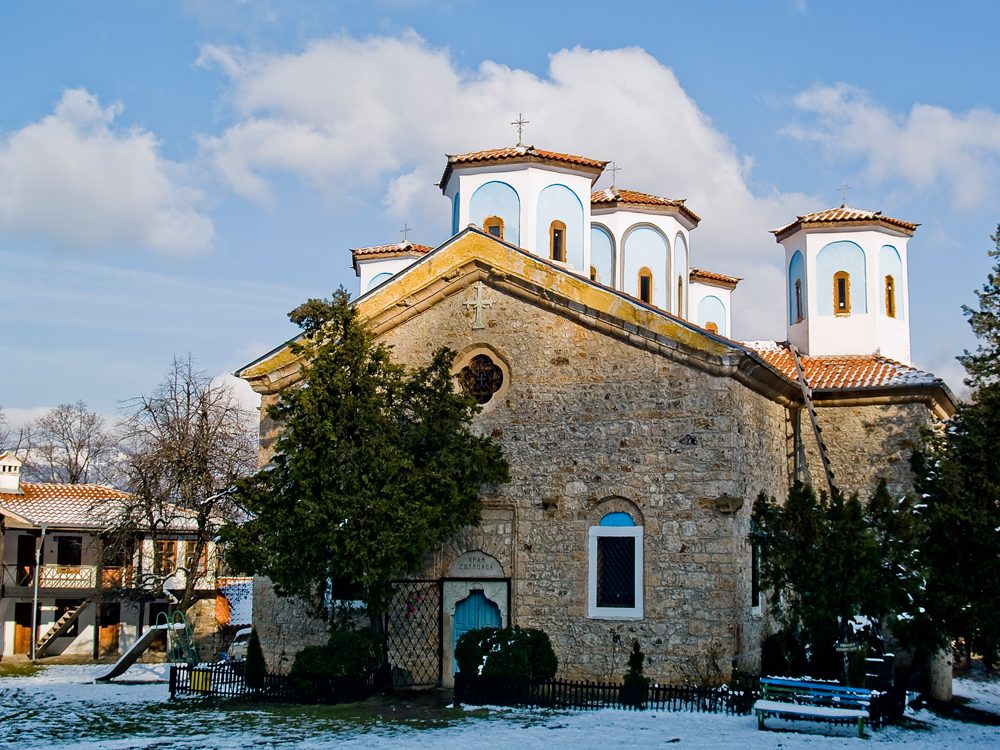
The monastery, also called Varovitets, lies among old trees by a river and waterfall at the foot of the Balkan Mountains. Under the abbots of the 1620s–1640s its scribes developed their own style, the Etropole calligraphic semi-uncial, and copied and decorated many liturgical books; about 76 volumes survive in the National Library of Bulgaria, the Museum of Church History and elsewhere. An icon-painting workshop of the 16th–17th centuries left more than 30 icons.3,4
- The patron icon of the Holy Trinity, signed by the painter Nedyalko of Lovech and dated 1598.
- The main church of 1858–1859: a large cruciform, three-aisled building with five hexagonal domes; its interior frescoes were painted in 1896–1907.
- The hiding place that Abbot Hrisant made for Vasil Levski in the monastery kitchen.
- A museum exhibition, a branch of the Etropole History Museum since 1977 and renewed in 1992, with a hall on the Etropole literary school and museum copies of its manuscripts.
Source: Bulgarian Tourist Union: Holy Trinity Monastery; Wikipedia: Etropole Monastery3,4
The Bulgarian Tourist Union dates the founding to the 12th century, possibly 1158; the English Wikipedia says the 12th or 13th century, and that 1158 comes from a stone inscription reportedly set in the church foundations. The union also calls the 1598 icon the first known signed medieval icon in Bulgaria, and both sources call the monastery the most important literary centre of northern Bulgaria in its time. These are the sources’ descriptions.3,4
Tickets and opening hours
| Ticket | Price listed by the Bulgarian Tourist Union |
|---|---|
| History Museum: adults | €3.00 |
| History Museum: pupils, students, pensioners | €2.00 |
| History Museum: guided talk / audio guide | €6.00 / €3.00 |
| History Museum: VR glasses, per person | €5.00 |
| Arnaudova house: adults / reduced | €2.00 / €1.00 |
| Combined ticket: museum, clock tower and Arnaudova house, by appointment | €4.00; reduced €3.00 |
| Family ticket for the permanent exhibition | €7.00 |
| Monastery: guided talks | Free |
Source: Bulgarian Tourist Union: History Museum, Etropole (100 National Tourist Sites, in Bulgarian); Bulgarian Tourist Union: Holy Trinity Monastery1,3
Children under 7 and visitors with disabilities go free. Phone: 0720 6 21 24 (museum), +359 887 982089 (monastery).1,3
The union’s clock tower page still lists older prices in leva; the euro table above comes from its museum page. Checked in November 2026.1,2
The No. 63 stamp
The three sites share No. 63 in “Know Bulgaria – 100 National Tourist Sites”, the movement the Bulgarian Tourist Union started in 1966. Walkers collect a stamp at each site in a booklet: 25 stamps earn a bronze badge, 50 a silver badge and all 100 a gold badge with a certificate.7
More stamps nearby
- No. 82a: the Botevgrad clock tower and museum.
- No. 82: the Botev ossuary at Skravena.
- No. 82b: the Elin Pelin House Museum, in Baylovo.
- No. 75: the Koprivshtitsa museum reserve.
Source: Bulgarian Tourist Union: 100 National Tourist Sites7
The village of Ribaritsa is 4 km west of the monastery; see our Ribaritsa guide and the Sofia Province page.4
Frequently Asked Questions
Which sites share stamp No. 63?
The Etropole History Museum, the town clock tower and the Holy Trinity (Varovitets) Monastery.
How far is the monastery from Etropole?
About 5 km north-east of the town; the nearest village is Ribaritsa, 4 km to the west.
When is the monastery open?
From 7:00 to 19:00 in April–October and from 8:00 to 17:00 in November–March, according to the Bulgarian Tourist Union.
What was the Etropole literary school?
A school of scribes and icon painters at the monastery in the 16th–17th centuries, with its own calligraphic style; about 76 of its books survive.
Which tourist-site number is Etropole?
No. 63 in the Bulgarian Tourist Union’s 100 National Tourist Sites.
Sources
- Bulgarian Tourist Union: History Museum, Etropole (100 National Tourist Sites, in Bulgarian)
- Bulgarian Tourist Union: The clock tower, Etropole (in Bulgarian)
- Bulgarian Tourist Union: Holy Trinity Monastery (in Bulgarian)
- Wikipedia: Etropole Monastery
- Wikipedia (Bulgarian): Clock tower (Etropole)
- Wikipedia (Bulgarian): History Museum (Etropole)
- Bulgarian Tourist Union: 100 National Tourist Sites (in Bulgarian)
Figures checked 12 November 2026. Information only, not investment, tax or legal advice.