National Tourist Site
About Botevgrad Clock Tower and History Museum
At a glance
| Where | Centre of Botevgrad, Sofia Province; the museum is at 1 Saransk Square |
|---|---|
| Stamp | Kept in the History Museum, for both the museum and the tower |
| Museum hours | Every day; summer 9:00–18:00, winter 8:30–17:30 |
| Phone | 0723 66 828; 0895 433737 (director) |
Source: Bulgarian Tourist Union: History Museum, Botevgrad (100 National Tourist Sites, in Bulgarian); Bulgarian Tourist Union: Clock tower, Botevgrad1,2
The clock tower
The tower was raised on the proposal of Midhat Pasha, when the village of Samundzhievo, today’s Botevgrad, was made a town and district centre. Its master builder was Vuno Markov of Vrachesh. It is one of the few architectural monuments in the town to survive from the Bulgarian National Revival.2,3
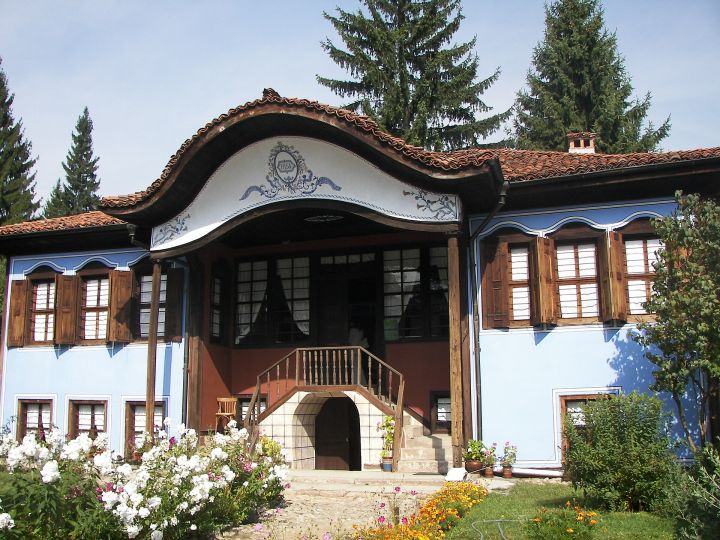
It has three proportional sections, 30 metres in all, on a square base with 5-metre sides. Stone came from a quarry near Bozhenitsa and timber from the Vrachesh area. The tower has blue frescoes and details like those of Plovdiv and Koprivshtitsa houses, while its pointed top recalls Islamic architecture; a weathercock was added in 1870. A wooden spiral stair leads up to the clock.2,3
The clock mechanism was made by the Orhanie ironmonger Gencho Nakov, known as Kantardzhiyata, and the bell by Lazar Dimitrov of Bansko. The original mechanism is kept in the museum; the one working today is an exact copy made by masters of the Etar complex, and its bell can be heard within 3 km. A figure in a turban, or a fez, once popped out of a little window at every hour; after the Liberation in 1878 the townspeople took it down and burned it.2,3
The Bulgarian Tourist Union says the tower was built in 1862–1864 and that its architect is unknown; the English Wikipedia says it was built in 1866 by Vuno Markov. Both the union and Wikipedia describe it as the tallest clock tower of its kind in Bulgaria.2,3
The History Museum
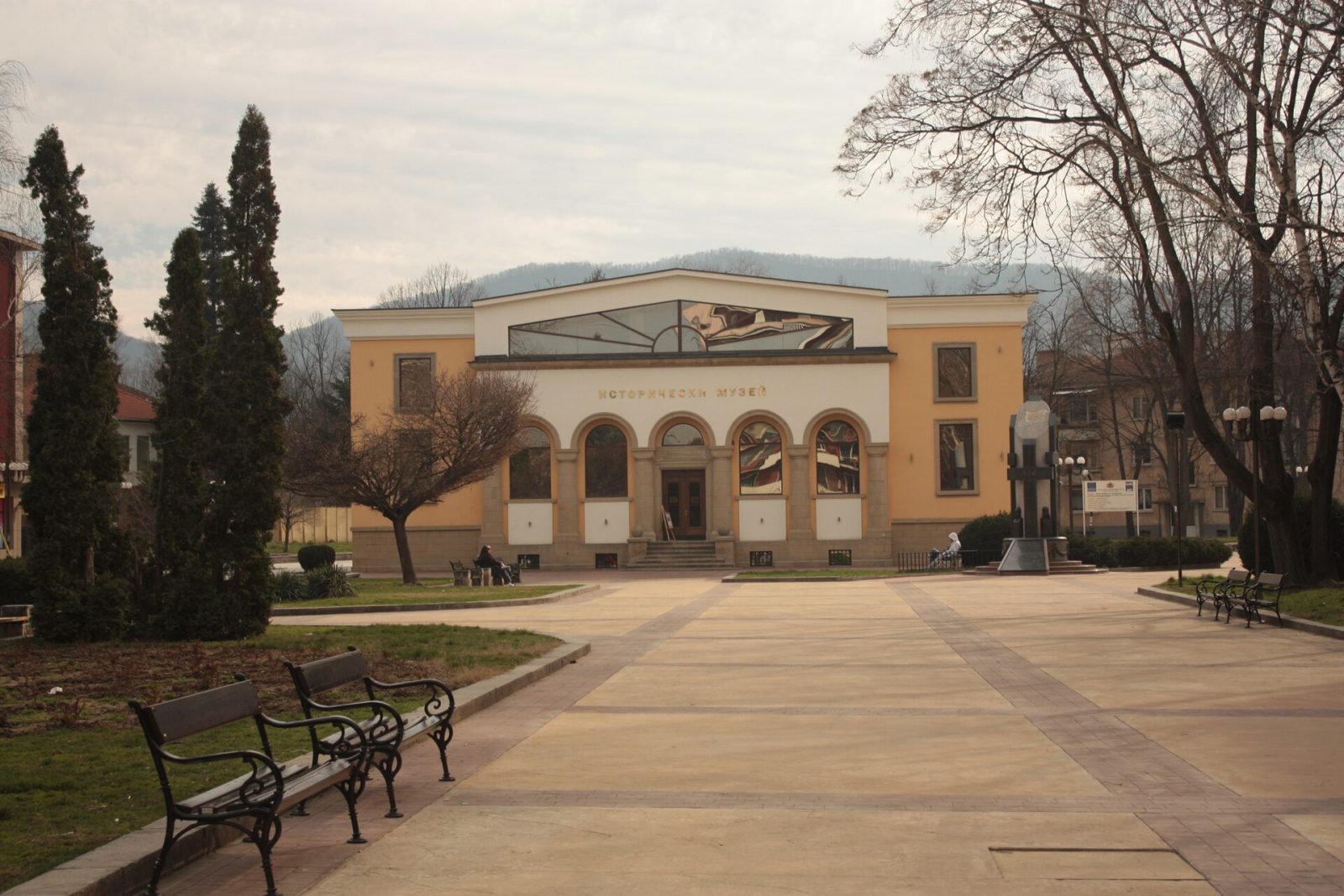
Museum work in Botevgrad began in 1937, when a collection was organised at the local high school. Enriched and extended, it was declared a state museum in 1952. Since 3 May 2011 the museum has been in the renovated building of the old Law Court.1,4
- More than 15,000 items: original documents, photographs, personal belongings, weapons, old printed books, coins and works of art.
- Three departments: archaeology, the history of the Bulgarian lands in the 15th–20th centuries, and the art and history of the 20th century.
- The original clock mechanism of the tower.
- Highlights in the English Wikipedia’s photographs: the belongings of the poet Stamen Panchev, a showcase of the Chavdar bus factory, a 14th-century silver earring and the safe of General Iosif Gurko.
Source: Bulgarian Tourist Union: History Museum, Botevgrad (100 National Tourist Sites, in Bulgarian); Bulgarian Tourist Union: Clock tower, Botevgrad; Wikipedia: Botevgrad History Museum1,2,4
The cell school in the village of Bozhenitsa is a branch of the museum.4
Tickets and opening hours
| Ticket | Price listed by the Bulgarian Tourist Union |
|---|---|
| History Museum: adults | 3 leva |
| History Museum: pupils and pensioners | 2 leva |
| Clock tower: adults | 1 lev |
| Clock tower: pupils | 0.50 leva |
Source: Bulgarian Tourist Union: History Museum, Botevgrad (100 National Tourist Sites, in Bulgarian); Bulgarian Tourist Union: Clock tower, Botevgrad1,2
The union’s two pages give different museum hours. The museum page lists 9:00–18:00 in summer and 8:30–17:30 in winter, with no day off. The clock tower page lists 9:00–18:00 every day, but 10:00–17:00 on Saturday and Sunday from 1 November to 31 March. The union lists prices in leva, the currency before the euro, so they may have changed. Checked in November 2026.1,2
The No. 82a stamp
The tower and the museum share No. 82a in “Know Bulgaria – 100 National Tourist Sites”, the movement the Bulgarian Tourist Union started in 1966. Walkers collect a stamp at each site in a booklet: 25 stamps earn a bronze badge, 50 a silver badge and all 100 a gold badge with a certificate.5
More stamps nearby
- No. 82: the Botev ossuary at Skravena.
- No. 63: the Etropole museum and monastery.
- No. 78: the Seven Altars Monastery, near Osenovlag.
- No. 82b: the Elin Pelin House Museum, in Baylovo.
Source: Bulgarian Tourist Union: 100 National Tourist Sites5
See also the Sofia Province page.
Frequently Asked Questions
When was the clock tower built?
In 1862–1864 according to the Bulgarian Tourist Union, and in 1866 according to the English Wikipedia.
How tall is it?
30 metres, in three sections on a square base with 5-metre sides.
Where is the stamp for the tower?
In the Botevgrad History Museum on Saransk Square, which keeps the stamp for both sites.
Does the clock still work?
Yes. An exact copy made by masters of the Etar complex strikes the hours; the original mechanism is in the museum.
Which tourist-site number is Botevgrad?
No. 82a in the Bulgarian Tourist Union’s 100 National Tourist Sites.
Sources
- Bulgarian Tourist Union: History Museum, Botevgrad (100 National Tourist Sites, in Bulgarian)
- Bulgarian Tourist Union: Clock tower, Botevgrad (in Bulgarian)
- Wikipedia: Botevgrad Clock Tower
- Wikipedia: Botevgrad History Museum
- Bulgarian Tourist Union: 100 National Tourist Sites (in Bulgarian)
Figures checked 12 November 2026. Information only, not investment, tax or legal advice.