National Tourist Site
About Koprivshtitsa Architectural and Historical Reserve
At a glance
| Museums | Closed on | Hours |
|---|---|---|
| Lyuben Karavelov House, Georgi Benkovski House, Museum of Education | Tuesday | 1 November–1 April 9:00–17:00; 1 April–1 November 9:30–17:30 |
| Lyutova House, Dimcho Debelyanov House, Todor Kableshkov House, Palaveevi Houses gallery, the fulling mill | Monday | Same hours |
Source: Bulgarian Tourist Union: Koprivshtitsa (100 National Tourist Sites, in Bulgarian)1
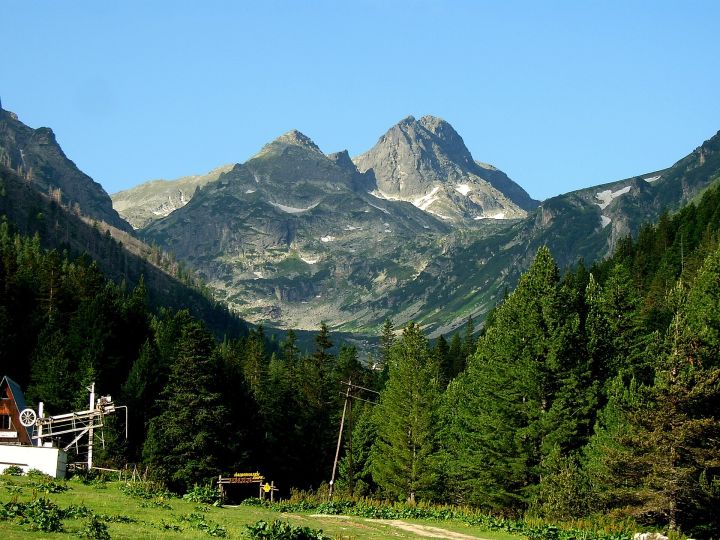
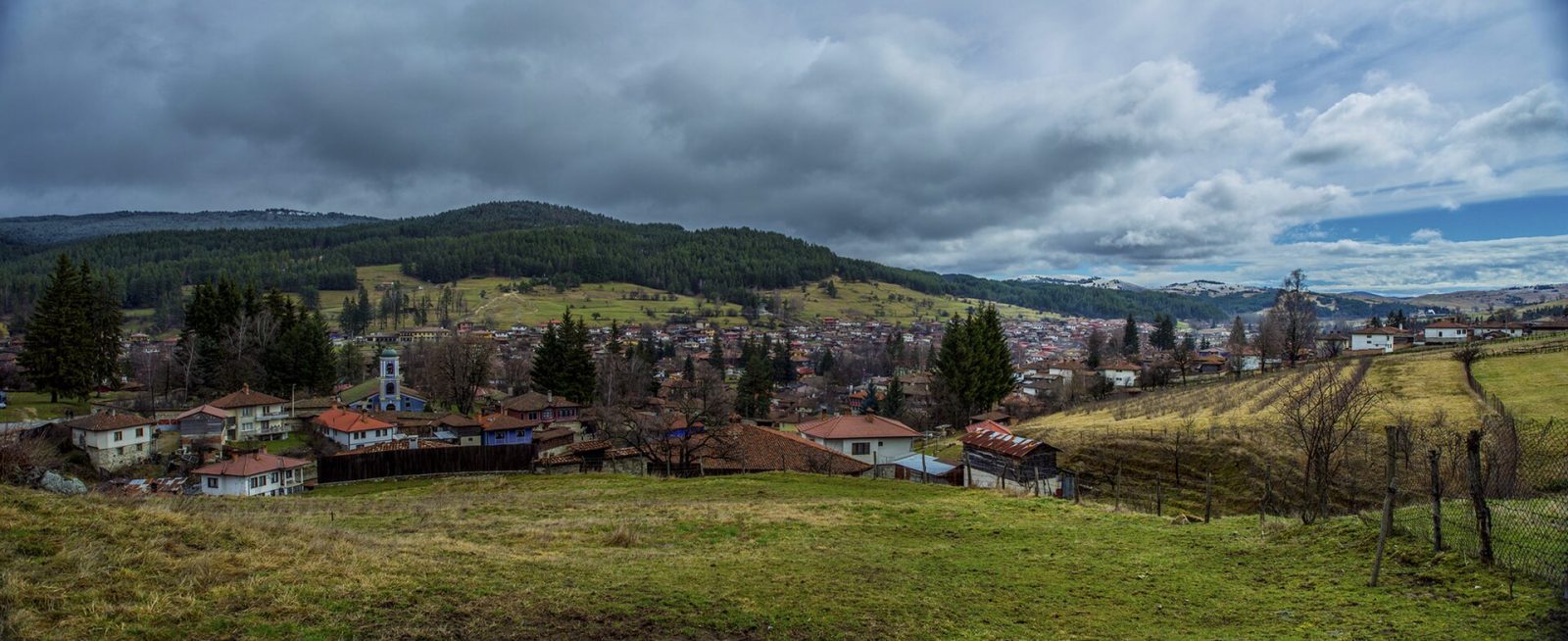
Koprivshtitsa lies on the Topolnitsa river in the Sredna Gora mountains, about 110 km east of Sofia, 24 km from Pirdop and 22 km from Strelcha.2
History of the town
Cell schools existed here from the 18th century. In 1810 Hadzhi Gero Mushek, father of Nayden Gerov and the model for Hadzhi Gencho in Lyuben Karavelov’s “Bulgarians of Old Times”, opened the best known of them. In 1846 Nayden Gerov opened one of the first Bulgarian class schools, and a girls’ school followed in 1850.1
Koprivshtitsa was one of the centres of the April Uprising of 1876, and the English Wikipedia notes that the first shot of the uprising was fired here. The town keeps 383 architectural monuments, most of them restored to their original look.2
The English Wikipedia says the National Festival of Bulgarian Folklore has been held in the hills above the town roughly every five years since 1965. This guide does not give the date of the next festival, as we have not found it confirmed by an official source.2
The house museums
| House | What to see |
|---|---|
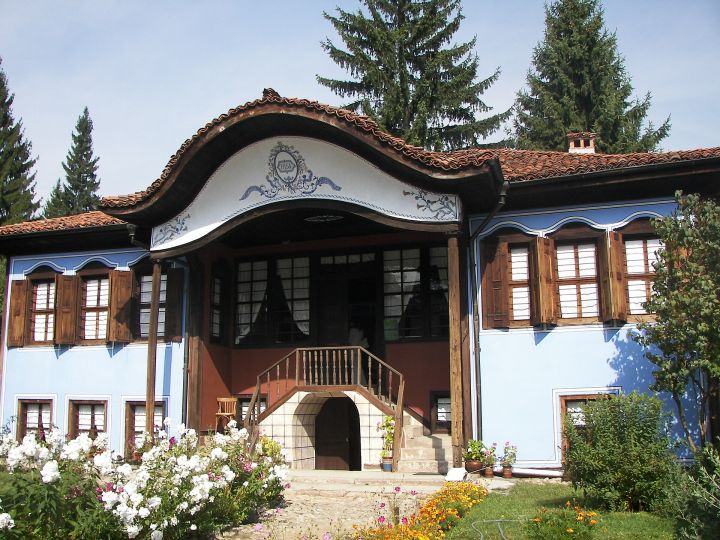
| Lyutova House (1854) | Built by Plovdiv masters for the cattle trader Stefan Topalov and later bought by the merchant Petko Lyutov; painted medallions of the cities he visited, as far as Cairo and Alexandria, and an exhibition of Koprivshtitsa felt carpets |
| Karavelov House (1810–1835) | The family home of Lyuben and Petko Karavelov; the printing press on which Karavelov’s newspapers, Botev’s “Zname” and, in Tarnovo, the first Bulgarian constitution were printed |
| Todor Kableshkov House (1845) | The author of the “Bloody Letter”; captured after the uprising, he ended his life in the Gabrovo prison at 25 |
| Oslekov House (1853–1856) | Built for Nencho Oslekov, a rebel hanged in Plovdiv on 27 June 1876; an ethnographic museum |
| Dimcho Debelyanov House (1830) | The lyric poet who died at the front in 1916 |
| Georgi Benkovski House (1831) | The leader of the uprising in the Fourth Revolutionary District |
Source: Bulgarian Tourist Union: Koprivshtitsa (100 National Tourist Sites, in Bulgarian); Wikipedia: Koprivshtitsa1,2
Also worth seeing are the Church of the Dormition, built in 1817 with money from 460 donors on the site of an older church burned by the kardzhali bandits, the Church of St Nicholas of 1839 and the April 20 ossuary of 1926, which holds the remains of those who died in the uprising.1,2
The Bulgarian Tourist Union describes the Oslekov House as a private ethnographic museum. The combined ticket covers six museums; check at the ticket desk which houses it includes on the day.1
Tickets and opening hours
| Ticket | Price listed by the Bulgarian Tourist Union |
|---|---|
| Combined ticket for 6 museums: adults | 15 leva |
| Combined ticket: pupils and students | 6 leva |
| Family ticket, with children under 18 | 30 leva |
| One museum: adults / pupils and students | 5 leva / 2 leva |
| Talk for all museums / for one museum | 30 leva / 7 leva |
| Palaveevi Houses, seasonal: adults / pupils and students | 2 leva / 1 lev |
Source: Bulgarian Tourist Union: Koprivshtitsa (100 National Tourist Sites, in Bulgarian)1
Entry is free for visitors with reduced working capacity and children from care homes, and for everyone on the last Monday of each month. By appointment the museums also offer demonstrations of old crafts, felt-making and a film on Todor Kableshkov and the outbreak of the uprising.1
The union lists prices in leva, the currency before the euro, so they may have changed. Because half the houses close on Monday and the other half on Tuesday, a weekday other than Monday or Tuesday gives access to all of them. Checked in November 2026.1
The No. 75 stamp
Koprivshtitsa is site No. 75 in “Know Bulgaria – 100 National Tourist Sites”, the movement the Bulgarian Tourist Union started in 1966. Walkers collect a stamp at each site in a booklet: 25 stamps earn a bronze badge, 50 a silver badge and all 100 a gold badge with a certificate.3
More stamps nearby
- No. 36a: the Strelcha History Museum.
- No. 36: Oborishte and the Rayna Knyaginya House, in Panagyurishte.
- No. 63: the Etropole museum and monastery.
Source: Bulgarian Tourist Union: 100 National Tourist Sites3
For where to stay and eat, see our Koprivshtitsa town guide and the Sofia Province page.
Frequently Asked Questions
How many museums does the combined ticket cover?
Six. The Bulgarian Tourist Union lists it at 15 leva for adults and 6 leva for pupils and students.
Which days are the museums closed?
The Karavelov and Benkovski houses and the Museum of Education close on Tuesday; the Lyutova, Debelyanov and Kableshkov houses, the Palaveevi Houses gallery and the fulling mill close on Monday.
Is there a free day?
Yes. Entry is free on the last Monday of each month, according to the union.
Where is Koprivshtitsa?
In the Sredna Gora mountains of Sofia Province, on the Topolnitsa river, about 110 km east of Sofia.
Which tourist-site number is Koprivshtitsa?
No. 75 in the Bulgarian Tourist Union’s 100 National Tourist Sites.
Sources
- Bulgarian Tourist Union: Koprivshtitsa (100 National Tourist Sites, in Bulgarian)
- Wikipedia: Koprivshtitsa
- Bulgarian Tourist Union: 100 National Tourist Sites (in Bulgarian)
Figures checked 12 November 2026. Information only, not investment, tax or legal advice.