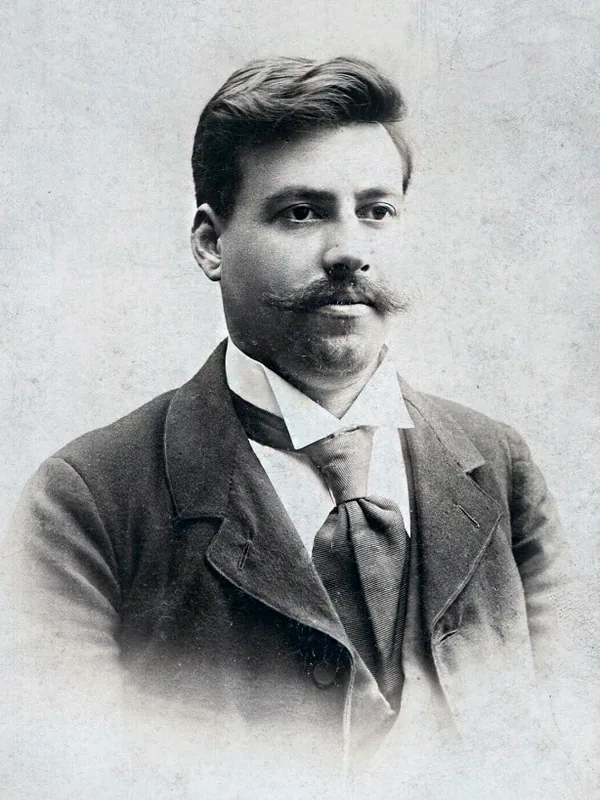
Gotse Delchev
At a glance
| In Bulgarian | Георги Николов Делчев |
|---|---|
| Born | 4 February 1872, Kukush, Ottoman Empire (now Kilkis, Greece) |
| Died | 4 May 1903, Banitsa, Ottoman Empire |
| Known for | Revolutionary activity and leadership in IMRO |
| Education | Military School of His Princely Highness, Sofia |
| Work | Teacher and revolutionary |
Source: Wikipedia: Gotse Delchev1
Life and work
Delchev was born into a Bulgarian family in Kukush, then part of the Ottoman Empire. He studied at the Bulgarian Men’s High School of Thessaloniki and entered the military school in Sofia. In 1894, shortly before completing his studies, he was expelled for holding socialist and revolutionary ideas. He returned to Ottoman Macedonia and worked as a teacher.1
He joined the revolutionary movement in 1894 and helped establish secret committees. Delchev sought to prepare the population for an uprising against Ottoman rule. From 1896, he represented IMRO in Sofia, where he worked to secure support and funds while seeking to keep the organisation independent of Bulgarian government control.1
Political aims
Delchev supported autonomy for Macedonia and the Adrianople region within the Ottoman Empire. He argued for cooperation among the different ethnic groups in those territories and opposed restricting IMRO membership to Bulgarians. He also opposed incorporating Macedonia into Bulgaria, although some contemporaries said he supported that as another possible outcome.1
He considered the 1903 uprising premature because he believed the population and organisation were not adequately prepared. He nevertheless took part in preparations and supported intensified guerrilla and terrorist tactics. His political aims and identity have since been interpreted differently in Bulgaria and North Macedonia.1
Death and legacy
Delchev was killed by Ottoman troops in a skirmish at Banitsa on 4 May 1903, shortly before the Ilinden Uprising. His death deprived the movement of a leading organiser and ideologist. His remains were moved several times before being transferred from Sofia to Skopje in 1946, where they were placed in the Church of the Ascension of Jesus.1
Sources
Facts checked 13 October 2026. Prepared by InvestBulgaria for general information.
