Religion in Bulgaria
The 2021 census
In the 2021 census, 9.5% of people did not answer the question on religion; the table shows shares of the whole population.1
| Religion | People | Share |
|---|---|---|
| Bulgarian Orthodox | 4,091,780 | 62.7% |
| Muslim | 638,708 | 9.8% |
| Protestant | 69,852 | 1.1% |
| Roman Catholic | 38,709 | 0.6% |
| Jewish | 1,736 | 0.03% |
| No religious affiliation | 1,036,943 | 15.9% |
| Not answered | 616,681 | 9.5% |
| Total population | 6,519,789 | 100% |
Source: Wikipedia: Religion in Bulgaria1
The Bulgarian Orthodox Church
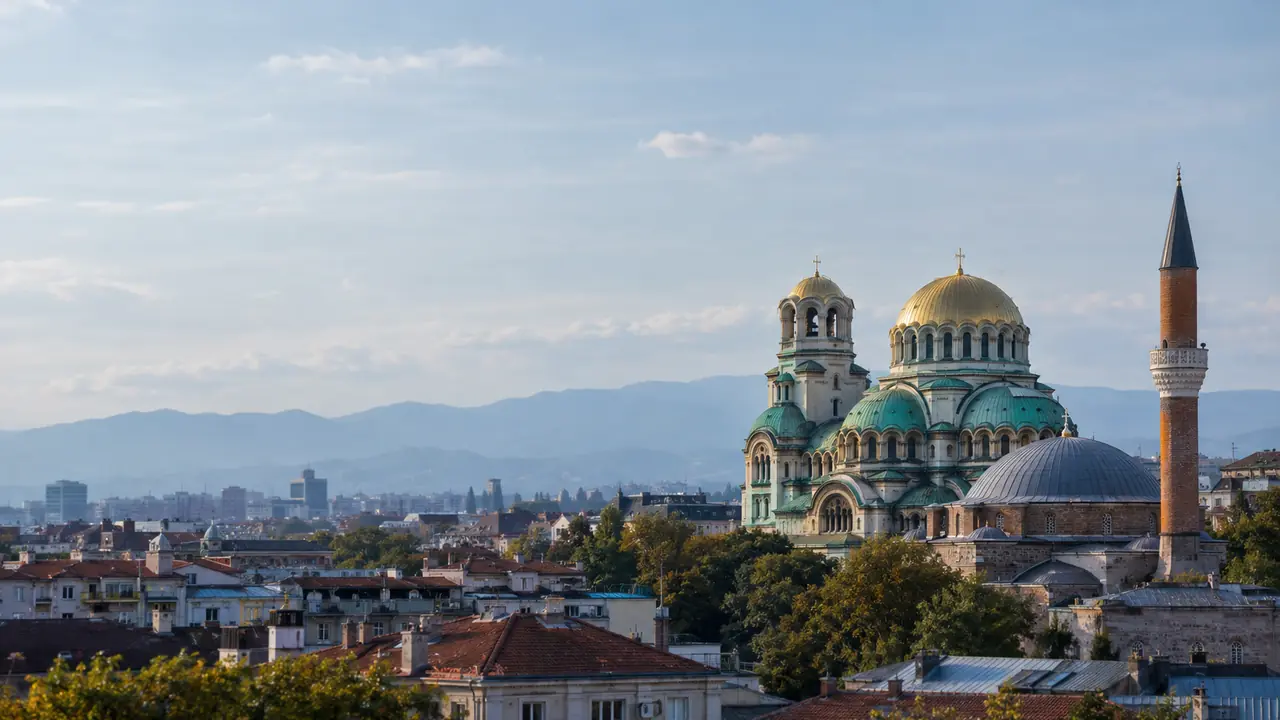
Bulgaria adopted Christianity in 864 under Boris I. In 919 the Bulgarian church became an autocephalous patriarchate, independent of Constantinople. It lost that status under Ottoman rule; in 1870 the sultan set up a separate Bulgarian Exarchate, and in 1950 the church became a patriarchate again. Its cathedral church, the Alexander Nevsky Cathedral in Sofia, is among the largest Orthodox churches in the world.1,2
Orthodox Easter, from Good Friday to Easter Monday, and Christmas are public holidays; see also Easter traditions.3
Islam and other faiths
Islam spread after the Ottoman conquest, completed in 1396; Sunni Islam was the official religion of the Ottoman Empire. Bulgarian Muslims today include Bulgarian Turks, Muslim Bulgarians (Pomaks) and some Roma; in the 2021 census 88% of Bulgarian Turks gave their religion as Islam. Smaller communities include Protestants, Roman Catholics and a Jewish community of under 2,000 people.1
Religion and the state
- Article 13 of the Constitution names Eastern Orthodox Christianity as the traditional religion of Bulgaria, guarantees the free practice of any religion, separates religion from the state and forbids its use for political ends.
- Article 37 makes freedom of religious and non-religious belief inviolable and asks the state to keep the peace between faiths.
Source: Wikipedia: Religion in Bulgaria1
Frequently Asked Questions
What is the main religion in Bulgaria?
Eastern Orthodox Christianity is Bulgaria’s main religion. In the 2021 census, 62.7% of the population identified as Bulgarian Orthodox, 9.8% as Muslim and 15.9% reported no religious affiliation.
What does Bulgaria’s Constitution say about religion?
Bulgaria’s Constitution names Eastern Orthodox Christianity as the country’s traditional religion, guarantees the free practice of any religion and separates religion from the state. Article 37 makes freedom of religious and non-religious belief inviolable and asks the state to keep peace between faiths.
When did the Bulgarian Orthodox Church become an autocephalous patriarchate?
The Bulgarian Orthodox Church became an autocephalous patriarchate in 919, independent of Constantinople. Bulgaria adopted Christianity in 864 under Boris I; the church lost patriarchate status under Ottoman rule, a separate Bulgarian Exarchate was established in 1870, and the church became a patriarchate again in 1950.
Sources
- Wikipedia: Religion in Bulgaria
- Wikipedia: History of Bulgaria
- Wikipedia: Public holidays in Bulgaria
Facts checked 13 October 2026. Prepared by InvestBulgaria for general information.
