Bulgarian Moussaka
At a glance
| Type of dish | Layered baked main course |
|---|---|
| Main ingredients | Potatoes and minced pork or beef |
| Topping | Usually milk or yoghurt mixed with raw eggs |
| Serving temperature | Hot or cold |
Source: Moussaka1
Bulgarian style
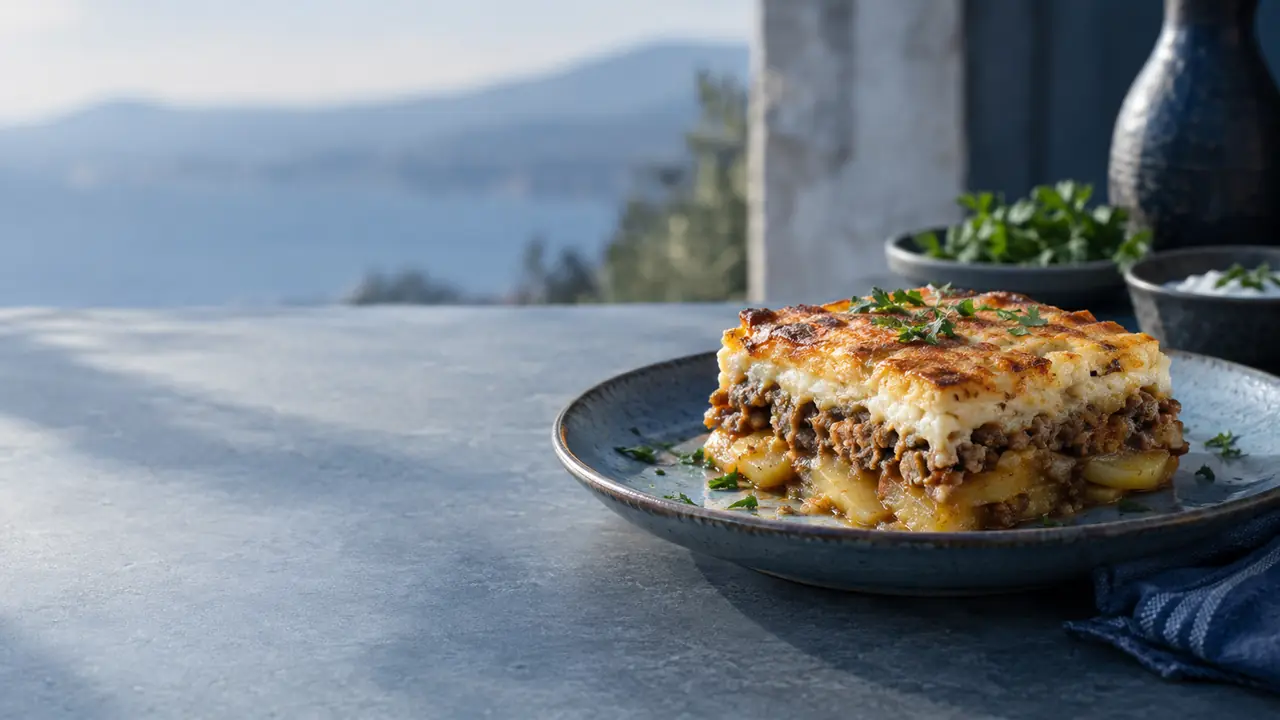
Moussaka has regional forms across the Balkans and the Middle East. In the Southeast European version found in Bulgaria, Albania, the former Yugoslavia and Romania, potatoes take the place of aubergine. The dish is built in layers and baked. This gives Bulgarian moussaka a potato-based profile within the wider family of dishes called moussaka.1
Layers and topping
One version uses a bottom layer of minced pork and beef, a middle layer of sliced potatoes and a top layer of custard. The components are cooked separately, assembled in a pan and baked until the top is browned. The topping is usually milk or yoghurt mixed with raw eggs; a little flour may also be added. This is one three-layer version, rather than a single fixed formula.1
Serving and place
Moussaka is a main course that can be served hot or cold. The potato-based version is found in Bulgaria and neighbouring Southeast European cuisines. The details differ between countries, so the shared name does not mean every local moussaka is prepared in the same way.1
A wider dish family
Across the region, potatoes are used instead of aubergine, and pork or beef mince is common. Other moussaka traditions use aubergine as the main vegetable. For example, the Greek version is layered with meat and aubergine and topped with béchamel, while Turkish musakka is not layered and pairs fried aubergine with a tomato-based meat sauce. These differences show how much the dish varies by place.1
Sources
Facts checked 13 October 2026. Prepared by InvestBulgaria for general information.
