Christmas Eve and Christmas in Bulgaria
At a glance
| In Bulgarian | Бъдни вечер |
|---|---|
| Date | 24 December |
| Also called | Badni Vecher; Sуха Коледа, Крачун, Малка Коледа and other regional names |
| Where | Bulgaria |
| Public holiday | Yes, described as a national holiday |
Source: Бъдни вечер; Christmas Eve — December 24; Bulgarian Christmas Food: Eve-to-Day Traditions and Where to Eat in 20261,3,4
The Eve meal
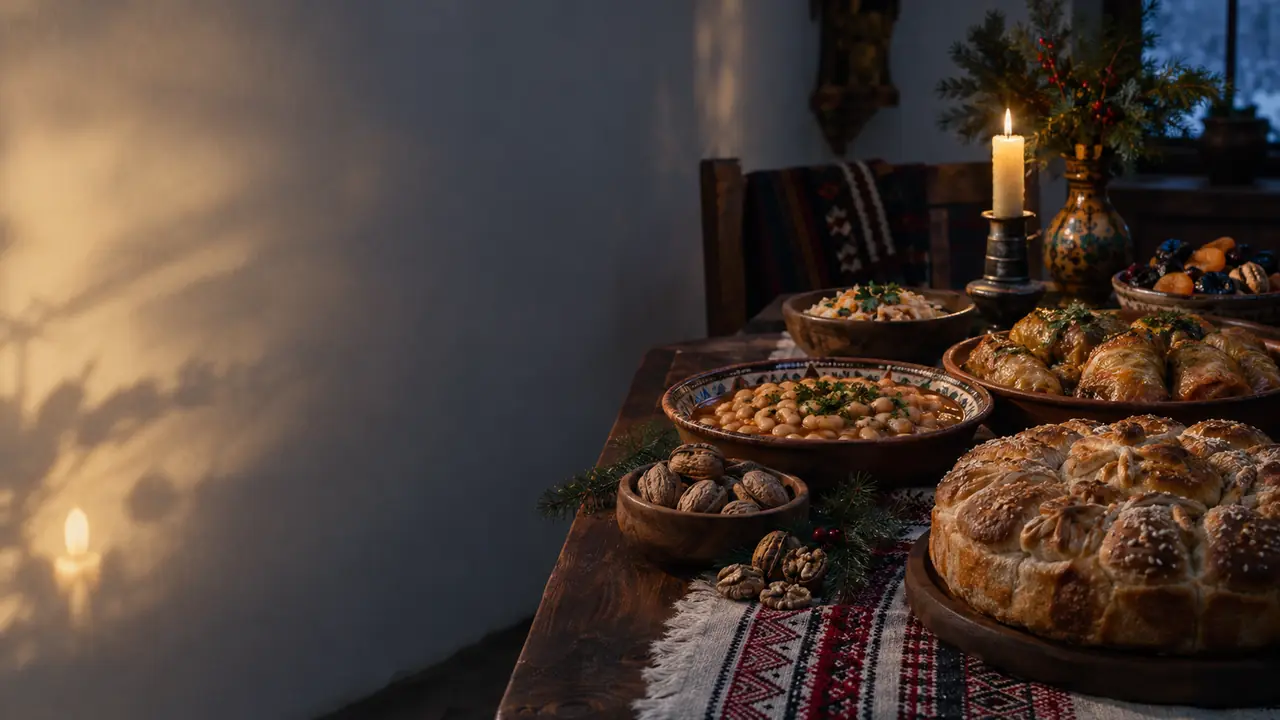
Badni Vecher is the evening before Christmas, on 24 December. It is the last day of the Orthodox Christmas fast, so the traditional meal is meatless. Families gather at the table, where an odd number of dishes is customary. The meal marks the close of the fast and the start of the Christmas celebrations.1,3,4
- Beans, boiled wheat and stuffed peppers
- Sarmi, dried fruit compote and nuts
- Honey, onions, garlic and wine
- A small loaf, sometimes with a coin inside
- Pumpkin pastry in some regions
Source: Бъдни вечер; Christmas Eve — December 24; Bulgarian Christmas Food: Eve-to-Day Traditions and Where to Eat in 20261,3,4
Customs and meaning
Some families put straw under the table to recall the manger. An elder may burn incense around the home and table, pray, and tend the badnik, a log kept burning through the night. The log’s warmth and light symbolise Christ’s birth. Folk customs also connect the evening with fertility, health and the lengthening of daylight.1,3,4
- Set aside portions for the household and the Virgin Mary
- Share the loaf; a hidden coin is said to bring luck
- Leave the table set overnight in some traditions
- Read signs in the log, walnuts or weather
Source: Бъдни вечер; Bulgarian Christmas Food: Eve-to-Day Traditions and Where to Eat in 20261,4
Christmas and carollers
On 25 December, meat and dairy return to the table in households that have observed the fast. After midnight, groups of carollers called koledari visit homes with songs and wishes for health, fertility and a good harvest. Related Christmas carolling customs are found across Slavic communities; in Bulgaria, visiting groups may receive ritual bread and other small gifts.1,2,4
- Christmas Day meals may include meat-filled sarmi
- Koledari sing from home to home
- Hosts may give bread, walnuts, dried fruit, wine or coins
- Folklore events and museum programmes offer visitors a chance to see performances
Source: Koliada; Bulgarian Christmas Food: Eve-to-Day Traditions and Where to Eat in 20262,4
Sources
- Бъдни вечер
- Koliada
- Christmas Eve — December 24
- Bulgarian Christmas Food: Eve-to-Day Traditions and Where to Eat in 2026
Facts checked 13 October 2026. Prepared by InvestBulgaria for general information.
