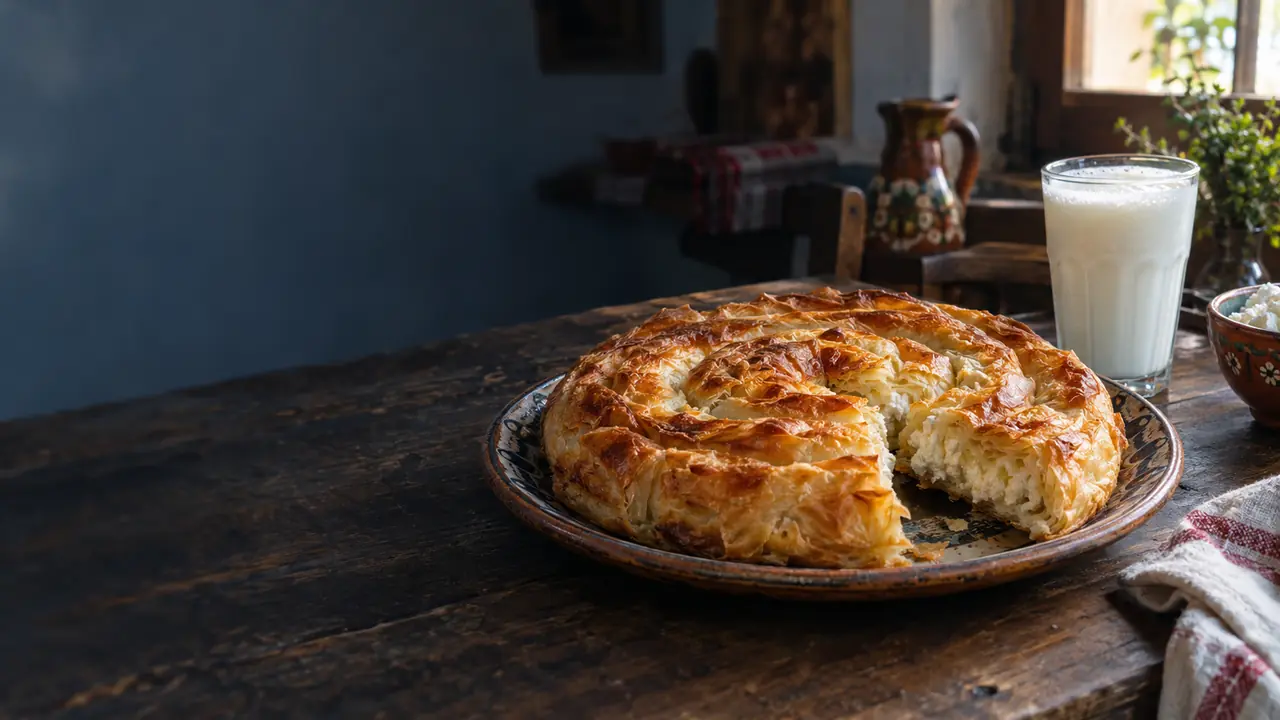
Banitsa
At a glance
| Type of dish | Pie |
|---|---|
| Main ingredients | Filo pastry, eggs, yoghurt and white brined cheese |
| Served | Hot or cold |
| Bulgarian name | баница |
Source: Banitsa1
What It Is
Banitsa is a traditional Bulgarian pie, also made in Budjak, North Macedonia and south-eastern Serbia. It is built from layers of filo pastry, with a filling of whisked eggs, plain yoghurt and pieces of white brined cheese, then baked. It may be served hot or cold. In south-eastern Serbia, it may also be called gibanica; Ukrainian Bulgarians in Budjak call it milina.1
How It Is Made
Banitsa pastry sheets are made from dough of flour, water and salt. They may be homemade or bought ready-made. The sheets are layered in a greased baking dish with small amounts of filling and sunflower oil or melted butter between them. Another approach is to roll the filling inside each sheet and arrange the rolls in a spiral. The assembled pie is baked.1
When It Is Eaten
Banitsa is served for breakfast with plain yoghurt, ayran or boza. In Bulgaria, it is traditionally prepared and served at Christmas and New Year’s Eve. On these occasions, small dogwood branches, coins or foil-wrapped notes bearing wishes may be placed inside before baking. The finished pie is cut into portions, and the charms are associated with hopes for the coming year.1
Other Fillings
Fillings are not limited to cheese. Spinach banitsa is called spanachnik, while sweet versions include milk or pumpkin; the pumpkin pastry is known as tikvenik. Other vegetable fillings include leeks, onions, cabbage and leafy greens, with vegetable variants collectively called zelnik. Some regional versions use rice, minced meat, onions or mushrooms. Apple is another sweet filling.1
Sources
Facts checked 13 October 2026. Prepared by InvestBulgaria for general information.
