Tsvetnitsa and Lazarovden
At a glance
| Date | Tsvetnitsa is the Sunday before Easter; Lazarovden is the preceding Saturday. |
|---|---|
| Also called | Tsvetnitsa: Vrubnitsa, Vaya, Kuklinden and Palm Sunday. Lazarovden: Lazaritsa, Lazar and Lazar’s Saturday. |
| Bulgarian names | Цветница; Лазаровден |
| Lazarovden name day | Lazar, Lazarka, Lazarin, Lazarina, Lazo, Laska, Elizar, Lachezara and Lachezar. |
The church feast
Tsvetnitsa, also called the Entry of the Lord, remembers Jesus Christ’s entry into Jerusalem before Passion Week. It falls on the Sunday a week before Easter, so its date changes. In 2026, it falls on 5 April. Christians mark the day in church; in Western churches it is also called Palm Sunday.1
Willow and village customs
At church, willow branches are blessed and given to worshippers to take home for health. People decorate gates with them and make wreaths. Folk observances have three strands: ritual uses of willow, customs connected with the dead and ancestors, and springtime customs and games for girls. Fish dishes are also permitted on this Sunday.1
Lazarovden and songs
Lazarovden, the Saturday before Tsvetnitsa, honours Lazarus of Bethany, whom Jesus raised from the dead. Its main folk custom is lazaruvane, performed by unmarried girls known as lazarki. The rite is an initiation: girls who have taken part become young women and may dress and adorn themselves in particular ways as they prepare for marriage.2
Preparation begins around the middle of Lent, when the girls learn their special songs from older women. On the feast, groups visit village homes, sing ritual songs and offer blessings for health, happiness and abundance. Hosts give them eggs. The songs vary according to the household members, with verses for people such as a child, a young man, a bride, a shepherd or a priest.2
Kumichene on Sunday
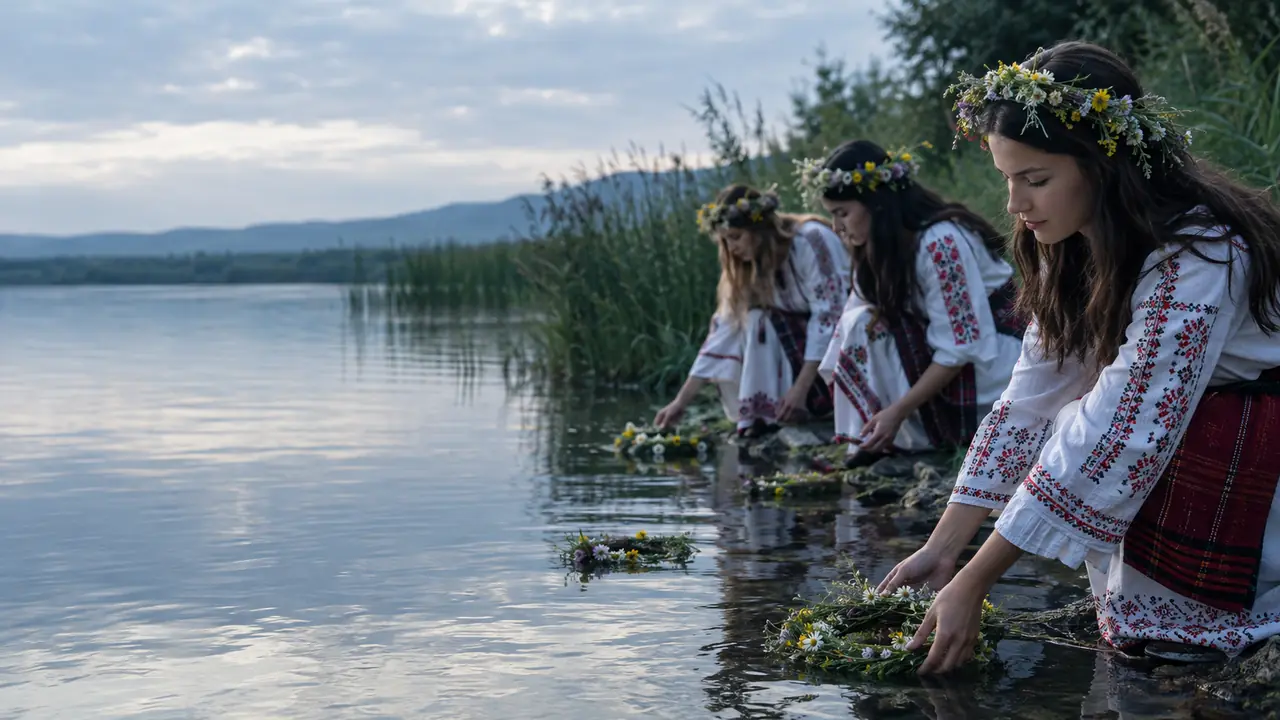
The lazarki continue their observance on Tsvetnitsa with kumichene. They go to a nearby river and set willow wreaths, or pieces of special ritual bread, afloat together. The girl whose wreath or bread reaches the front first is named kumitsa. The others carry her back to the village, and tradition says they do not speak to her until the third day after Easter, when they visit her and she offers them a meal and forgiveness.1,2
Sources
Facts checked 13 October 2026. Prepared by InvestBulgaria for general information.
