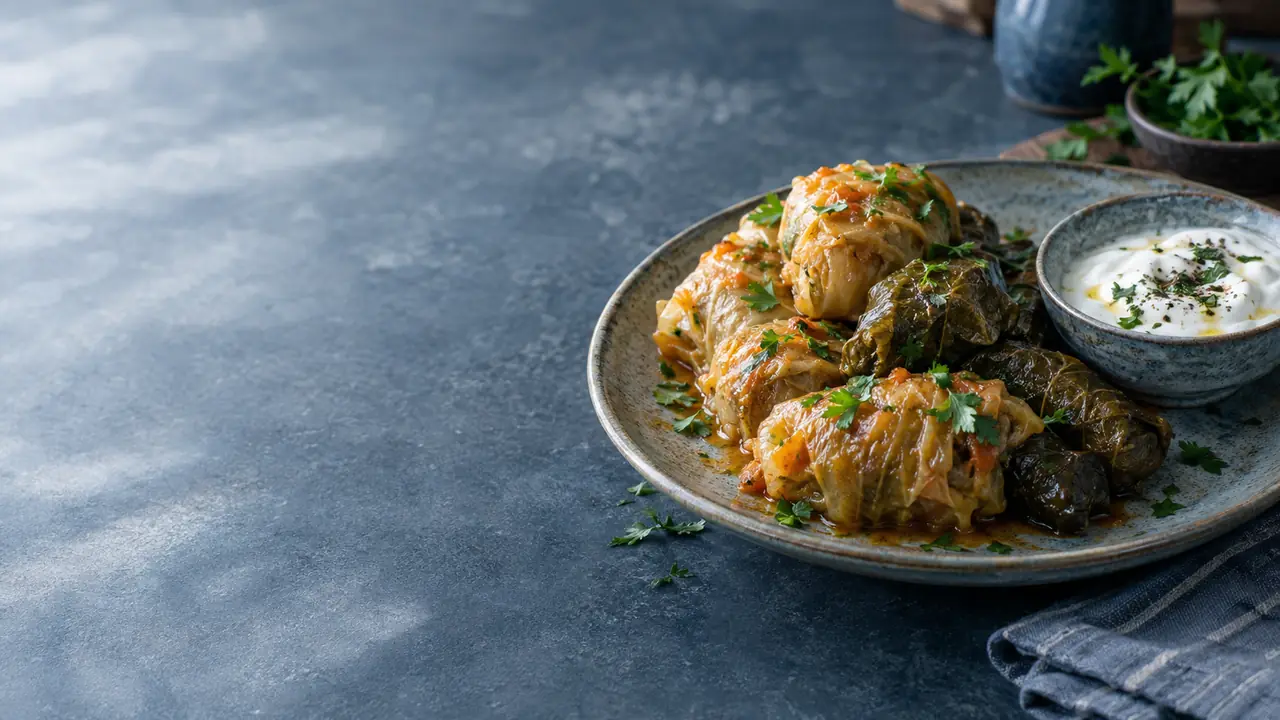
Sarmi
At a glance
| Type of dish | Stuffed leaf rolls |
|---|---|
| Main ingredients | Cabbage or vine leaves; rice, sometimes meat |
| Cabbage version | Usually eaten in autumn and winter |
| Vine-leaf version | Usually eaten in spring and summer |
| Christmas Eve version | Lenten filling without meat |
Source: Stuffed leaves; Bulgarian Sarma Guide: Stuffed Cabbage and Vine Leaf Rolls Explained1,2
A leaf-wrapped dish
Sarmi are made by wrapping leaves around a filling. Rice and minced meat are common ingredients, though fillings vary. Cabbage and vine leaves are among the leaves used for these rolls. Sarmi belong to the wider family of stuffed dishes known as dolma, and the name comes from a Turkish word meaning “wrap” or “wrapped thing”.1,2
Bulgarian food includes rolls made with both cabbage and vine leaves. One source describes these as two distinct seasonal dishes: zelni sarmi, made with cabbage, and lozovi sarmi, made with vine leaves. Another notes that Bulgarian and Macedonian usage does not usually distinguish between the two leaf types. The names and distinctions can therefore vary by context.1,2
Leaves and fillings
Cabbage sarmi are often made with fermented sour cabbage leaves, especially in the colder months. Fresh cabbage may also be used. The vine-leaf version is associated mainly with spring and summer, and can use fresh or brined leaves. The rolls share a wrapping method, but their fillings and accompaniments may differ.2
A typical meat filling described for cabbage sarmi combines pork, rice and onion. Vine-leaf rolls may contain rice and herbs, sometimes with minced meat. Bulgarian seasoning may include sharena sol, a blend based around savoury, with paprika and black pepper. The rolls are folded around the filling, placed close together in a cooking dish and baked covered with water or broth.2
When they are eaten
Cabbage sarmi are a winter dish, while vine-leaf sarmi are more common in warmer months. Cabbage rolls may be served with their braising juices, bread or yoghurt. Vine-leaf rolls are often served warm or cold with thick Bulgarian yoghurt. Sarmi can also be made in a clay pot, Dutch oven or lidded baking dish.2
Sarmi are also part of the Bulgarian Christmas Eve meal, known as Badni Vecher. For this occasion, the filling is meatless and may include rice, walnuts and raisins. This is a Lenten version of a dish that is often made with pork at other times. The Christmas Eve custom makes sarmi part of both seasonal cooking and family celebrations.2
Sources
Facts checked 13 October 2026. Prepared by InvestBulgaria for general information.
