Easter in Bulgaria
At a glance
| Date | Varies; Eastern Easter falls on 2 May in 2027 |
|---|---|
| Also called | The Resurrection of Christ |
| Celebrated by | Christians |
| Bulgarian name | Великден |
Source: Великден1
Date and meaning
Velikden, also called the Resurrection of Christ, celebrates Christians’ belief that Jesus rose on the third day after his crucifixion. The date moves from year to year. The general rule is the Sunday after the first spring full moon. Orthodox and Western churches can keep Easter on different dates. In 2027, Western Easter falls on 28 March and Eastern Easter on 2 May.1
The Easter vigil
In Bulgaria, preparations take place during Holy Week, the final week of Great Lent. The main service begins late on Saturday evening. Shortly before midnight, the church lights are put out and the priest brings out a lit three-branched candle. Worshippers light their candles from it, then leave the church as the Resurrection is announced at midnight.1
Easter greetings
At the announcement, the priest says “Christ is risen”, and the reply is “Truly he is risen”. The congregation then returns to the church for the service. Easter is also marked with family meals and the giving and exchanging of Easter eggs. These customs sit alongside church services as part of the Bulgarian celebration.1
Eggs and food
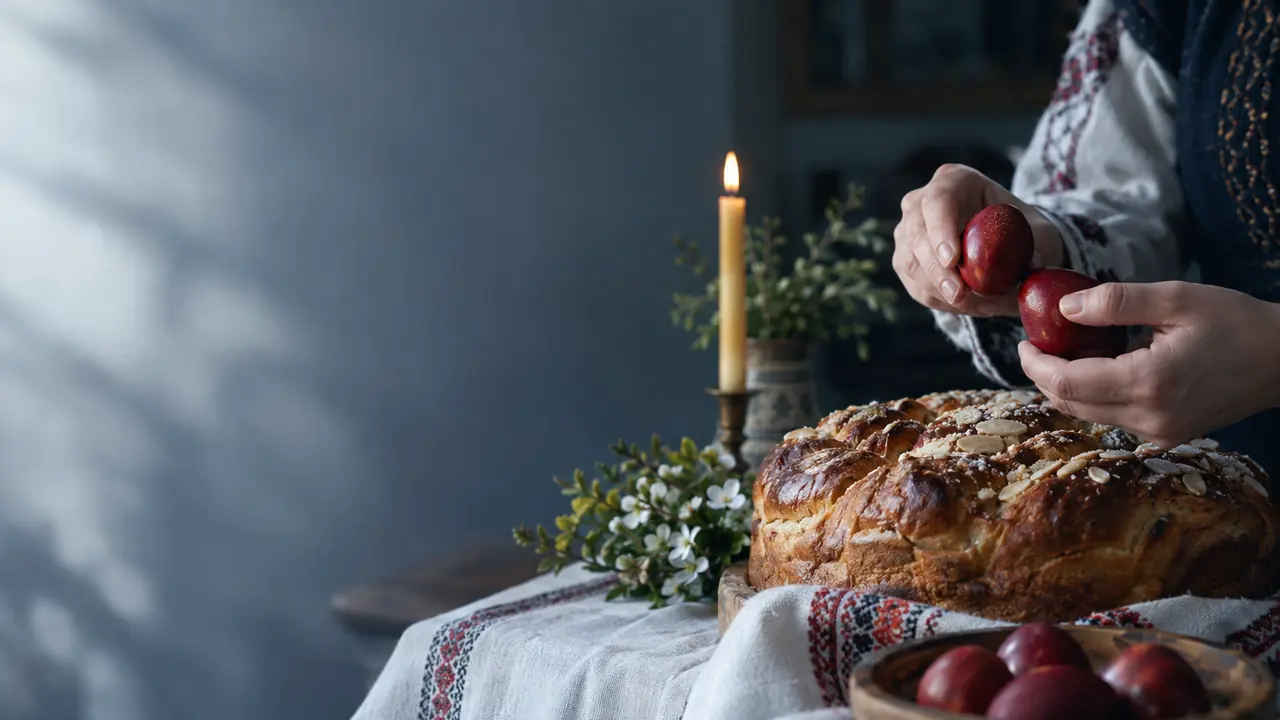
Eggs are traditionally coloured on Maundy Thursday or Holy Saturday in Bulgaria. The first egg is dyed red by the oldest woman in the household. Red can recall Christ’s blood, while the egg can symbolise his empty tomb and the new life of the Resurrection. The Bulgarian Easter table also includes kozunak. The Easter egg custom is also linked with the return of eggs to the table after Lent.1,2
Sources
Facts checked 13 October 2026. Prepared by InvestBulgaria for general information.
