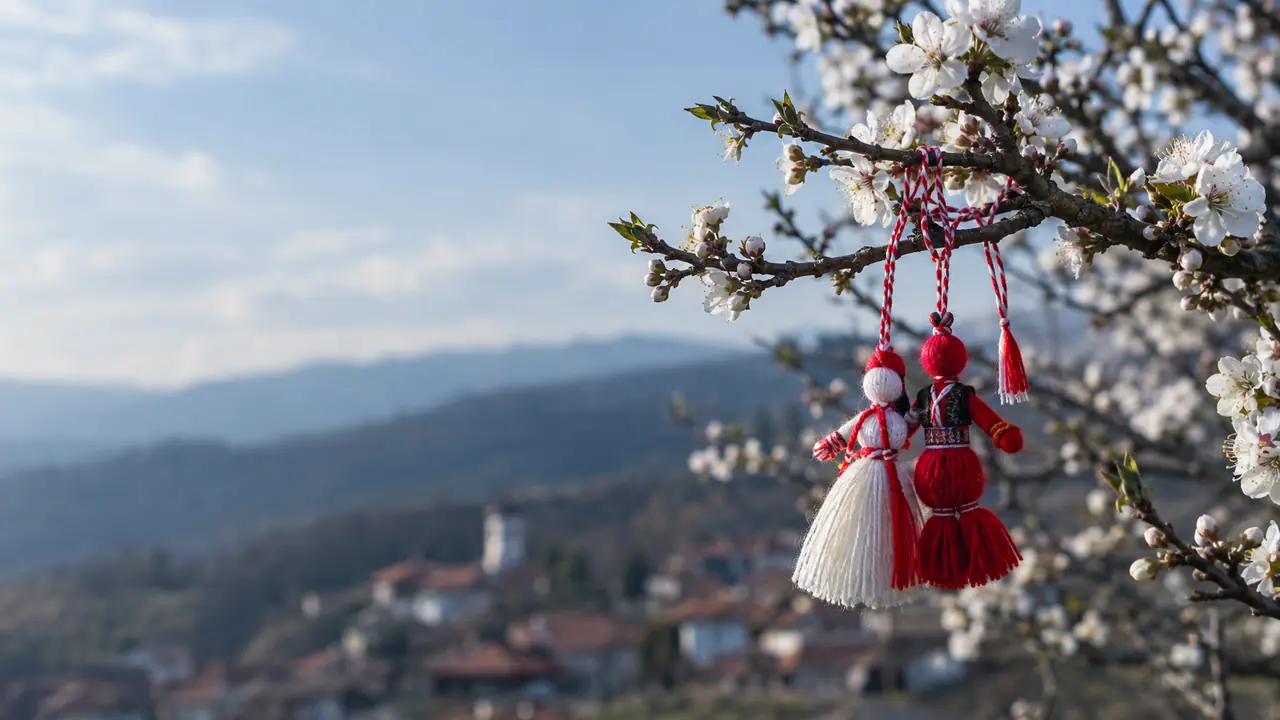
Baba Marta and the Martenitsa
At a glance
| Date | 1 March |
|---|---|
| Also called | Martenitsa; Martinka; Mărțișor |
| Where | Bulgaria, North Macedonia, Romania and Moldova; related customs are also noted in Greece and Albania |
| Bulgarian name | мартеница |
Source: Martenitsa; Cultural practices associated to the 1st of March1,2
Welcome spring
Baba Marta means “Grandma March” in Bulgarian and Macedonian. On 1 March, people mark the beginning of spring by making, giving and wearing a small red-and-white thread ornament called a martenitsa. It may be pinned to clothing or worn around the wrist or neck. Traditionally, martenitsi are gifts for loved ones, friends and people close to the giver, rather than something bought for oneself.1,2
Threads and meaning
The red and white threads express a wish for good health and herald new life. White is associated with purity, while red symbolises life and passion. In Bulgarian and Macedonian folklore, Baba Marta is imagined as a grumpy old woman whose mood changes quickly. People wear the colours hoping for her mercy, a quicker end to winter and the arrival of spring. The ornament is usually removed when the wearer first sees a blossoming tree, swallow or stork.1,2
Custom through time
The tradition is linked to ancient agricultural and nature-related customs. Some ethnographers suggest connections with the Eleusinian Mysteries, while a Bulgarian story links the first martenitsi to a seventh-century battle and doves carrying white threads that turned bloody. These are accounts of possible origins, rather than a single certain explanation. Today, martenitsi may include beads and other decoration. The wider cultural practices associated with 1 March were inscribed on UNESCO’s Representative List in 2017; making skills are also passed on informally and through museum workshops.1,2
Sources
Facts checked 13 October 2026. Prepared by InvestBulgaria for general information.
