Saint Paisius of Hilendar
At a glance
| In Bulgarian | Свети Паисий Хилендарски |
|---|---|
| Born | c. 1722, probably Bansko, Samokov eparchy, Ottoman Empire (now Bulgaria) |
| Died | c. 1773, Stanimaka (now Asenovgrad), Ottoman Empire (now Bulgaria) |
| Known for | Author of Istoriya Slavyanobolgarskaya (1762) |
| Monastic roles | Hieromonk and deputy abbot at Hilandar Monastery |
| Venerated in | Eastern Orthodox Church |
Source: Wikipedia: Paisius of Hilendar1
Life and work
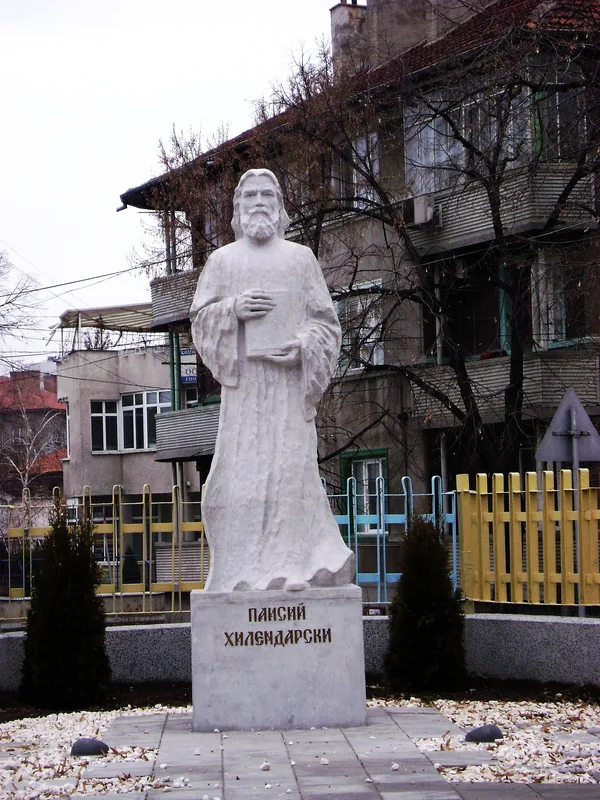
Paisius was born in the Samokov eparchy, probably in Bansko, although the exact place of his birth remains disputed. He established himself at Hilandar Monastery in 1745, where he later served as a hieromonk and deputy abbot. A Bulgarian Orthodox clergyman, he became a key figure of the Bulgarian National Revival and is considered its forefather. He is thought to have died around 1773, on the way to Mount Athos near Ampelino, now Asenovgrad.1
The history
Paisius collected materials for two years, working hard and visiting the Habsburg monarchy, before completing Istoriya Slavyanobolgarskaya at Zograf Monastery in 1762. It sought to present a complete history of Bulgaria and strengthen Bulgarian national consciousness. The work followed histories by Petar Bogdan Bakshev (1667) and Blasius Kleiner (1761), making it the third modern work of Bulgarian history. It also warned against Bulgarians abandoning their language and identity through Hellenisation.1
Legacy and veneration
The work was copied and distributed in the Bulgarian lands. Sophronius of Vratsa made its first manual copy in 1765. Paisius also toured Bulgaria as a mendicant friar, carrying the book with him as it spread. Its chapters covered historical events, Slavic teachers and Bulgarian saints, and it ended with an epilogue.1
The Bulgarian Orthodox Church canonised Paisius on 26 June 1962 with the title of Venerable. He is venerated in the Eastern Orthodox Church and shares a feast day, 19 June, with St. Paisius the Great. Paisiy Peak in Antarctica is named after him. His image appears on Bulgarian 2 lev banknotes and coins, and Bulgaria’s first 2 euro coin from 2026 also features him.1
Sources
Facts checked 13 October 2026. Prepared by InvestBulgaria for general information.
