National Tourist Site
About National Palace of Culture
At a glance
| Tourist site | No. 61a, “National Palace of Culture” |
|---|---|
| Address | 1 Bulgaria Square, Sofia |
| Open | Monday to Friday 9:00–20:00; weekends and holidays 10:00–20:00 |
| Built | 1979–1981, ground broken on 25 May 1978 |
| Architect | Alexander Barov, with civil engineer Bogdan Atanassov |
| Metro | NDK station on line 2 and NDK II station on line 3 |
Source: Bulgarian Tourist Union: National Palace of Culture (100 National Tourist Sites, in Bulgarian); National Palace of Culture: History; Wikipedia: National Palace of Culture1,2,3
History of the palace
In the mid-1970s the government decided that Bulgaria needed a large cultural centre, to be ready by 1981 for the celebration of 1,300 years of the Bulgarian state. The site had first been set aside for a new opera house, but an international design competition produced no winner. The project went to the architect Alexander Barov and the civil engineer Bogdan Atanassov.2
Ground was broken on 25 May 1978, construction took three years, from 1979 to 1981, and the palace opened on 31 March 1981. The Bulgarian Tourist Union says the idea came from Lyudmila Zhivkova, Minister of Culture from 1975 to 1981, and the palace bore her name until 1989. Many Sofia residents contributed money and volunteer work.1,2
The Bulgarian Tourist Union and the English Wikipedia both say that in July 2005 the International Association of Congress Centres (AIPC) gave the NDK its Apex award as the best congress centre in the world. The English Wikipedia says that since 2011 it has been run as a commercial company while remaining state property.1,3
What to see
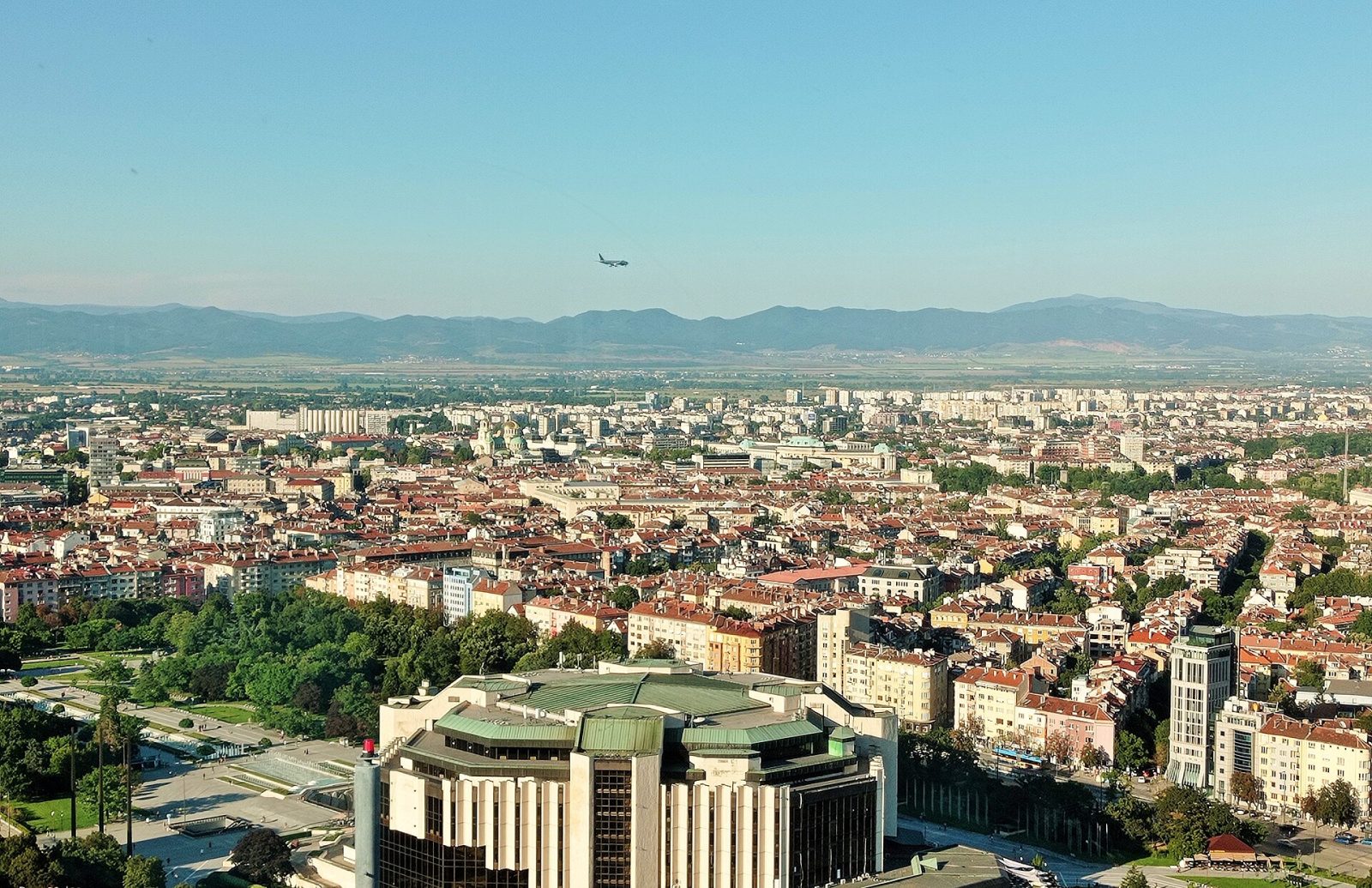
The palace has eight floors and three underground levels, with 13 halls and 55 conference rooms seating from 100 to 4,000 people, and more than 15,000 square metres of exhibition space, according to the Bulgarian Tourist Union. It hosts congresses, concerts, film screenings, exhibitions and fairs, among them the Sofia International Film Festival.1,3
| Work of art | Artist |
|---|---|
| The phoenix trademark, with feathers like the sun’s rays | Stefan Kanchev, graphic designer |
| The 7-metre bronze “Sun” above the main entrance | Georgi Chapkanov, sculptor |
| The gilded sculpture “The Revival”, known as “Mother Bulgaria”, in the central foyer | Dimitar Boykov, sculptor |
Source: National Palace of Culture: History2
The English Wikipedia counts more than 80 monumental works of art made for the building, including paintings, mosaics, murals and wood carvings by artists such as Dechko Uzunov and Svetlin Roussev.3
The Bulgarian Tourist Union describes the NDK as the largest multifunctional complex in South-East Europe, built on 18,300 square metres with a volume of 576,800 cubic metres. The English Wikipedia gives a total functional area of 123,000 square metres.1,3
Visiting
The Bulgarian Tourist Union lists the NDK as open Monday to Friday from 9:00 to 20:00 and on weekends and holidays from 10:00 to 20:00, with the contact phone 02 916 6300.1
The NDK’s history page does not list opening hours. The hours above are those given by the Bulgarian Tourist Union.1,2
The No. 61a stamp
The palace is site No. 61a in “Know Bulgaria – 100 National Tourist Sites”, the movement the Bulgarian Tourist Union started in 1966. Walkers collect a stamp at each site in a booklet: 25 stamps earn a bronze badge, 50 a silver badge and all 100 a gold badge with a certificate.4
More stamps nearby
- No. 61: the Earth and Man National Museum, on Cherni Vrah Boulevard.
- No. 66: the Museum of Physical Culture and Sport, in the Vasil Levski National Stadium.
- No. 68a: the National Polytechnic Museum.
- No. 59: the Alexander Nevsky Cathedral.
Source: Bulgarian Tourist Union: 100 National Tourist Sites4
For the city itself, see our Sofia city guide.
Frequently Asked Questions
When was the NDK built?
Construction ran from 1979 to 1981, after ground was broken on 25 May 1978, and the palace opened on 31 March 1981.
Who designed the National Palace of Culture?
The architect Alexander Barov, with the civil engineer Bogdan Atanassov.
How do I get there by metro?
NDK station is on metro line 2 and NDK II station on line 3.
Which tourist-site number is the NDK?
No. 61a in the Bulgarian Tourist Union’s 100 National Tourist Sites.
Sources
- Bulgarian Tourist Union: National Palace of Culture (100 National Tourist Sites, in Bulgarian)
- National Palace of Culture: History
- Wikipedia: National Palace of Culture
- Bulgarian Tourist Union: 100 National Tourist Sites (in Bulgarian)
Figures checked 11 November 2026. Information only, not investment, tax or legal advice.