National Tourist Site
About National Archaeological Institute and Museum
At a glance
| Tourist site | No. 68, “Archaeological Institute with Museum at BAS” |
|---|---|
| Run by | The National Archaeological Institute with Museum, Bulgarian Academy of Sciences |
| Address | 2 Saborna Street, Sofia |
| Summer, May–October | 10:00–18:00, every day |
| Winter, November–April | 10:00–17:00, closed on Mondays |
| Adult ticket | €6; free for everyone on the last Sunday of the month |
Source: Bulgarian Tourist Union: Archaeological Institute with Museum at BAS (100 National Tourist Sites, in Bulgarian); National Archaeological Institute with Museum: admission prices and opening hours1,2
The building and its history
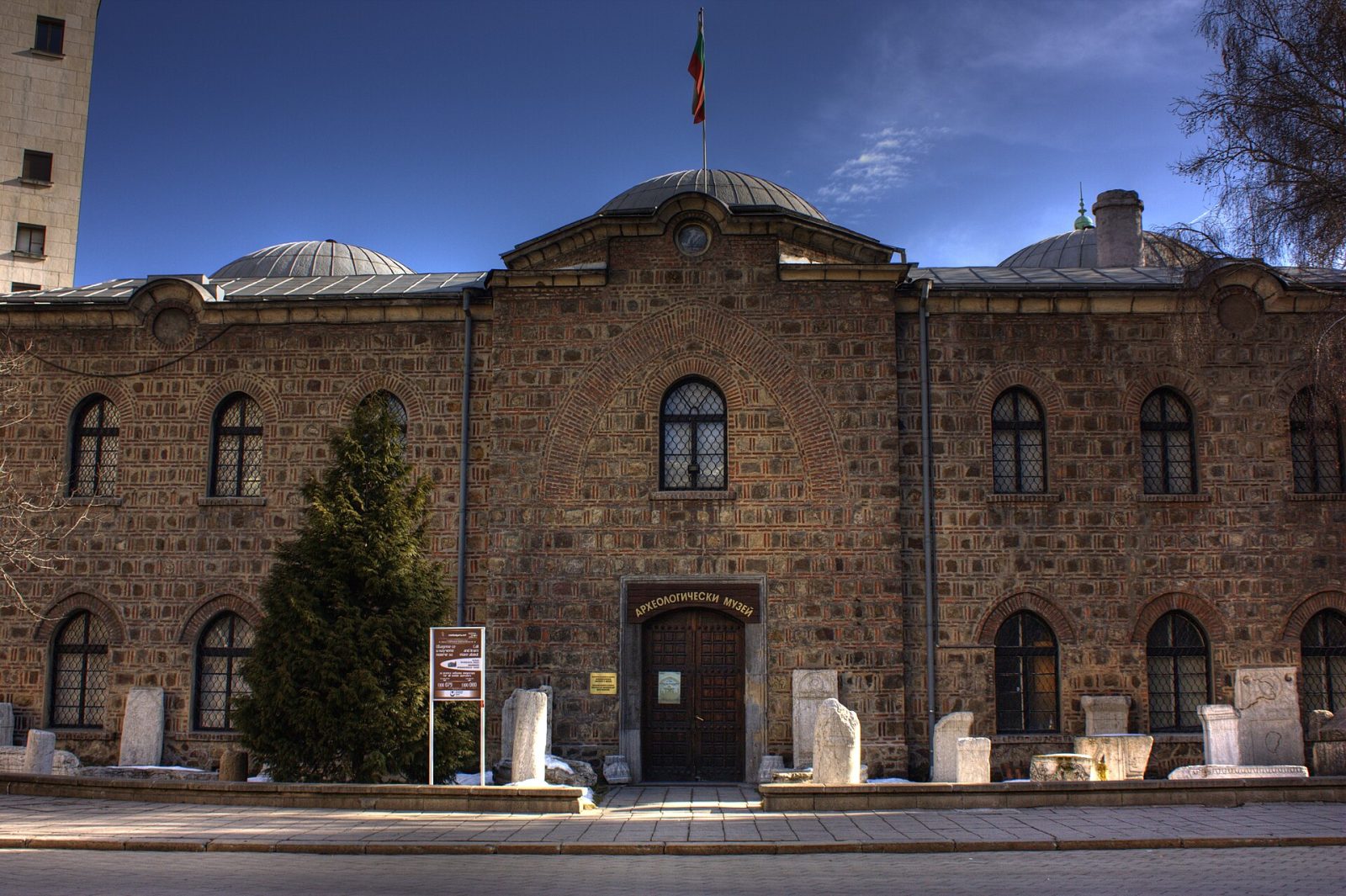
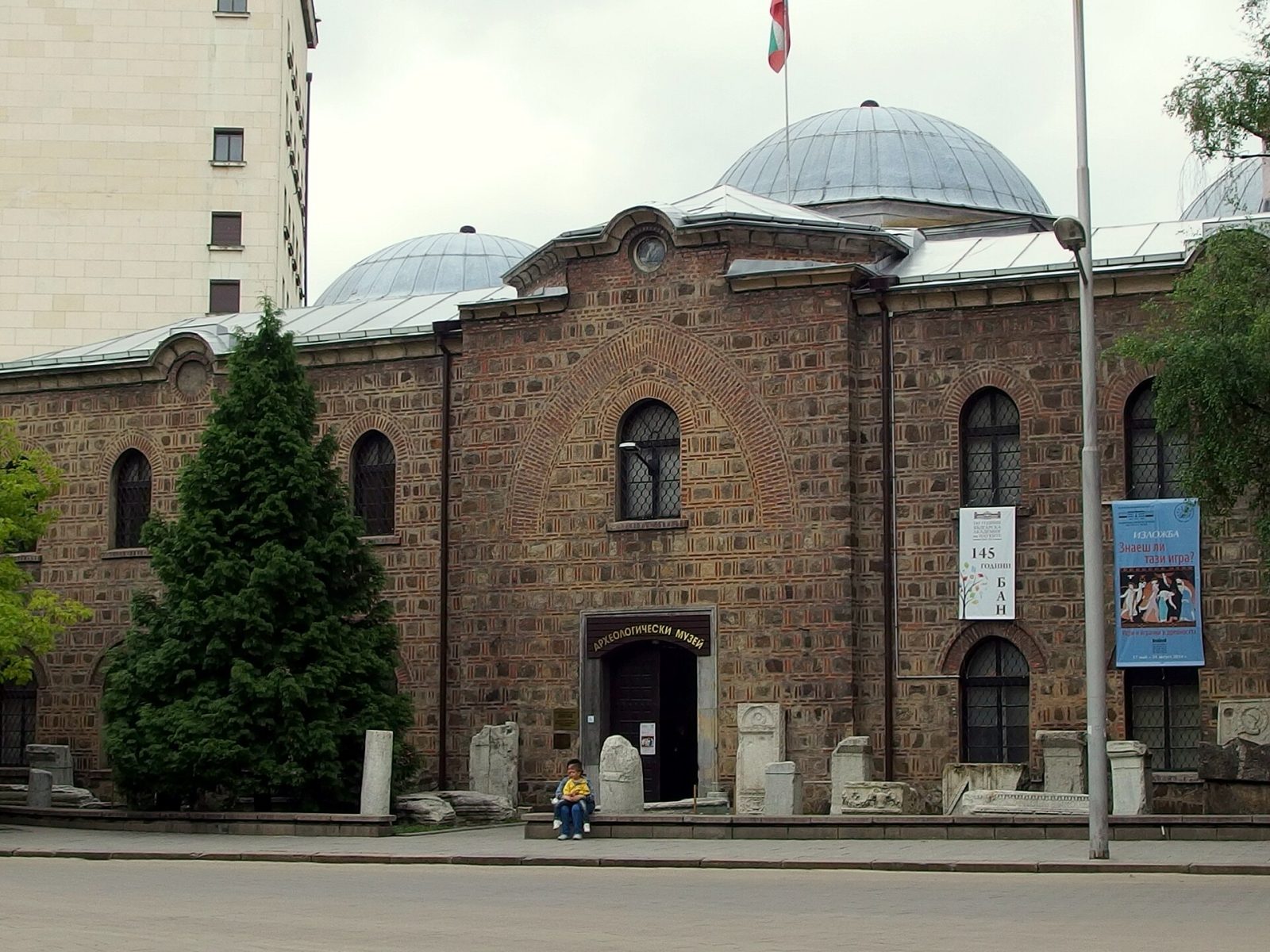
The museum occupies the former Koca Mahmud Pasha or Büyük Mosque, which the English Wikipedia describes as the largest and oldest former Ottoman mosque in Sofia. Building started in 1451 under the grand vizier Veli Mahmud Pasha and was completed in 1494. From 1880 to 1893 the building held the National Library.3
The museum was set up by a decree of the Knyaz in 1892 and became the National Museum in 1893 under the Czech archaeologist Václav Dobruský. It opened in its present building in 1905, and the ethnographic collection left for its own museum in 1906. An independent Archaeological Institute under Bogdan Filov was founded in 1920 and merged with the museum in 1948.3
The two sources tell the institute’s early history slightly differently. The Bulgarian Tourist Union says the institution has worked in its present form since 1949 and traces it to the antiquities department of the Sofia library of 1878–1879 and to the Archaeological Institute of 1921. The English Wikipedia gives 1920 for the institute and 1948 for the merger.1,3
What to see
The Bulgarian Tourist Union says the institute’s stores hold more than 450,000 objects, including 6,500 ancient and about 200 medieval stone monuments and a large coin collection. The museum has five halls.1,3
| Hall | What it shows |
|---|---|
| Prehistory | Finds from 1,600,000 to 1,600 BC, on the lower floor of the north wing: cave finds, early tools, pottery and ritual objects |
| Main Hall | Ancient Thrace, Greece and Rome through to the late Middle Ages, on the first floor of the main building |
| Treasury | Grave goods and treasures from the late Bronze Age to late Antiquity, including the Valchitran and Lukovit treasures |
| Middle Ages | Medieval books, woodwork, drawings and metalwork, on the second floor |
| Temporary exhibitions | Changing shows, on the second floor of the main building |
Source: Wikipedia: National Archaeological Museum (Bulgaria)3
The Bulgarian Tourist Union singles out three treasures in the Treasury hall: Valchitran, Lukovit and the treasure from Nikolaevo in Pleven Province.1
Tickets and opening hours
| Ticket | Price |
|---|---|
| Adults | €6 |
| Pupils and students | €1.50 |
| Parent with children up to 16 | €6 |
| Two parents with children up to 16 | €8 |
| Jubilee ticket, unlimited visits to the end of the year | €10 |
| Guided tour in Bulgarian / in English | €10 / €20 |
| Mobile guide in Bulgarian and English | €3 |
Source: National Archaeological Institute with Museum: admission prices and opening hours2
From May to October the museum opens every day from 10:00 to 18:00; from November to April it opens 10:00 to 17:00 and closes on Mondays. Last entry is 30 minutes before closing. It is closed on 25 December and 1 January and opens 10:00 to 14:00 on 24 and 31 December.2
Entry is free for pensioners on the second Thursday of the month and for all visitors on the last Sunday of the month, and at any time for visitors with physical disabilities with one assistant, and ICOM card holders.2
The Bulgarian Tourist Union’s page still shows the older prices in leva, including a 10-leva adult ticket. The euro prices above are the museum’s own, checked in November 2026.1,2
The No. 68 stamp
The museum is site No. 68 in “Know Bulgaria – 100 National Tourist Sites”, the movement the Bulgarian Tourist Union started in 1966. Walkers collect a stamp at each site in a booklet: 25 stamps earn a bronze badge, 50 a silver badge and all 100 a gold badge with a certificate.4
More stamps nearby
- No. 63a: the National Gallery, in the former royal palace across the square.
- No. 62: the National Ethnographic Museum, in the same palace.
- No. 65: the National Museum of Natural History, on Tsar Osvoboditel Boulevard.
- No. 58: the National History Museum, in the Boyana district.
Source: Bulgarian Tourist Union: 100 National Tourist Sites4
For the city itself, see our Sofia city guide.
Frequently Asked Questions
How much is a ticket to the National Archaeological Museum?
€6 for adults and €1.50 for pupils and students. Entry is free for everyone on the last Sunday of the month.
Is the museum open on Mondays?
From May to October, yes, 10:00 to 18:00. From November to April it is closed on Mondays.
What building is the museum in?
The former Büyük Mosque, built between 1451 and 1494, opposite the former royal palace in central Sofia.
Which tourist-site number is the Archaeological Museum?
No. 68 in the Bulgarian Tourist Union’s 100 National Tourist Sites.
Sources
- Bulgarian Tourist Union: Archaeological Institute with Museum at BAS (100 National Tourist Sites, in Bulgarian)
- National Archaeological Institute with Museum: admission prices and opening hours
- Wikipedia: National Archaeological Museum (Bulgaria)
- Bulgarian Tourist Union: 100 National Tourist Sites (in Bulgarian)
Figures checked 11 November 2026. Information only, not investment, tax or legal advice.