National Tourist Site
About Peristera Fortress
At a glance
| Tourist site | No. 37a, “Peristera fortress” |
|---|---|
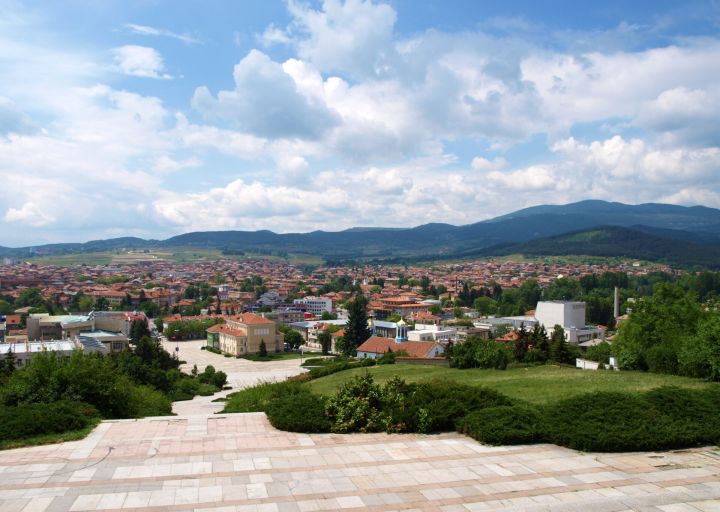
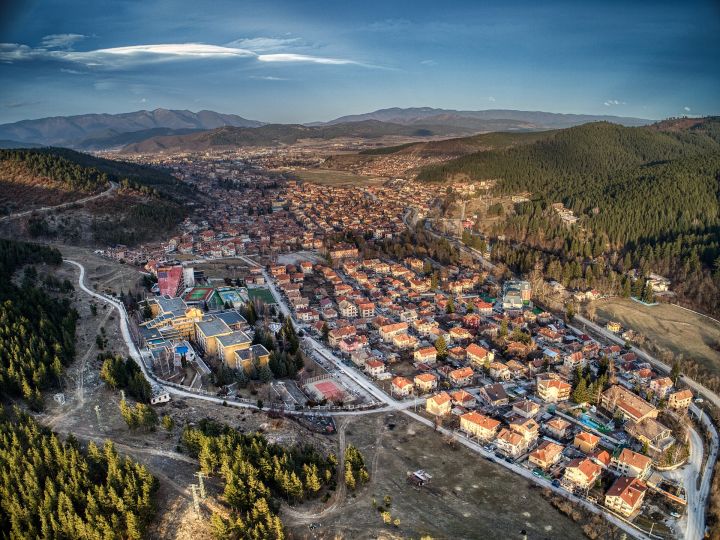
| Location | St Petka hill, on the north side of Peshtera |
| Opening hours | 9:00–16:30; closed on Mondays |
| Phone | 0894 677 706 |
| Status | Immovable cultural property of national importance since 2012 |
Source: Bulgarian Tourist Union: Peristera fortress (100 National Tourist Sites, in Bulgarian); Wikipedia (Bulgarian): Peristera (fortress)1,2
History of the fortress
The name comes from the Greek for “dove”. In the highest part of the hill stands a group of rocks, one of them shaped like a dove, which archaeologists take to be the remains of a Thracian sanctuary; the Bulgarian Tourist Union links the site to the Thracian Bessi tribe. A legend tells of Peristera, daughter of the Bessi priest Vologaesus, who leapt from the walls rather than surrender to the Roman legions.1,2
| Period | What happened |
|---|---|
| 2nd–early 3rd century | A Roman fort is built near one of the roads from the Upper Thracian Plain to the Aegean |
| Late Roman period | Coins of Diocletian, Constantine I and Julian; the fort was probably destroyed in the Gothic war of the 370s |
| 6th century | Life returns after a 150-year gap; under Justinian I two of the six towers are turned into single-nave churches |
| Late 6th century | The fortress flourishes under Justin II and is burned under Tiberius II Constantine |
| Late 14th century | Partly rebuilt in the Middle Ages, it is destroyed by the Ottomans |
Source: Bulgarian Tourist Union: Peristera fortress (100 National Tourist Sites, in Bulgarian); Wikipedia (Bulgarian): Peristera (fortress)1,2
The first excavations took place in 1954, with partial digs in 1958 and 1972. Systematic excavations in 2007, 2010 and 2011 were led by the archaeologist Boni Petrunova, and Peshtera municipality restored the site with EU regional development funding by early 2014.2
The Bulgarian Tourist Union says that only two other tower churches of this kind are known, both in Serbia. That is the union’s statement.1
What to see
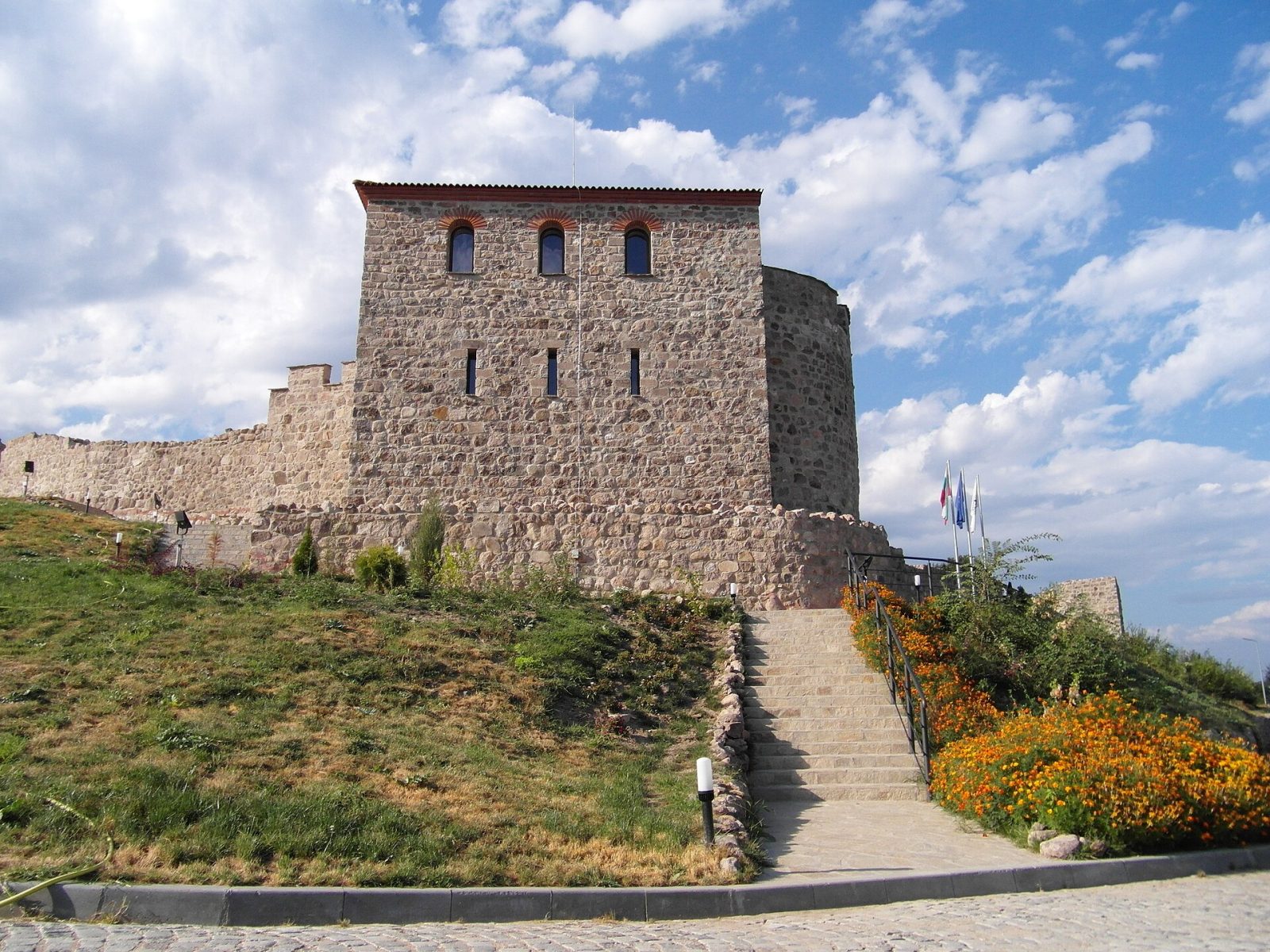
- Three wall circuits: the citadel walls, 253 metres long, enclose almost 3 decares; a second wall encloses 12 decares and a third belt 20 decares. A red line along the walls marks the original masonry; the rest was added in the restoration.
- 28 rooms along the inside of the wall: barracks, workshops and stores.
- Storage jars: 75 pithoi were excavated and 45 are shown in place. The union says the stores could feed a garrison for 18 months of siege.
- Tower churches: the south-east tower church shows panels of the most valuable coins from a gold hoard found in one of the jars.
- Finds: over 300, including gold coins, arrowheads, fibulae, jewellery and a bronze lamp with a medieval cross.
- Museum tower: the south tower was turned into a three-storey museum, and a touch screen tells the history of the hill.
Source: Bulgarian Tourist Union: Peristera fortress (100 National Tourist Sites, in Bulgarian); Wikipedia (Bulgarian): Peristera (fortress)1,2
St Petka hill is now a dendrological and archaeological park with an open-air theatre. Visitors can be photographed in period soldiers’ dress among replicas of siege engines, and the union describes a Thracian wine festival linked to Dionysus held in November.1
Tickets and opening hours
| Ticket | Price listed by the Bulgarian Tourist Union |
|---|---|
| Regular ticket | €3.07 |
| Reduced ticket | €1.53 |
| Guided talk | €5.11 |
Source: Bulgarian Tourist Union: Peristera fortress (100 National Tourist Sites, in Bulgarian)1
The fortress opens from 9:00 to 16:30 and is closed on Mondays. There are four shelters, a path for visitors with disabilities, a car park and an information centre.1
These are the union’s listings. The fortress’s own website, given by the Bulgarian Wikipedia, could not be checked for this guide. Checked in November 2026.1,2
The No. 37a stamp
The fortress is site No. 37a in “Know Bulgaria – 100 National Tourist Sites”, the movement the Bulgarian Tourist Union started in 1966. Walkers collect a stamp at each site in a booklet: 25 stamps earn a bronze badge, 50 a silver badge and all 100 a gold badge with a certificate.3
More stamps nearby
- No. 37: Snezhanka Cave, south-west of Peshtera.
- No. 38: the Batak History Museum.
- No. 70: the Bratsigovo History Museum.
- No. 35a: the Stamboliyski Villa Museum, near Slavovitsa.
Source: Bulgarian Tourist Union: 100 National Tourist Sites3
For the wider area, see the Pazardzhik province page.
Frequently Asked Questions
Where is the Peristera fortress?
On St Petka hill, on the north side of Peshtera in Pazardzhik province.
What does Peristera mean?
It comes from the Greek for ‘dove’; a rock at the top of the hill is shaped like a dove.
When is it open?
From 9:00 to 16:30, closed on Mondays, according to the Bulgarian Tourist Union.
How much is a ticket?
The union lists €3.07 for a regular ticket, €1.53 reduced and €5.11 for a guided talk.
Which tourist-site number is Peristera?
No. 37a in the Bulgarian Tourist Union’s 100 National Tourist Sites.
Sources
- Bulgarian Tourist Union: Peristera fortress (100 National Tourist Sites, in Bulgarian)
- Wikipedia (Bulgarian): Peristera (fortress)
- Bulgarian Tourist Union: 100 National Tourist Sites (in Bulgarian)
Figures checked 12 November 2026. Information only, not investment, tax or legal advice.