National Tourist Site
About Shipka Memorial Church
At a glance
| Tourist site | No. 92, Memorial Church of the Nativity, Shipka |
|---|---|
| Where | On the north-western edge of the town of Shipka, Kazanlak municipality, on the road from Kazanlak to Gabrovo |
| Opening hours | April to October 8:30–18:00, November to March 8:30–16:30 |
| Entry | Free |
| Phone | +359 4324 20 47 |
Source: Bulgarian Tourist Union: Memorial Church of the Nativity, Shipka (100 National Tourist Sites, in Bulgarian); Wikipedia (Bulgarian): Shipka Monastery1,2
Why the church was built
Thousands of Russian soldiers died in the battles for the Shipka Pass or of hunger, disease and cold in the winter of 1877–1878. The idea of a memorial church came from Russia: from Olga Skobeleva, mother of General Mikhail Skobelev, Count Nikolay Ignatiev, the former Russian ambassador in Constantinople, his wife and others. In 1879 Emperor Alexander II backed the plan with an icon, a coat of mail and 1,000 roubles, and allowed a committee to be set up.1,2
The site, at the start of the Shipka Pass, lay in Eastern Rumelia, so a special decree of the Sultan was needed. The church was named after the Nativity because the last great battle was fought in the days around Christmas. More than 300,000 roubles were collected, mainly in Russia but also in Bulgaria.1,2
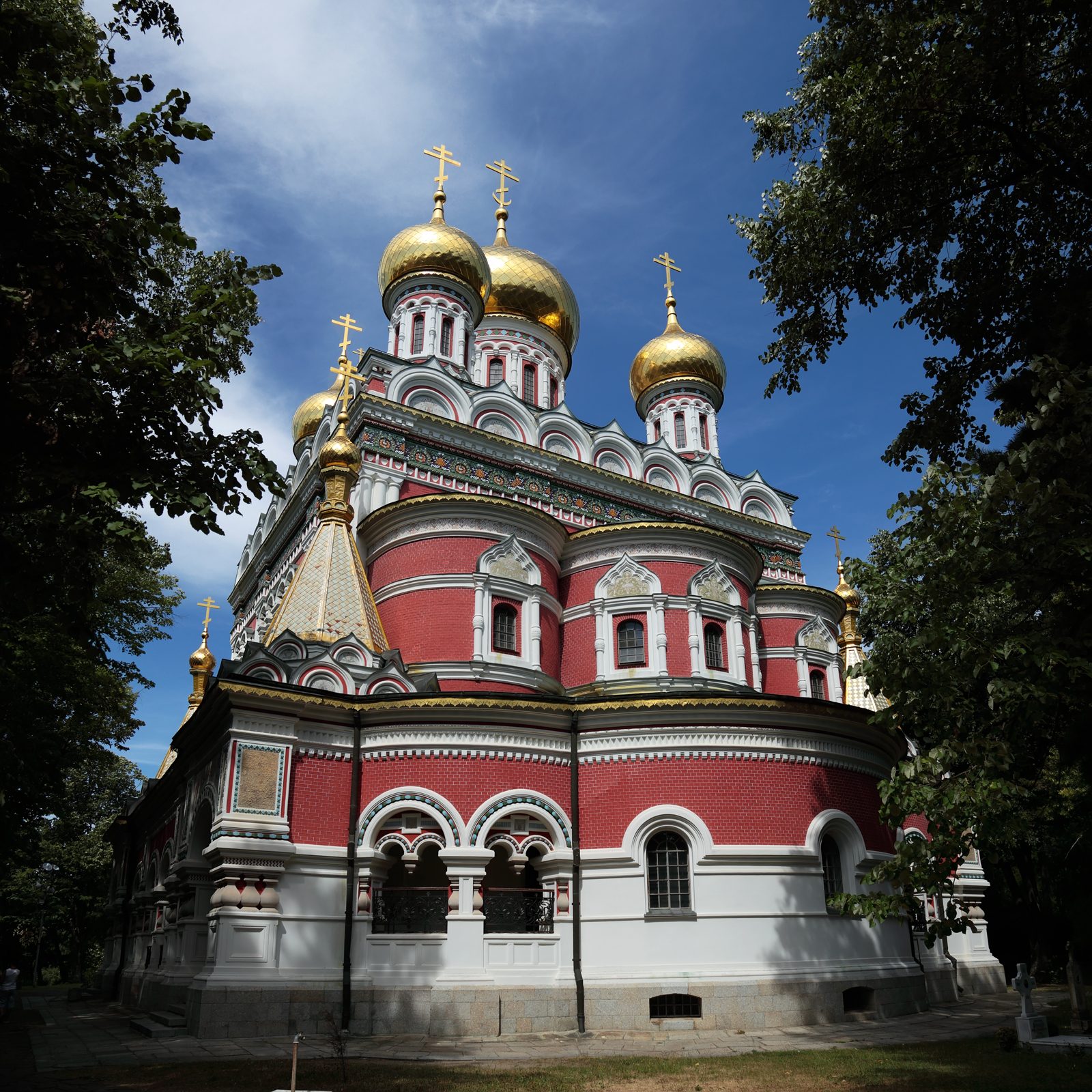
The English Wikipedia says the church was designed by Antoniy Tomishko in the 17th-century Russian style and built under the architect Alexander Pomerantsev. The consecration coincided with the 25th anniversary of the battles; Prince Ferdinand attended for Bulgaria and Grand Duke Nikolay Nikolaevich the Younger for Emperor Nicholas II.1,3
The Bulgarian Tourist Union says building took 6 years and ended in 1902, while both Wikipedias give 1885–1902. The union gives the consecration as 15–19 September 1902; the Bulgarian Wikipedia gives 27 September and the English Wikipedia 28 September 1902.1,2,3
The church belonged to the Russian state until 23 July 1934, when it was given to Bulgaria, according to the union; it was declared a monument of culture in 1970 and has been the property of the Bulgarian Orthodox Church since December 2004. Today it is a working monastery with monks’ quarters, a pilgrims’ building and a seminary.1,2
Domes, bells and interior
| Feature | Detail |
|---|---|
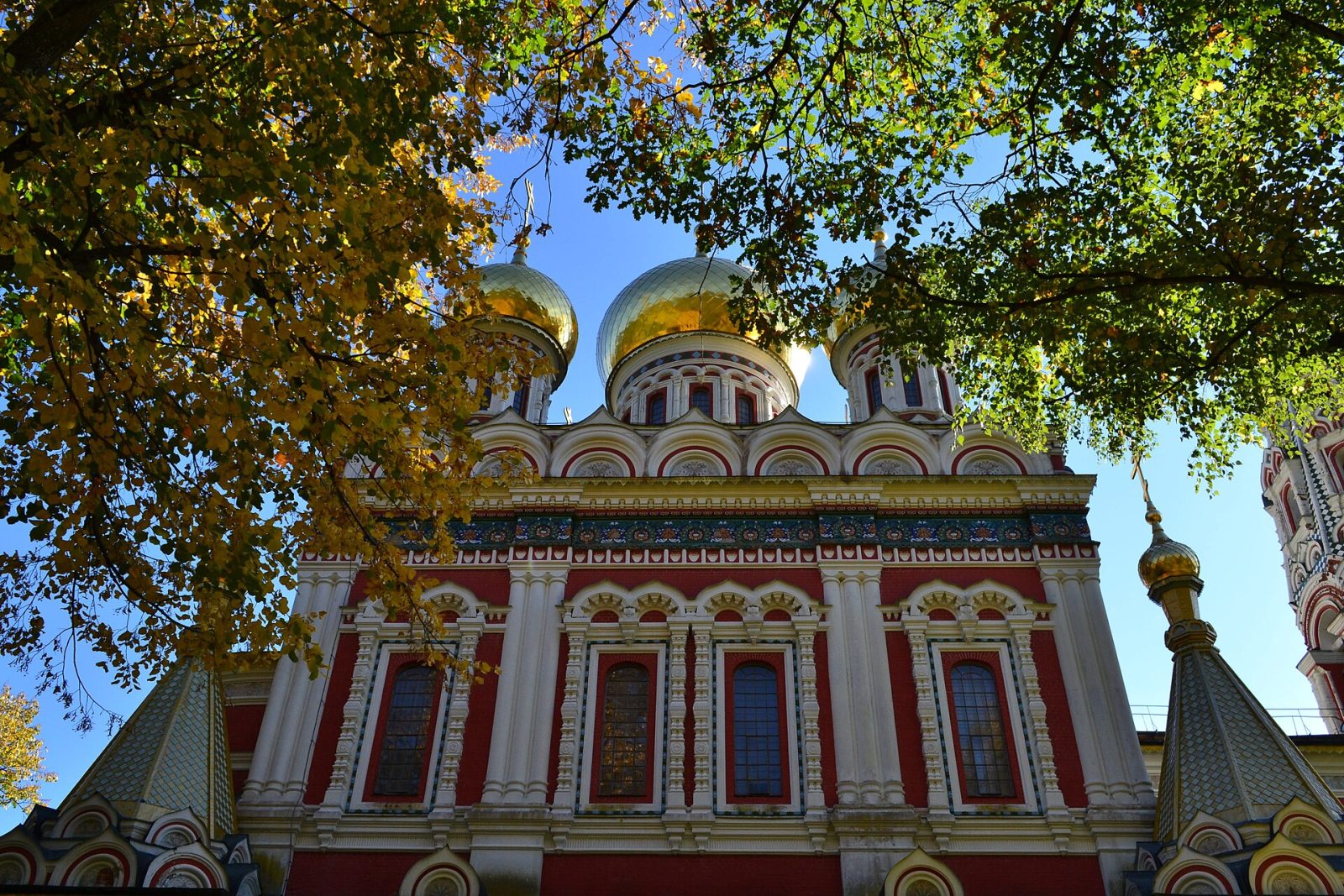
| Domes | Five gilded onion domes: four side domes 33 m high and a central dome of 42 m, topped with ten copper-covered crosses |
| Bells | 17 decorated bells weighing more than 20 tonnes in all |
| Iconostasis | Gilded limewood, with icons painted on cypress wood given by the monks of the Russian Saint Panteleimon monastery on Mount Athos |
| Murals | Begun in 1902 by Professor Myasoedov, author of the Christ Pantocrator, and Professor Anton Mitov, and finished in 1957–1959 by a team led by Nikolay Rostovtsev |
Source: Bulgarian Tourist Union: Memorial Church of the Nativity, Shipka (100 National Tourist Sites, in Bulgarian)1
The union gives the weight of the largest bell as 11,643 kg; the English Wikipedia gives 12 tonnes, says the bells were cast from cartridges collected after the battles and gives the bell tower a height of 53 m.1,3
The crypt and the names
Below the main floor is a crypt with its own iconostasis. In its two side galleries, 17 stone sarcophagi hold the remains of soldiers killed at Shipka; the Bulgarian Wikipedia says the bones of nearly 9,000 Russian and Bulgarian soldiers are kept there.1,2
Stone plaques in the church and the side galleries list the military units and the fallen, 18,491 in all according to the union, and four plaques name 451 Bulgarian volunteers. The English Wikipedia counts 34 marble plaques.1,3
Tickets and opening hours
| Season | Opening hours |
|---|---|
| April to October | 8:30–18:00 |
| November to March | 8:30–16:30 |
Source: Bulgarian Tourist Union: Memorial Church of the Nativity, Shipka (100 National Tourist Sites, in Bulgarian)1
Entry is free. If visitors ask, the monks will tell the story of the monastery, also free of charge. Checked in November 2026.1
The No. 92 stamp
The Shipka Memorial Church is site No. 92 in “Know Bulgaria – 100 National Tourist Sites”, the movement the Bulgarian Tourist Union started in 1966. Walkers collect a stamp at each site in a booklet: 25 stamps earn a bronze badge, 50 a silver badge and all 100 a gold badge with a certificate.4
More stamps nearby
- No. 93: the Freedom Monument on Shipka Peak.
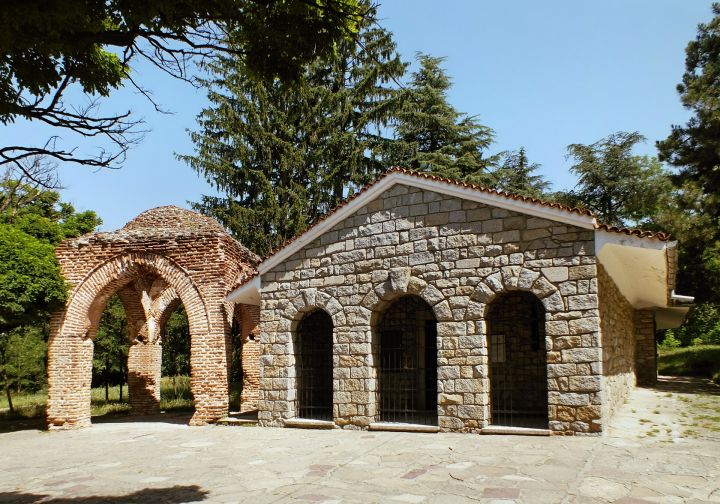
- No. 91: the Kazanlak Thracian tomb and the Chudomir museum.
- No. 90: the Stara Zagora museums.
Source: Bulgarian Tourist Union: 100 National Tourist Sites4
For the area, see the Stara Zagora province page.
Frequently Asked Questions
Is there an entry fee?
No. The Bulgarian Tourist Union lists free entry and free talks by the monks.
When was the church built?
It was finished and consecrated in September 1902, for the 25th anniversary of the Shipka battles; the Wikipedias give 1885–1902 for the building work.
Who is buried in the crypt?
Soldiers who died in the battles for the Shipka Pass in 1877–1878, in 17 stone sarcophagi.
When is the church open?
April to October 8:30–18:00 and November to March 8:30–16:30.
Which tourist-site number is the Shipka Memorial Church?
No. 92 in the Bulgarian Tourist Union’s 100 National Tourist Sites.
Sources
- Bulgarian Tourist Union: Memorial Church of the Nativity, Shipka (100 National Tourist Sites, in Bulgarian)
- Wikipedia (Bulgarian): Shipka Monastery
- Wikipedia (English): Shipka Memorial Church
- Bulgarian Tourist Union: 100 National Tourist Sites (in Bulgarian)
Figures checked 12 November 2026. Information only, not investment, tax or legal advice.