National Tourist Site
About Stara Zagora: Regional History Museum, Neolithic Dwellings and Defenders Memorial
At a glance
| Place | Address | Opening hours |
|---|---|---|
| Regional History Museum | 42 Ruski Boulevard | 10:00–18:00, closed on Monday |
| Neolithic Dwellings Museum | 20 Armeyska Street | April to September Tuesday to Sunday, October to March Tuesday to Saturday; 10:00–12:30 and 13:00–18:00 |
| Defenders of Stara Zagora 1877 memorial | Stara Zagora | Open access |
Source: Bulgarian Tourist Union: Regional History Museum, Stara Zagora (100 National Tourist Sites, in Bulgarian); Bulgarian Tourist Union: Neolithic Dwellings Museum (100 National Tourist Sites, in Bulgarian); Bulgarian Tourist Union: Defenders of Stara Zagora 1877 monument (100 National Tourist Sites, in Bulgarian)1,2,3
For the town, see our Stara Zagora city guide.
A town with eight names
The Bulgarian Tourist Union writes that the first settlers came at the end of the 7th or start of the 6th millennium BC, drawn by the climate and the copper ore of Sredna Gora, and that the town has had 8 names over the centuries.1
| Name | Period |
|---|---|
| Beroe | The Thracian settlement, as is supposed |
| Augusta Traiana | The Roman town founded in the first decades of the 2nd century |
| Irinopolis | For about 30 years after Empress Irene paid to rebuild the fortress in 784 |
| Vereya and Boruy | The Middle Ages |
| Eski Zagra | The Ottoman period |
| Zheleznik | The name used by Bulgarians in the National Revival |
| Stara Zagora | Adopted just before the Liberation |
Source: Bulgarian Tourist Union: Regional History Museum, Stara Zagora (100 National Tourist Sites, in Bulgarian)1
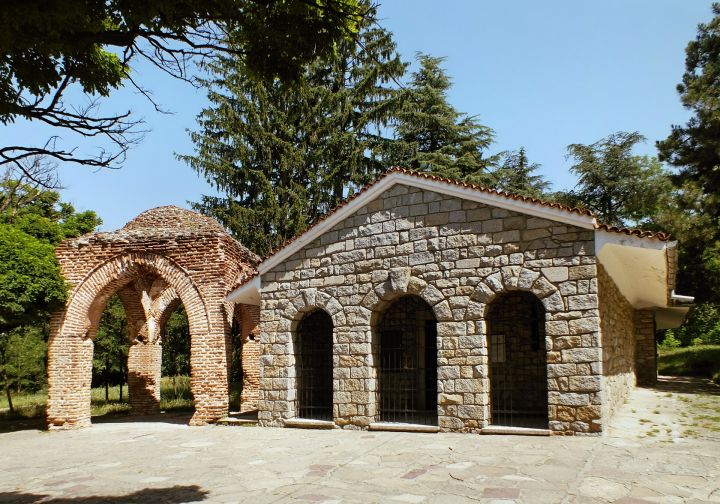
The main streets of Augusta Traiana and its forum at the Western Gate, with a colonnade and mosaics, can still be seen. The union says Beroe probably first joined Bulgaria briefly under Khan Tervel, and for good under Khan Krum.1
Regional History Museum
The museum’s first exhibition opened in 1907. It moved into a new building in September 2007, which opened to visitors in March 2009. The Bulgarian Wikipedia says it holds more than 100,000 original objects, and the union describes its prehistoric collection as the largest in Europe.1,5
Highlights named by the Bulgarian Wikipedia include a bone idol and a marble human figure of the 5th millennium BC, a helmet-mask, a Sarmatian sword, a gold necklace, a glass phial with a dancing woman, a marble group of Orpheus, an 11th-century stone slab with a lioness and cub, a copy of Paisius’s “Slavonic-Bulgarian History”, and collections of Thracian chariots, ancient bronze and glass, coins and folk costume.5
The museum also runs the Museum of Religions in the Eski Mosque, the Augusta Traiana forum complex, the 4th-century mosaic from a private Roman house, the Hilendar metochion and the 19th-century Town Life house museum.1,5
Neolithic Dwellings
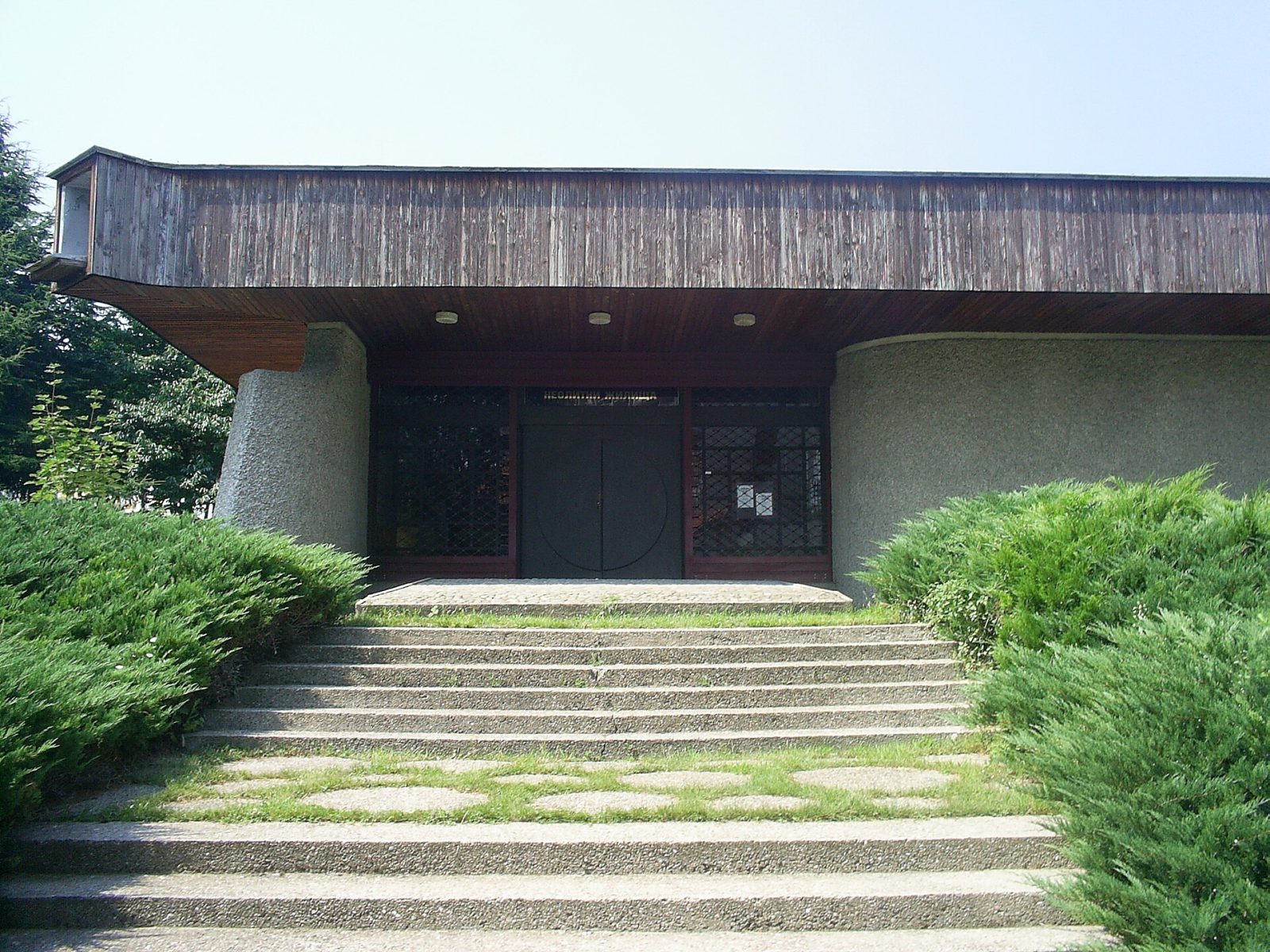
The two houses stood on the eastern slope of a hill near water. About 5500 BC the village burnt down suddenly: the walls and roofs of wooden posts woven with rods and plastered with clay collapsed, and the whole household inventory was preserved under them. Each house held 80 to 120 clay pots, with charred lentils, vetch, barley and wheat.2
The museum opened in 1979. The Bulgarian Wikipedia gives each house three rooms, 10 m long and 5.60 m wide, each with its own hearth, and says 1,826 objects were found in the excavations, among them hand mills, bread ovens, sickles of goat horn, a 33 cm decorated drum and a clay figure with a human head and an animal body. Specialists of the regional museum call the houses the best preserved and most richly furnished of the 6th millennium BC in Europe.6
The same building has the permanent exhibition “Prehistoric Art in the Stara Zagora Region”, with cult figures and jewellery of shell, bone and marble.2,6
The Defenders of Stara Zagora
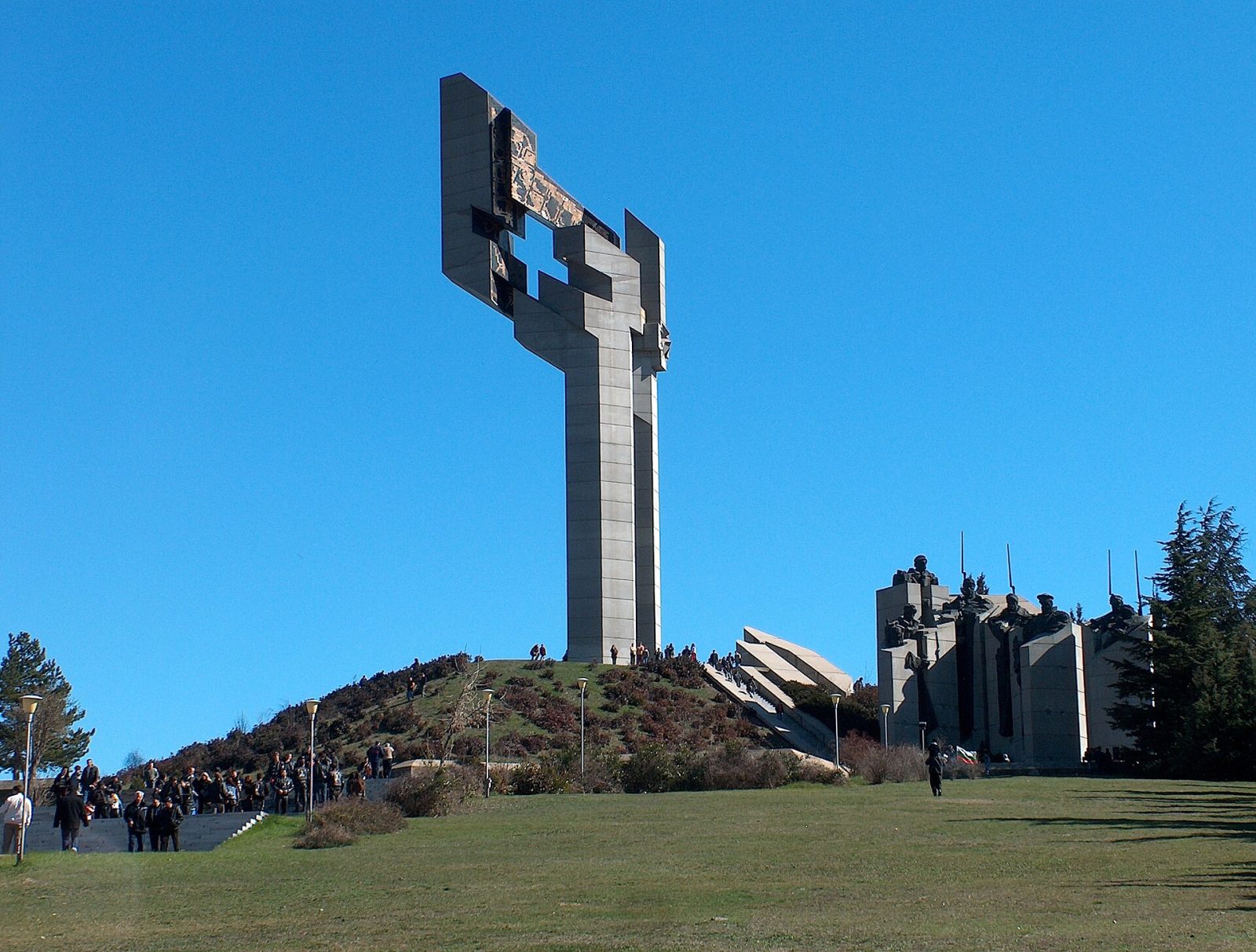
The memorial recalls the battle of 31 July 1877, when the Bulgarian volunteers fought their first battle under the Samara Flag. The 50 m monument is shaped like a flag in the wind. At its base are the ossuary of the fallen and an eternal flame, and a group of six volunteers and a Russian officer stands for the six Bulgarian battalions that first went into battle under Russian officers.3
The Samara Flag was made by nuns in Samara and given to the volunteers during the Russo-Turkish War. Many standard-bearers died rather than let it be captured. After the war it was kept in Radomir, the home town of its last standard-bearer, Nikola Korchev.3
Tickets and opening hours
| Ticket | Adults | Reduced |
|---|---|---|
| Regional History Museum and Neolithic Dwellings | €3.50 | Pensioners €2, pupils and students €1 |
| Museum of Religions, Roman mosaic, Town Life house, Hilendar metochion | €2 | Pupils, students and pensioners €1 |
| Year-round combined ticket (4 sites) | €8 | €3 |
| Summer combined ticket (6 sites) | €10 | €4 |
| Guided talk at the museum, Bulgarian or foreign language | €8 or €15 | — |
Source: Bulgarian Tourist Union: Regional History Museum, Stara Zagora (100 National Tourist Sites, in Bulgarian)1
Children under 7 enter free, and adults with children pay a reduced €2 at the museum and the Neolithic Dwellings. The memorial is open access, and a guide can be booked through the museum on +359 42 919 214. Checked in November 2026.1,3
The No. 90 stamp
The Stara Zagora museums are site No. 90 in “Know Bulgaria – 100 National Tourist Sites”, the movement the Bulgarian Tourist Union started in 1966. Walkers collect a stamp at each site in a booklet: 25 stamps earn a bronze badge, 50 a silver badge and all 100 a gold badge with a certificate.4
More stamps nearby
- No. 71: the Peyo Yavorov House Museum and Saint Athanasius Monastery, Chirpan.
- No. 91: the Kazanlak Thracian tomb and the Chudomir museum.
- No. 92: the Shipka Memorial Church.
- No. 93: the Freedom Monument on Shipka Peak.
Source: Bulgarian Tourist Union: 100 National Tourist Sites4
For the area, see the Stara Zagora province page.
Frequently Asked Questions
How old are the Neolithic Dwellings?
The village they belonged to burnt down about 5500 BC, which preserved the houses and their contents.
How much is a ticket?
The Bulgarian Tourist Union lists €3.50 for adults for the Regional History Museum and the Neolithic Dwellings together, and a year-round combined ticket for €8.
When is the Regional History Museum open?
From 10:00 to 18:00, closed on Monday, according to the Bulgarian Tourist Union.
What does the Defenders monument commemorate?
The battle of 31 July 1877, when the Bulgarian volunteers first fought under the Samara Flag.
Which tourist-site number are the Stara Zagora museums?
No. 90 in the Bulgarian Tourist Union’s 100 National Tourist Sites.
Sources
- Bulgarian Tourist Union: Regional History Museum, Stara Zagora (100 National Tourist Sites, in Bulgarian)
- Bulgarian Tourist Union: Neolithic Dwellings Museum (100 National Tourist Sites, in Bulgarian)
- Bulgarian Tourist Union: Defenders of Stara Zagora 1877 monument (100 National Tourist Sites, in Bulgarian)
- Bulgarian Tourist Union: 100 National Tourist Sites (in Bulgarian)
- Wikipedia (Bulgarian): Regional History Museum (Stara Zagora)
- Wikipedia (Bulgarian): Neolithic Dwellings (Stara Zagora)
Figures checked 12 November 2026. Information only, not investment, tax or legal advice.