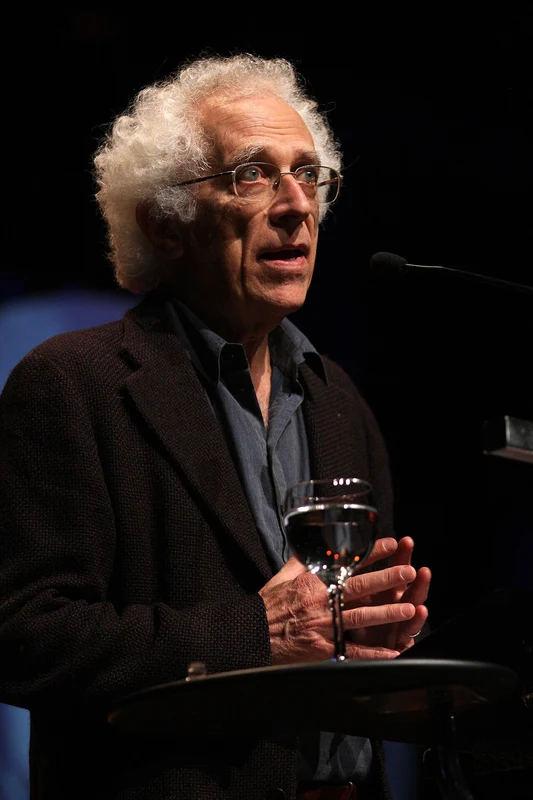
Tzvetan Todorov
At a glance
| In Bulgarian | Цветан Тодоров |
|---|---|
| Born | 1 March 1939, Sofia |
| Died | 7 February 2017, Paris |
| Family | Son of the bibliographer Todor Borov; brother of the physicist Ivan Todorov |
| Citizenship | Bulgarian; French from 1974 |
Source: Wikipedia: Tzvetan Todorov; Wikipedia (Bulgarian): Цветан Тодоров1,2
The two Wikipedias describe his studies differently. English Wikipedia says he earned an MA in philology at Sofia University in 1963, began a doctorate under Roland Barthes in 1966 and received his doctorat ès lettres in 1970. Bulgarian Wikipedia says he graduated in 1961, went to Paris on a scholarship in 1963 and defended his dissertation under Barthes in 1970.1,2
Structuralism and poetics
Todorov became a director of research at the CNRS, France’s national research centre, in 1968. In 1970 he helped found the journal “Poétique”, which he co-edited until 1979, and with Gérard Genette he edited the literary theory series “Collection poétique” at Éditions du Seuil until 1987. English Wikipedia names his definition of the fantastic in “Introduction à la littérature fantastique” (1970) as his main contribution to literary theory: an event that seems supernatural and leaves the reader hesitating between a natural and a supernatural explanation.1,2
History, memory and the other
From the 1980s Todorov turned to the history of ideas and to moral questions. His books include “The Conquest of America: The Question of the Other” (1982), “Facing the Extreme: Moral Life in the Concentration Camps” (1991), “On Human Diversity” (1993), “Voices from the Gulag: Life and Death in Communist Bulgaria” (1999), “Hope and Memory” (2000), “In Defence of the Enlightenment” (2009) and “The Inner Enemies of Democracy” (2014).1
In 2008 the jury of the Prince of Asturias Award for Social Sciences, meeting in Oviedo, gave him the prize unanimously. It noted that his work had been translated into 25 languages and wrote that “Todorov represents the spirit of unity in Europe, between the West and the East, and the commitment to the ideals of freedom, equality, integration and justice”.3
Links with Bulgaria and private life
Bulgarian Wikipedia says Todorov spent the first 23 years of his life in Bulgaria, took French citizenship in 1974 and, in a 2008 interview with a Bulgarian newspaper, described himself as both Bulgarian and French. Sofia University made him an honorary doctor in 1988. He was married first to the scholar Martine van Woerkens and then to the Canadian novelist Nancy Huston, with whom he had two children. He died in Paris on 7 February 2017 after a neurodegenerative illness.1,2
Sources
- Wikipedia: Tzvetan Todorov
- Wikipedia (Bulgarian): Цветан Тодоров
- Princess of Asturias Foundation: 2008 jury minutes
Facts checked 10 November 2026. Prepared by InvestBulgaria for general information.