Vladimir Dimitrov – the Master
At a glance
| In Bulgarian | Владимир „Майстора“ Димитров Поппетров |
|---|---|
| Born | 1 February 1882, Frolosh, near Kyustendil |
| Died | 29 September 1960 |
| Known for | Painting, draughtsmanship and teaching |
| Art school | School of Drawing in Sofia, from 1903 |
| Gallery | More than 700 oil paintings exhibited in Kyustendil |
Source: Wikipedia: Vladimir Dimitrov1
Life and career
Vladimir Dimitrov was born in Frolosh, near Kyustendil, on 1 February 1882. He began working as a clerk. In 1903, he enrolled at the School of Drawing in Sofia, where he was first called the Master, or Maystora. Before and after the First World War, he travelled to Russia, Italy, France, Germany and the United States.1
Between 1912 and 1917, he took part in the Balkan Wars and the First World War as a war painter. From 1920 to 1930, he created the painting now known as The Bulgarian Madonna. In 1922, he met the American John Crane in Rome and sold him much of his work over the following few years. He spent almost all of his later life in Shishkovtsi.1
Art and lifestyle
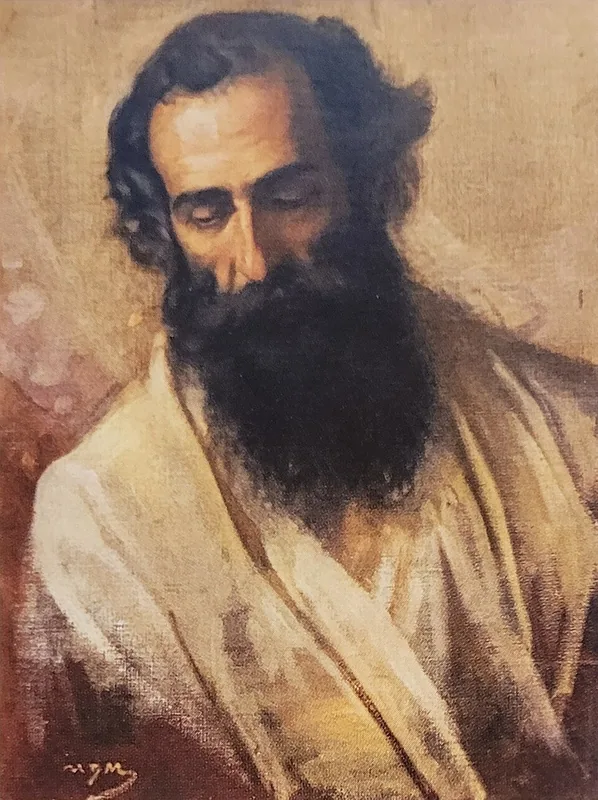
Dimitrov’s paintings use bright colours and a wide range of Post-Impressionist techniques. His work may be considered closer to Fauvism than Expressionism. He simplified figures and compositions to make them accessible to a wider public, while keeping a strong connection to reality. The emphasis in his work rests more on colour than on clarity of image.1
His family was poor. After he became famous, Dimitrov tried to give away his possessions and money, and continued to live in poverty. He wore old clothes, did not shave and ate only vegetarian food. Many people believed he was a saint and showed great affection for him.1
Legacy
More than 700 of Dimitrov’s oil paintings are exhibited in the Vladimir Dimitrov Art Gallery in Kyustendil. Maystora Peak on Greenwich Island in the South Shetland Islands, Antarctica, is named after him. In 1982, to mark the centenary of his birth, a set of six souvenir postage stamps featuring his paintings was issued.1
Sources
Facts checked 13 October 2026. Prepared by InvestBulgaria for general information.
