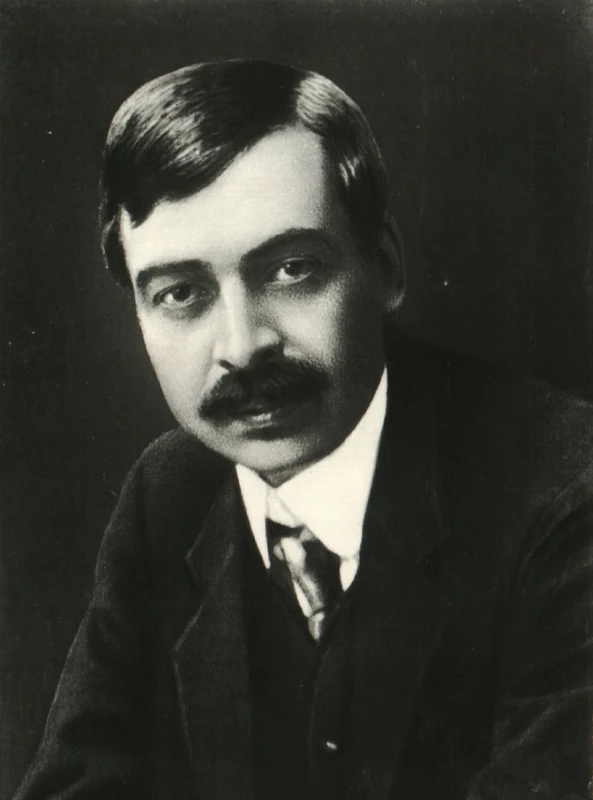
Peyo Yavorov
At a glance
| In Bulgarian | Пейо Яворов (Пейо Тотев Крачолов) |
|---|---|
| Born | 13 January 1878, Chirpan |
| Died | 29 October 1914, Sofia |
| Known for | Symbolist poetry: “Insomnias”, “In the Wake of the Shadows of the Clouds” |
| Pen name | Yavorov, given to him by Pencho Slaveykov |
Source: Wikipedia: Peyo Yavorov; Wikipedia (Bulgarian): Пейо Яворов1,2
Telegraph clerk and revolutionary
Yavorov finished the fifth grade of high school in Plovdiv, and his father then made him leave school and take a job in the telegraph service. From 1897 to 1901 he worked as a telegraph and post clerk in Chirpan, Stara Zagora, Sliven, Straldzha, Pomorie and Sofia. In those years he came into contact with the Internal Macedonian-Adrianople Revolutionary Organization and edited its papers, among them “Delo”.2
In 1902 he crossed into Macedonia for the first time with the band of Mihail Chakov, and he later fought with Yane Sandanski. His book “Gotse Delchev” (1904) made him the first biographer of the revolutionary leader. When the Balkan War began in 1912, he led partisan band No. 15 of the Macedonian-Adrianople volunteers, reached the Aegean near Kavala, was awarded the cross “For Bravery” and became the first mayor of Nevrokop after its liberation.2
The poet of “Misal”
With the help of Krastyo Krastev and Pencho Slaveykov he moved to Sofia and joined their literary magazine “Misal”. Slaveykov gave him the pen name Yavorov. His first collection, “Poems”, came out in 1901, and its revised edition of 1904 had a preface by Slaveykov. Bulgarian Wikipedia says the second collection, “Insomnias” (1907), opened the way for modern Bulgarian lyric poetry, and the anthology “In the Wake of the Shadows of the Clouds” followed in 1910.1,2
He worked as a librarian and later as dramaturg of the National Theatre, for which he wrote two plays, “At the Foot of Vitosha” (1910) and “When Thunder Strikes, How the Echo Fades” (1912). He was sent abroad several times to study literature, to Nancy, Geneva, Vienna and Paris.2
Mina, Lora and the end
English Wikipedia says most of his poems are dedicated to the two women in his life. In 1906 he fell in love with Mina Todorova, who died of tuberculosis in 1910 and was buried in Paris. In 1912 he married Lora Karavelova, the daughter of the statesman Petko Karavelov; their surviving letters record a passionate and stormy love.1,2
On 29 November 1913 Lora shot herself, and Yavorov tried to kill himself; the bullet passed through his temple and left him blind. Crushed by the trial and by rumours that he had killed her, he took poison and shot himself on 29 October 1914, at the age of 36. He was buried in the Central Sofia Cemetery.1,2
Sources differ on where Mina Todorova was buried. Bulgarian Wikipedia says Paris; English Wikipedia names the cemetery of Boulogne-Billancourt, just outside the city.1,2
Memory
- His birthplace in Chirpan became a museum in 1954, and his home in Sofia is also a museum.
- In 2008 Armenia issued a stamp with his portrait, in gratitude for his poem “Armenians”.
- A school in Yerevan, a boulevard and a district of Sofia, and Yavorov Peak in Antarctica bear his name.
Source: Wikipedia: Peyo Yavorov; Wikipedia (Bulgarian): Пейо Яворов1,2
Sources
Facts checked 10 November 2026. Prepared by InvestBulgaria for general information.