UNESCO World Heritage site
About Ancient City of Nessebar
At a glance
| Name | Ancient City of Nessebar (Старинен Несебър) |
|---|---|
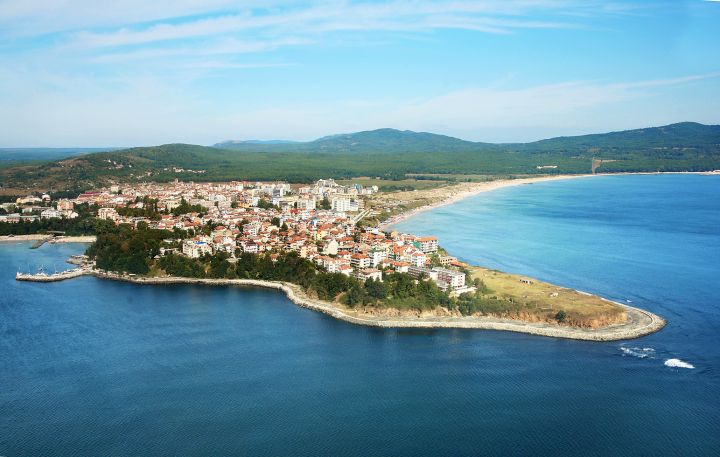
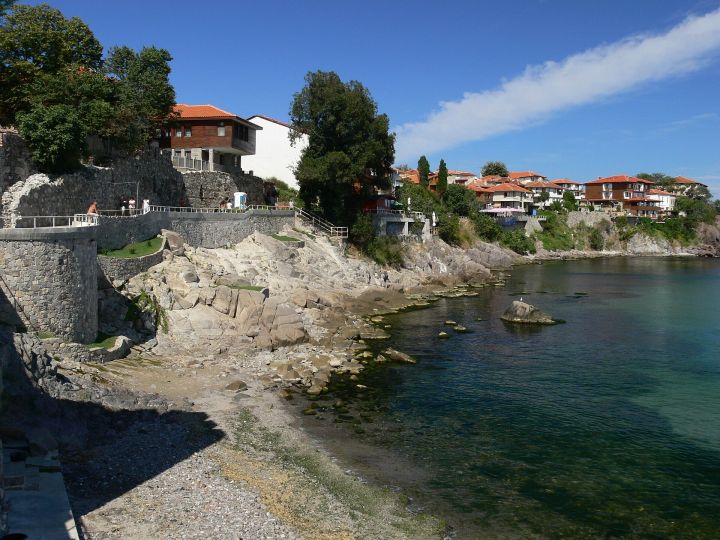
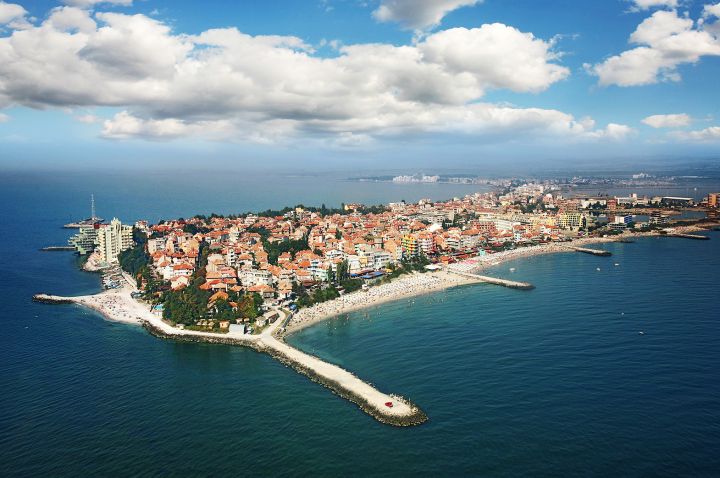
| Where | On a small rocky peninsula, 35 km north-east of Burgas, joined to the mainland by an isthmus about 400 m long |
| What it is | A town lived in for over 3,000 years, with Greek, Byzantine and medieval churches and 19th-century wooden houses |
| UNESCO | Inscribed in 1983 under cultural criteria (iii) and (iv) |
| National status | Architectural and archaeological reserve since 1956 |
| Run by | Museum “Ancient Nessebar”, which manages the archaeological museum, four churches, the windmill and the ethnographic museum |
Source: UNESCO World Heritage Centre: Ancient City of Nessebar; Wikipedia: Несебър; Museum Ancient Nessebar: Ticket prices for 20261,3,4
Why it matters
UNESCO describes Nessebar as an outstanding example of a town where many civilisations have left their mark over more than 3,000 years. It was a Thracian settlement, then a Greek colony, and later one of the most important Byzantine towns on the west coast of the Black Sea.1
It was listed under criterion (iii), as testimony to cultures that have disappeared, and criterion (iv), for its well-preserved Byzantine churches and its 19th-century wooden houses typical of the Black Sea coast.1
The Bulgarian Tourist Union’s own list of 100 National Tourist Sites gives the Archaeological Museum as No. 6, while the Bulgarian Wikipedia article gives No. 7 for the reserve “Old Nessebar” with the museum. Our Ancient Nessebar Museum page covers the museum and its stamp.7,3
History
| When | Event |
|---|---|
| Late Bronze Age | A Thracian settlement on the peninsula |
| 6th century BC | Dorian Greeks from Megara found the colony of Mesembria |
| 425–424 BC | Mesembria joins the Delian League led by Athens |
| 5th century BC | The town begins to mint its own coins |
| 1st century BC | The town comes under Roman rule |
| 812 | Khan Krum takes the town for the First Bulgarian Empire after a two-week siege |
| 1331–1371 | A time of prosperity under Tsar Ivan Alexander |
| 1366 | Taken by crusaders under Amadeus VI, Count of Savoy |
| 1453 | Ottoman conquest; the start of a long decline |
| 19th century | The wooden houses of the Revival period are built |
| 1934 | The Bulgarian name changes from Mesemvriya to Nesebar |
| 1956 | Declared an architectural and archaeological reserve |
| 1983 | Added to the UNESCO World Heritage List |
Source: UNESCO World Heritage Centre: Ancient City of Nessebar; Wikipedia: Nesebar; Wikipedia: Несебър1,2,3
English Wikipedia notes that Mesembria was the only Dorian colony on the Black Sea coast, the others being Ionian, and that it kept the right to mint coins under Rome.2
Sources give different dates. English Wikipedia says the Greek colony was founded at the beginning of the 6th century BC and Rome took the town in 71 BC. The Bulgarian Wikipedia article says the end of the 6th century BC and 72 BC, and dates the first coins to about 440 BC. UNESCO gives the Thracian name as Menebria; English Wikipedia gives Mesembria.1,2,3
Churches and monuments
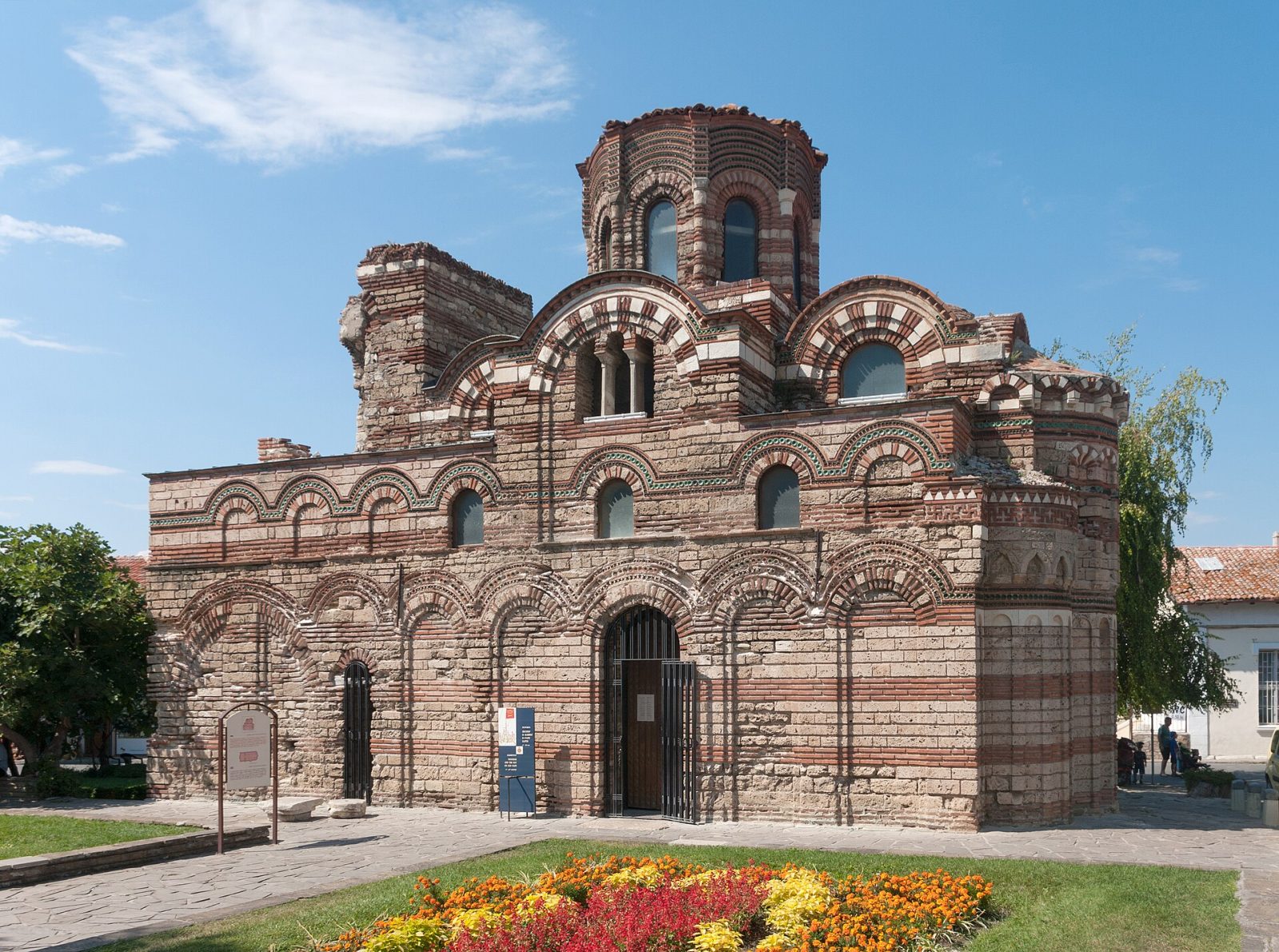
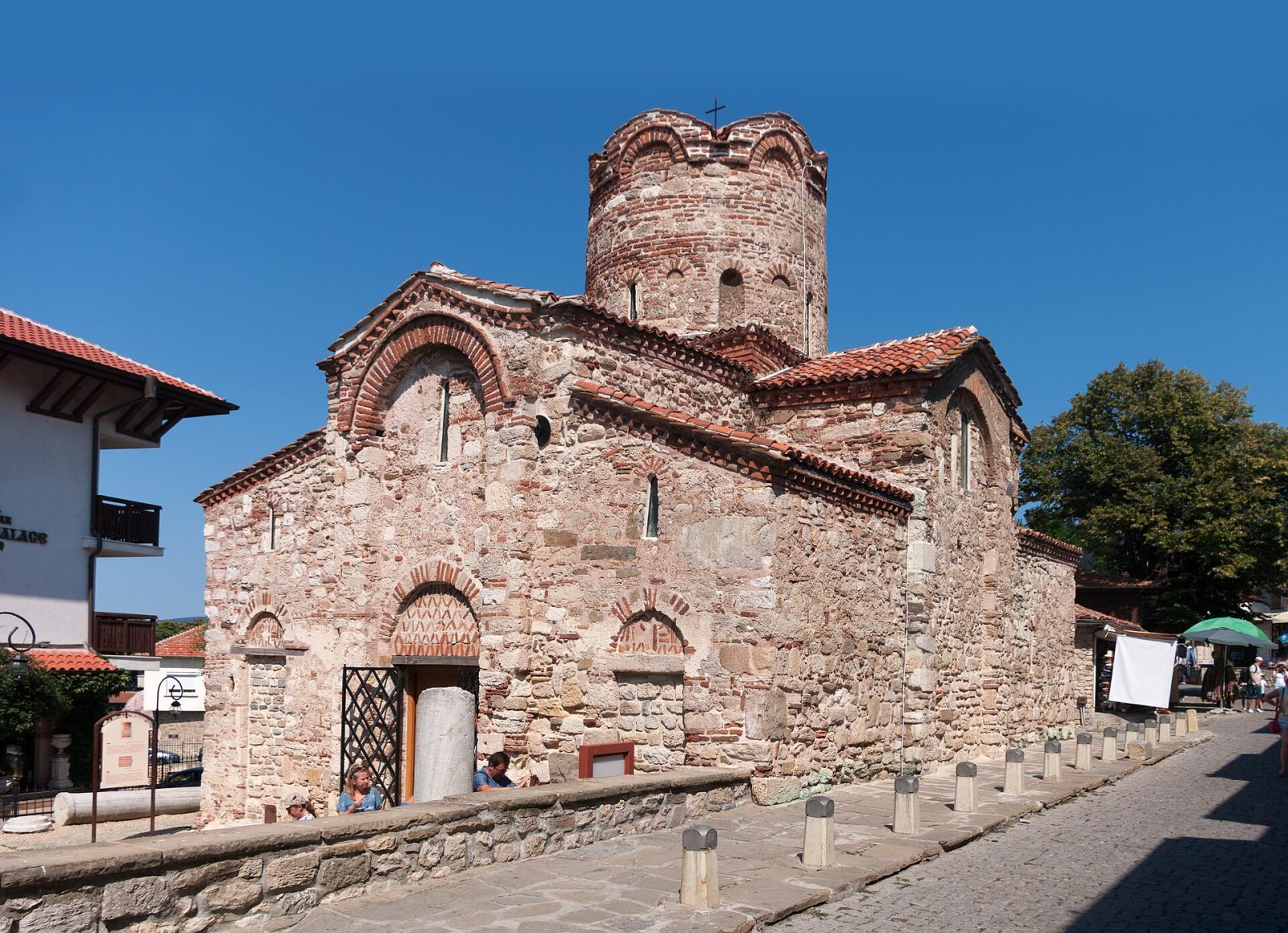
The remains of the ancient town, mostly from the Hellenistic period, include the acropolis, a temple of Apollo, an agora and a stretch of the Thracian fortification wall. The Old Metropolis basilica and the fortress date from the Middle Ages.1
| Church | Date |
|---|---|
| St Sophia, the Old Metropolis (Стара митрополия) | 5th–6th century |
| Basilica of the Virgin Eleusa | 6th century |
| St John the Baptist | 11th century |
| St Stephen, the New Metropolis (Нова митрополия) | 11th century, rebuilt in the 16th–18th century |
| St Theodore | 13th century |
| St Paraskevi | 13th–14th century |
| Holy Archangels Michael and Gabriel | 13th–14th century |
| Christ Pantocrator | 13th–14th century |
| St John Aliturgetos | 14th century |
| St Spas | 17th century |
| St Clement | 17th century |
| Assumption of the Virgin | 19th century |
Source: Wikipedia: Nesebar2
Counts of the churches differ. English Wikipedia says forty churches survive in whole or in part around the town. The Bulgarian Wikipedia article says the old town had about 42 churches, that fewer than half have been found and conserved by archaeologists, and that only one is still in use.2,3
The Ethnographic Museum is in the Moskoyani House, built in 1840 for the merchant Panayot Moskoyani and typical of late Revival-period houses in Nessebar, according to the Bulgarian Wikipedia article.3
The Archaeological Museum
The Archaeological Museum was founded in 1956, and its first exhibition was in the church of St John the Baptist. In 1994 it moved to a new building designed by the architect Hristo Koev, with a foyer and four exhibition halls. Its address is 2A Mesambria Street.5
English Wikipedia records that the archaeologist Lyuba Ognenova-Marinova led six underwater expeditions of the Bulgarian Academy of Sciences along the coast between 1961 and 1972.2
Tickets in 2026
| Site | Adults | Children |
|---|---|---|
| Archaeological Museum | €4.60 | €2.30 |
| Church of St Stephen | €4.60 | €2.30 |
| Churches of St Spas, St Paraskeva and St John the Baptist, and the Windmill (each) | €2.56 | €1.53 |
| Ethnographic Museum | €3.07 | €1.53 |
| Archaeological Museum and one church | €6.14 | €3.07 |
| Archaeological Museum and St Stephen | €7.67 | €4.09 |
| All six museum sites (museum, four churches, windmill) | €17.90 | €8.69 |
Source: Museum Ancient Nessebar: Ticket prices for 20264
These are the individual prices on the museum’s 2026 price list, which also gives lower prices for organised groups and more combined tickets.4
The museum’s website did not show a clear current timetable when we checked in November 2026. Call the museum on +359 554 4 60 19 or +359 554 4 60 12 before you go.4,5
Guided tours
Museum “Ancient Nessebar” offers guided tours in Bulgarian, Russian, English and German, for groups and individual visitors, if booked in advance. The booking number is +359 878 402 913.6
Pressure on the old town
UNESCO notes that since 1986 there have been illegal changes to 19th-century buildings and new buildings in breach of the Cultural Heritage Law. It names unauthorised changes to houses, growing pressure from tourism and investment, and mobile shop units as threats to the town’s structure and atmosphere, and calls for an overall management plan.1
The Bulgarian Wikipedia article records that in November 2010 some residents protested against a ministry decision to remove several illegal buildings, and that a petition to remove the old town from the UNESCO list was started but never submitted to any institution.3
Frequently Asked Questions
Why is Nessebar on the UNESCO list?
UNESCO listed it in 1983 under criteria (iii) and (iv), for over 3,000 years of history from the Thracians and Greeks to Byzantium, its medieval churches and its 19th-century wooden houses.
How many churches are there in Nessebar?
English Wikipedia says forty survive in whole or in part. The Bulgarian Wikipedia article says the old town had about 42, fewer than half have been found and conserved, and only one is in use.
How much are the tickets?
In 2026 the Archaeological Museum costs €4.60 for adults and €2.30 for children. A ticket for all six museum sites costs €17.90 for adults and €8.69 for children.
Are guided tours available?
Yes. The museum offers tours in Bulgarian, Russian, English and German on advance booking, on +359 878 402 913.
Where is Nessebar?
On a peninsula about 850 m long and 350 m wide, 35 km north-east of Burgas, joined to the mainland by an isthmus of about 400 m.
What was Nessebar called in ancient times?
Mesembria. The Bulgarian name was Mesemvriya until 1934. UNESCO gives the earlier Thracian name as Menebria.
Sources
- UNESCO World Heritage Centre: Ancient City of Nessebar
- Wikipedia: Nesebar
- Wikipedia: Несебър (in Bulgarian)
- Museum Ancient Nessebar: Ticket prices for 2026
- Visit Nessebar: Archaeological Museum (in Bulgarian)
- Visit Nessebar: Guided tours (in Bulgarian)
- Bulgarian Tourist Union: 100 National Tourist Sites (in Bulgarian)
Figures checked 11 November 2026. Information only, not investment, tax or legal advice.