UNESCO World Heritage site
About Madara Rider
At a glance
| Name | Madara Rider, also called the Madara Horseman (Мадарски конник) |
|---|---|
| Where | Madara National Historical and Archaeological Reserve, about 1.5 km east of the village of Madara and 15 km east of Shumen |
| Dated | Very late 7th or, more often, early 8th century, the reign of Khan Tervel |
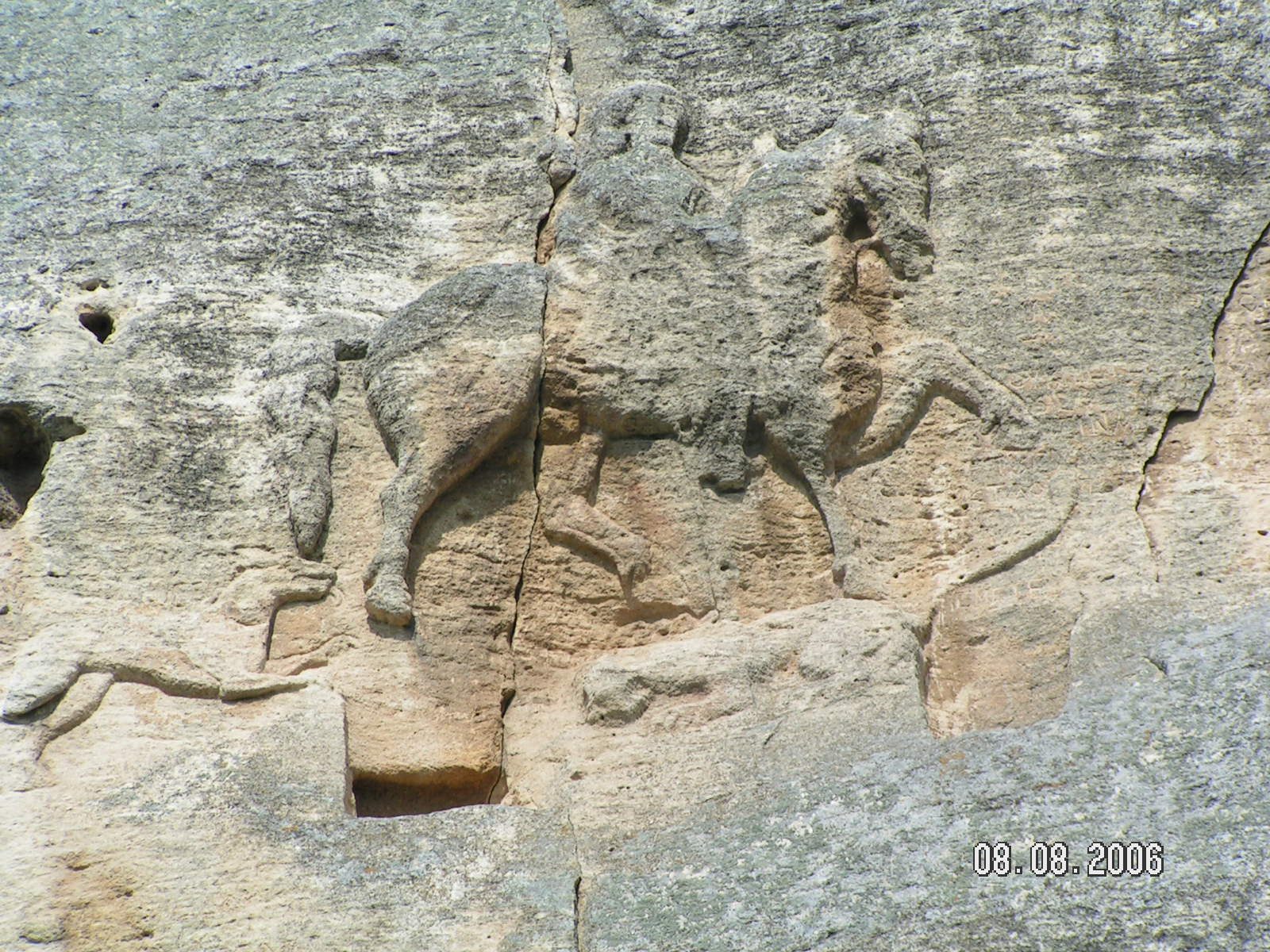
| What it is | A rock relief of a horseman spearing a lion, with a dog and a bird, and Greek inscriptions around it |
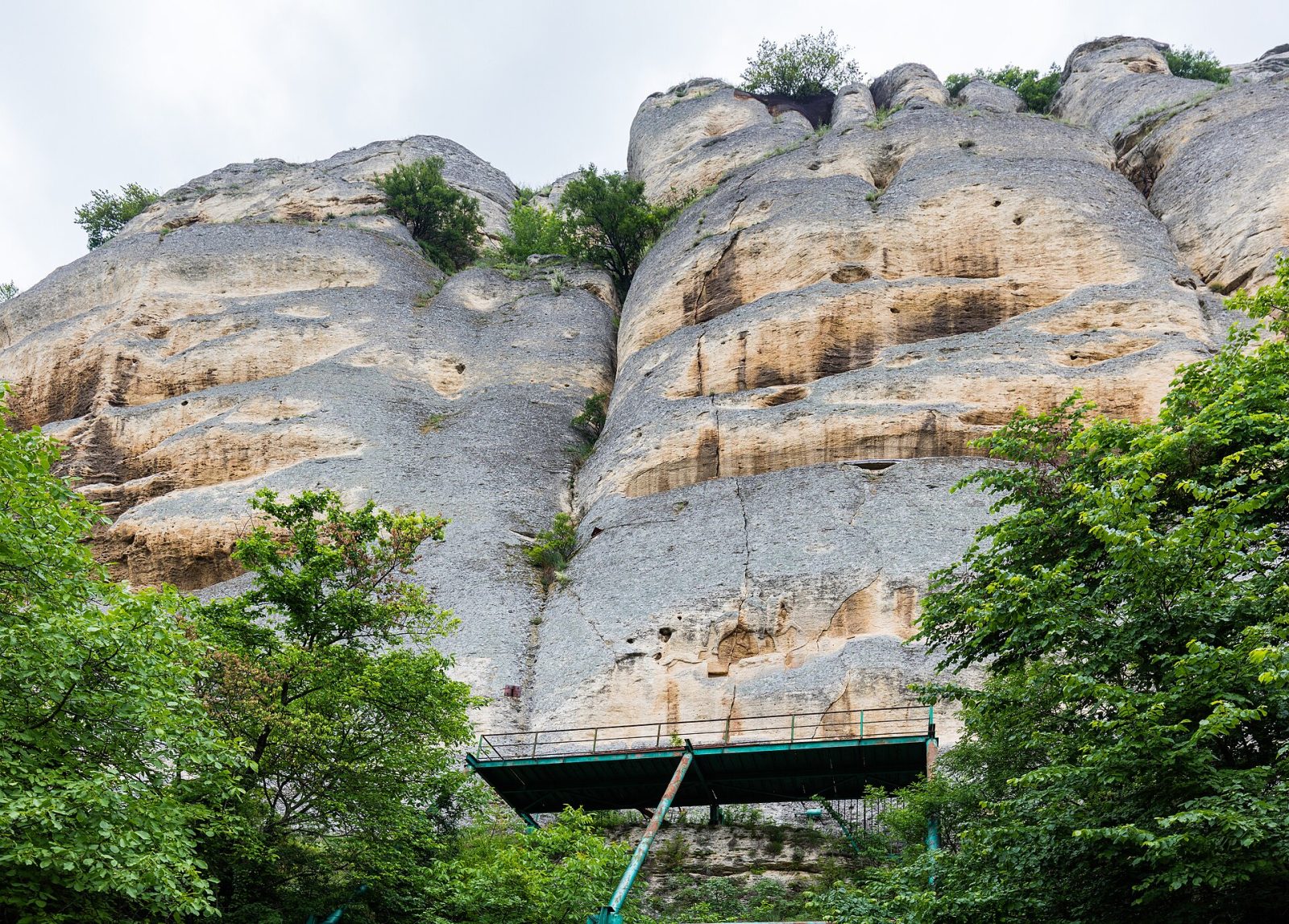
| Position | About 23 m up an almost vertical cliff 100 m high |
| UNESCO | Inscribed in 1979 under criteria (i) and (iii) |
| Run by | Regional History Museum, Shumen |
| Ticket | €3.58 for adults, €2.56 for pensioners, €1.53 for students |
Source: UNESCO World Heritage Centre: Madara Rider; Wikipedia: Madara Rider; Wikipedia: Madara (village); Visit Shumen: Madara National Historical and Archaeological Reserve; Radio Shumen (BNR): Madara Rider the most visited site in 20251,2,5,6,7
Why it matters
UNESCO describes the Madara Rider as a unique relief created in the first years of the Bulgarian state, at the beginning of the 8th century, and as the only relief of its kind, with no parallel in Europe. It has survived in its authentic state, without alteration.1
The monument matters as a work of art and as a written source. The inscriptions carved around it are, in UNESCO’s words, a chronicle of important events in the reigns of the khans Tervel, Kormisos and Omurtag. UNESCO also calls Madara the principal sacred place of the First Bulgarian Empire before the country became Christian in the 9th century.1
UNESCO listed the relief under criterion (i), as an exceptional work of art with no parallel in Europe, and criterion (iii), as historical source material from the earliest years of the Bulgarian state.1
What the relief shows
The horseman rides to the right, close to life size. He holds the reins in his left hand and thrusts a short spear into a lion lying under his horse’s front legs. A hunting dog runs behind the horse, and above the horse’s head a bird, described as an eagle, spreads its wings.2,3
- The rider wears a knee-length coat and carries a bow case on his back.
- The saddle has a high back of an eastern type, and the rider’s right foot rests in a stirrup.
- The spear stuck in the lion carries a small pennant.
- The halo and garments are now barely recognisable after centuries of erosion.
Source: Wikipedia: Madara Rider; Wikipedia: Мадарски конник2,3
Studies of the rock suggest that the lion was carved before the dog and that the horse was reworked over time. This has led some researchers to think the relief may be older than the inscriptions and was adapted for new purposes later.3
Who carved it, and why
The meaning of the relief is not settled. Many scholars link it with the Bulgars, a horse-riding people from the Eurasian steppe, and point to details such as the stirrup, the halo and the bird. Others see Thracian traditions in the rightward direction and the lion, or a likeness to Sasanian rock reliefs in Iran.2
| Reading | What it says |
|---|---|
| A Bulgar ruler | The most widely held view links the relief with Khan Tervel, the ruler named in the oldest inscription |
| A deity | Some link the rider with the Bulgar sky god Tangra; others with the Iranian god Mithra |
| The Thracian Horseman | An early theory, later rejected because of differences in the details and in the animals |
| Khan Krum | Once thought likely, now usually rejected |
Source: Wikipedia: Madara Rider; Wikipedia: Мадарски конник2,3
The Bulgarian archaeologist Rasho Rashev described the figure as a general image of a deified ruler, which in the minds of contemporaries blended with a hero of early medieval epic.3
Sources differ on the date. The English Wikipedia article gives the very late 7th or, more often, the very early 8th century. The Bulgarian article dates the relief to the 8th century and gives Tervel’s reign as 701 to 721, while the English article gives 701 to 718.2,3
The inscriptions of the khans
Three partly preserved texts in Medieval Greek are carved into the rock around the rider. The oldest belongs to Khan Tervel, which is why the relief is thought to date from his reign. The others refer to the khans Krum and Omurtag, who most likely ordered them.2,4
| Inscription | Ruler | What survives |
|---|---|---|
| I | Tervel (701–718) | A treaty with Emperor Justinian II, “the emperor with the cut-off nose”, and Tervel’s help in the emperor’s victory |
| II | Krum (802–814) | Payments in gold, a promise to give every year, treaties that were torn up, and war |
| III | Omurtag (814–831) | A fragment naming “Omurtag the ruler set by god” |
Source: Wikipedia: Madara Rider; Wikipedia: Мадарски надписи2,4
A further damaged inscription of Omurtag was found at the pagan shrine below the cliff. It is the only one that directly names Tangra, the supreme god of the Bulgars.2,3
UNESCO’s descriptions differ: the English text says the inscriptions tell of events between AD 705 and 801, the French text gives 705 to 831 and the Spanish text 705 to 813. The year 831 matches the end of Omurtag’s reign.1,2
The reserve around the rider
The rider is the best-known part of a much larger reserve. Finds in the reserve go back to the Neolithic and Eneolithic ages, and the site was used for worship by Thracians, Bulgars and Christians in turn.5,6
- The Cave of the Nymphs at the foot of the cliff, where the Thracians worshipped their gods; votive plaques to the Three Nymphs, Zeus, Heracles, Dionysus and the Thracian rider were found in the reserve.
- A Roman villa of the 2nd to 5th centuries, later used to make wine, with a granary, a wine press and storage jars.
- The pagan shrine below the relief, excavated in 1924–1935, with a three-aisled temple and a building thought to be the ruler’s residence.
- Christian churches of the 9th century and a rock monastery with more than 150 cells and churches.
- Fortresses of the First Bulgarian Empire and a medieval Bulgarian palace.
Source: Wikipedia: Мадарски конник; Wikipedia: Madara (village); Visit Shumen: Madara National Historical and Archaeological Reserve3,5,6
Sources date the rock monastery differently: the Madara village article on Wikipedia gives the 12th to 14th centuries, while Visit Shumen dates it to the 14th century.5,6
Felix Kanitz described the relief for science in 1872. Scaffolding was put up for closer study in 1895, 1905 and 1954, and a plaster cast was made in 1905. The reserve was first studied by Géza Fehér, Karel Škorpil and Rafail Popov.3,5
A fragile monument
UNESCO notes a serious and lasting conservation problem: the rock that carries the relief is unstable. Wind erosion, water running off after heavy rain and melting snow, and biological coatings are wearing the stone away.1
The relief has been the subject of archaeological, geological, hydrological, seismic and microbiological studies, gathered in a database that sets the parameters for urgent work. An international project on its conservation ended in 2007, and UNESCO says its proposed interventions still need to be carried out.1
A national symbol, now on the euro
| Year | Event |
|---|---|
| 1979 | Added to the UNESCO World Heritage List at the committee session in Luxor |
| 1999–2000 | Shown on the 1 to 50 stotinki coins of the lev |
| 29 June 2008 | Wins a national vote, with 25.44% in the survey on the design of Bulgaria’s euro coins |
| 2026 | Appears on the 1, 2, 5, 10, 20 and 50 cent coins issued when Bulgaria joined the euro area |
Source: Wikipedia: Madara Rider; Wikipedia: Мадарски конник; BTA: Madara Rider, St John of Rila and Paisii of Hilandar on Bulgarian euro coins2,3,8
The Bulgarian Wikipedia article describes the 2008 vote as the choice of a “global symbol of Bulgaria”, while the English article describes it as a survey on the design of the euro coins.2,3
The other Bulgarian euro coins show St John of Rila and Paisii of Hilandar.8
Opening hours and tickets
| Season | Open |
|---|---|
| April to October | 08:30–20:00, every day |
| November to March | 08:30–17:00, every day |
Source: Visit Shumen: Madara National Historical and Archaeological Reserve6
| Ticket | Price |
|---|---|
| Adult | €3.58 |
| Pensioner | €2.56 |
| Student | €1.53 |
Source: Visit Shumen: Madara National Historical and Archaeological Reserve6
Hours differ between sources. Visit Shumen gives the times above; the Bulgarian Wikipedia article gives 08:00–19:00 in summer and 08:00–16:00 in winter. Call the reserve on +359 5313 2095 before you travel. Prices were checked in November 2026.3,6
A staircase of almost 100 m leads to the platform below the relief. The reserve is one of the 100 National Tourist Sites, and its stamp is kept at the Madarski Konnik hut.3
Getting there and nearby
The village of Madara is 15 km east of Shumen, at the western foot of the Madara plateau, and the reserve is about 1.5 km east of the village. The postal address of the reserve is 9750 Madara, Shumen Province.5,6
The reserves of Pliska and Veliki Preslav, the first two capitals of medieval Bulgaria, are close by. Pliska, the Shumen Fortress and the museum in Shumen are run by the same Regional History Museum. In 2025, Pliska had 36,140 visitors, and all the museum’s sites together had 111,561.3,7
Frequently Asked Questions
What is the Madara Rider?
A large early medieval rock relief of a horseman spearing a lion, followed by a dog, carved about 23 m up a 100 m cliff near the village of Madara, east of Shumen. Greek inscriptions of the Bulgar khans surround it.
How old is the Madara Rider?
It is usually dated to the very early 8th century, the reign of Khan Tervel, although some sources give the very late 7th century. UNESCO dates it to the beginning of the 8th century.
Why is the Madara Rider on the UNESCO list?
UNESCO listed it in 1979 as an exceptional work of art with no parallel in Europe and as a historical source from the first years of the Bulgarian state, because its inscriptions record events in the reigns of the khans.
Who does the rider represent?
No one knows for certain. The most common view links him with Khan Tervel; other readings see a deity such as Tangra, or a generalised image of a deified ruler.
How much is a ticket to the Madara reserve?
Visit Shumen lists €3.58 for adults, €2.56 for pensioners and €1.53 for students.
What are the opening hours?
Visit Shumen gives 08:30 to 20:00 from April to October and 08:30 to 17:00 from November to March, every day. Other sources give shorter hours, so call ahead.
Is the Madara Rider on Bulgarian coins?
Yes. It appeared on the 1 to 50 stotinki coins from 1999, and since 2026 it is on the 1, 2, 5, 10, 20 and 50 cent euro coins.
How far is Madara from Shumen?
The village of Madara is 15 km east of Shumen, and the reserve is about 1.5 km east of the village.
Sources
- UNESCO World Heritage Centre: Madara Rider
- Wikipedia: Madara Rider
- Wikipedia: Мадарски конник (in Bulgarian)
- Wikipedia: Мадарски надписи (in Bulgarian)
- Wikipedia: Madara (village)
- Visit Shumen: Madara National Historical and Archaeological Reserve
- Radio Shumen (BNR): Madara Rider the most visited site in 2025 (in Bulgarian)
- BTA: Madara Rider, St John of Rila and Paisii of Hilandar on Bulgarian euro coins
Figures checked 11 November 2026. Information only, not investment, tax or legal advice.