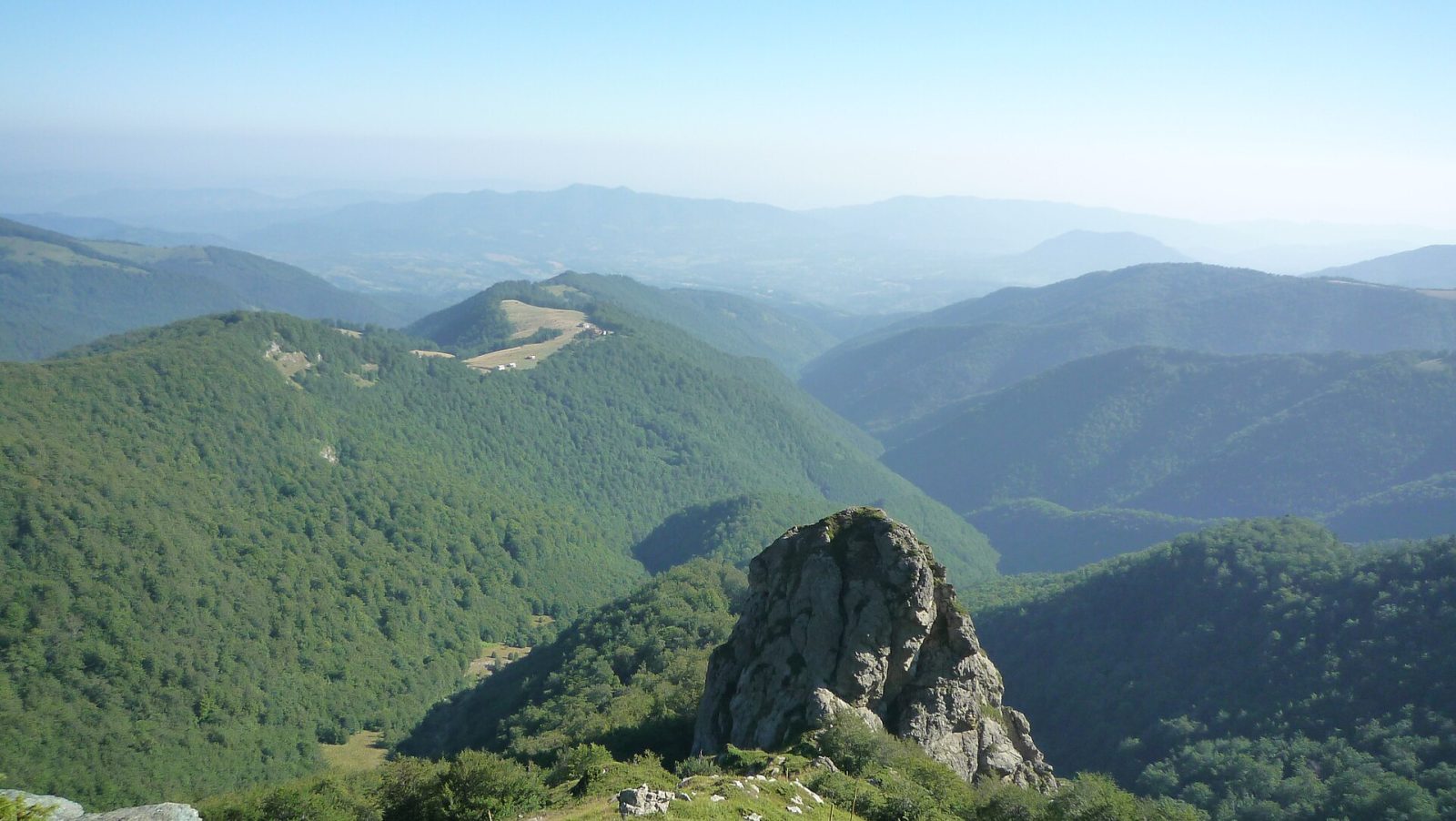
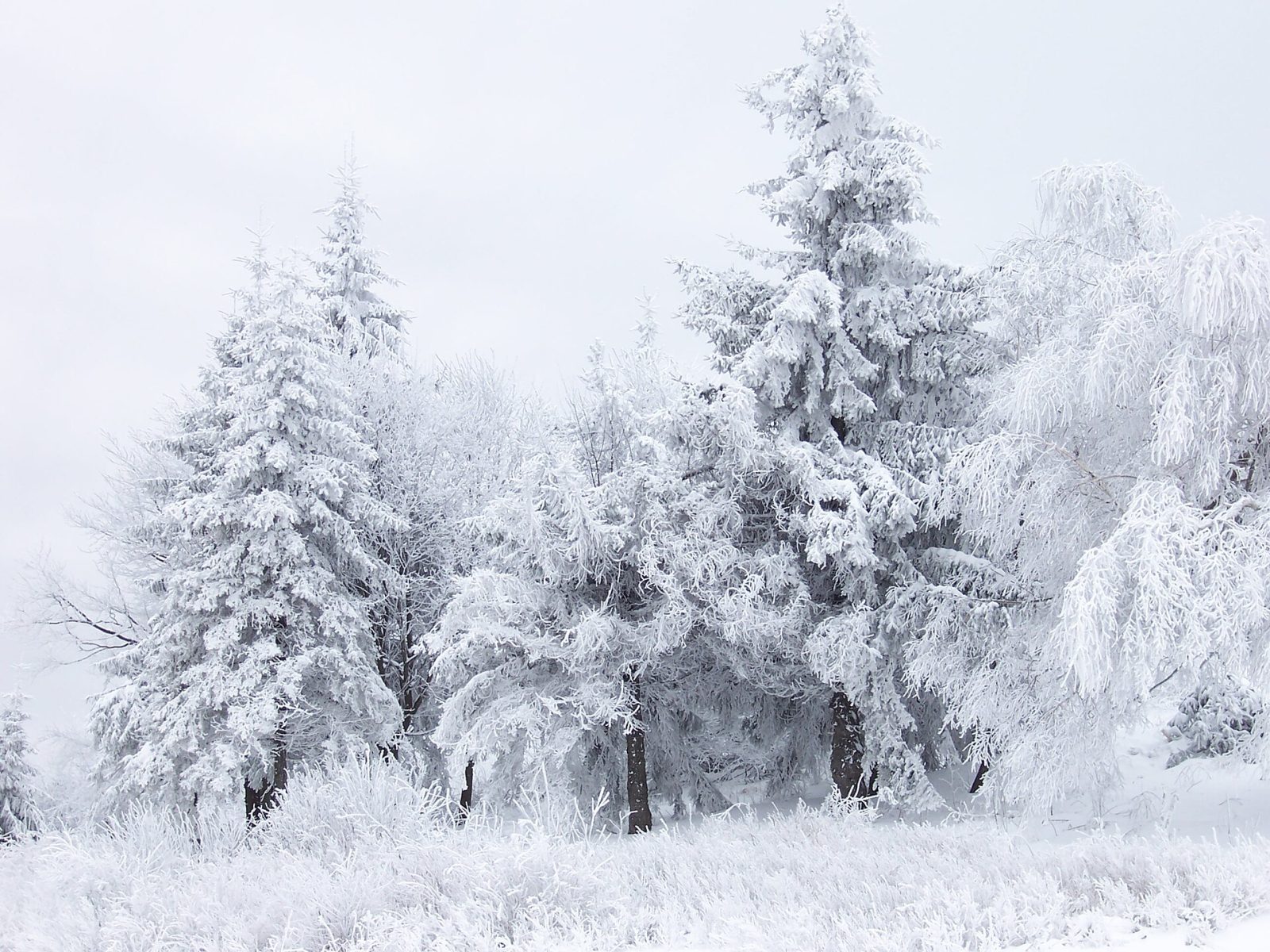
UNESCO World Heritage site
About Ancient Beech Forests (Central Balkan)
At a glance
| Name | Ancient and Primeval Beech Forests of the Carpathians and Other Regions of Europe, Bulgarian component (Старите и първични букови гори) |
|---|---|
| Where | Nine reserves inside Central Balkan National Park, in the central and highest part of the Balkan Mountains (Stara Planina) |
| What it is | Old, natural beech forests that have been left to develop without human intervention |
| UNESCO | The site was inscribed in 2007 under natural criterion (ix); the Bulgarian forests were added in July 2017 |
| The national park | About 717 km², from about 500–550 m near Karlovo to 2,376 m at Botev Peak; founded on 31 October 1991 |
| Managed by | Central Balkan National Park Directorate in Gabrovo, part of the Ministry of Environment and Water |
Source: UNESCO World Heritage Centre: Ancient and Primeval Beech Forests of the Carpathians and Other Regions of Europe; Wikipedia: Ancient and Primeval Beech Forests of the Carpathians and Other Regions of Europe; Wikipedia: Central Balkan National Park; Ministry of Environment and Water: The beech forests of Central Balkan National Park, information board1,2,3,5
Why it matters
UNESCO describes the site as relatively undisturbed, complex temperate forests that show how European beech spread across the continent. Since the end of the last Ice Age, beech has spread from a few isolated refuges in the Alps, Carpathians, Dinarides, Mediterranean and Pyrenees, a process UNESCO says is still going on.1
The site was listed under criterion (ix) as essential to understanding the history and evolution of the beech genus, Fagus. UNESCO says strict non-intervention management is essential in all its parts, and names logging and habitat fragmentation as the main threats.1
The Ministry of Environment and Water’s information board says the beech forests of Central Balkan National Park are entirely natural and cover nearly 30,000 ha, of which about 22,900 ha are pure beech stands with an average age of 133 years. The forests on the UNESCO list cover about 55% of the reserve area and over 15% of the park.5
Sources give different totals. UNESCO says the site has 93 parts in 18 countries; the ministry’s information board says 94 beech forests in 18 countries covering about 98,125 ha; the park’s website says about 100,000 ha. The Bulgarian Wikipedia article gives the average age of the park’s beech forests as 135 years.1,4,5,6
The nine reserves
The Bulgarian component is made up of the most representative beech forests in all nine reserves of the park. Reserves are the most strictly protected category of protected area under Bulgarian law.6
| Reserve | Component (ha) | Buffer zone (ha) |
|---|---|---|
| Boatin (Боатин) | 1,226.88 | 851.22 |
| Tsarichina (Царичина) | 1,485.81 | 1,945.99 |
| Kozya Stena (Козя стена) | 644.43 | 289.82 |
| Steneto (Стенето) | 2,466.10 | 1,762.01 |
| Stara Reka (Стара река) | 591.20 | 1,480.04 |
| Dzhendema (Джендема) | 1,774.12 | 2,576.63 |
| Severen Dzhendem (Северен Джендем) | 926.37 | 1,066.47 |
| Peeshti Skali (Пеещи скали) | 1,049.10 | 968.14 |
| Sokolna (Соколна) | 824.90 | 780.55 |
Source: Wikipedia: Ancient and Primeval Beech Forests of the Carpathians and Other Regions of Europe2
The components in the English Wikipedia table add up to 10,988.91 ha with 11,720.87 ha of buffer zones. The park and the Ministry of Environment and Water give the Bulgarian component as 10,989.31 ha.2,5,6
English Wikipedia lists the reserves in the provinces of Lovech, Plovdiv, Stara Zagora and Gabrovo. The park calls Severen Dzhendem its highest reserve.2,9
Central Balkan National Park
The park covers 716.69 km² and runs 85 km from west to east, with an average width of 10 km. English Wikipedia calls it the third-largest protected area in Bulgaria. It reaches into five provinces: Lovech, Gabrovo, Sofia, Plovdiv and Stara Zagora.3
- Forests cover about 56% of the park. English Wikipedia counts 2,340 species and subspecies of plants.
- Wildlife: 59 species of mammals, 224 of birds, 14 of reptiles, 8 of amphibians and 6 of fish, and 2,387 species of invertebrates.
- Waterfalls, called “praskalo” in the local dialect, include Raysko Praskalo (124.5 m), Vidimsko Praskalo (80 m), Kademliysko Praskalo (72 m) and Karlovsko Praskalo (26 m).
- Caves: Raychova Dupka in the Steneto reserve is 377 m deep, which the Bulgarian Wikipedia article says makes it the second deepest pothole in Bulgaria.
Source: Wikipedia: Central Balkan National Park; Wikipedia: Централен Балкан (национален парк)3,4
In 2017 UNESCO’s Man and the Biosphere Programme also declared the park and five surrounding municipalities, Troyan, Sevlievo, Pavel Banya, Karlovo and Anton, as the Central Balkan Biosphere Reserve. It includes four older biosphere reserves, Steneto, Tsarichina, Dzhendema and Boatin, all designated in 1977.7
The lowest point of the park differs by source: English Wikipedia gives 550 m near Karlovo in its introduction and about 500 m in its statistics; the Bulgarian Wikipedia article gives 500 m. The combined area of the nine reserves is over 20,000 ha in the Bulgarian article and 20,019 ha in the English one.3,4
Walking into the beech forest
Inside the reserves you may walk only on the marked trails. The park describes two marked routes from the Vidima district of Apriltsi into the Severen Dzhendem reserve:9,10
| Route | Length and time | Difficulty | What you see |
|---|---|---|---|
| Vidimsko Praskalo eco-trail, from the Vidima hydroelectric plant | About 12 km, about 6 hours there and back | Easy | An old beech forest along the Praskalo river, five wooden bridges and two viewing platforms facing the 80 m Vidimsko Praskalo waterfall |
| Vodnite Dupki interpretative trail, from the Mazaneto area | About 8 km, circular, about 5 hours | Medium | A 100-year-old beech forest, information boards and a viewpoint by the Vodnite Dupki cave, where 18 species of bats have been found |
Source: Central Balkan National Park: Vidimsko Praskalo eco-trail; Central Balkan National Park: Vodnite Dupki interpretative trail9,10
The park does not recommend either trail in winter. The Vidimsko Praskalo trail ends at the second viewing platform; going beyond the marked trail is prohibited in the reserve and can be fined. Do not enter the Vodnite Dupki cave.9,10
Park rules
- Hiking is the main way to visit; mass events need the directorate’s permission.
- Car traffic and parking are regulated. To use a road with restricted access, ask the nearest park office.
- Cycling and horse riding are allowed only in the places set by the management plan.
- Camp and light fires only at the places marked for this.
- No cutting trees, breaking branches or picking flowers.
- Fishing and hunting are banned in the park, as is carrying long firearms, bows or crossbows.
- No loud music or fireworks, and take your rubbish with you.
Source: Central Balkan National Park: Visitor information; Ministry of Environment and Water: What to know when visiting the national parks8,11
The Ministry of Environment and Water notes that fishing is banned throughout Central Balkan National Park, unlike in Rila and Pirin, and that fines run from 500 to 5,000 leva for individuals. In July 2026 the park announced a complete ban on open fires; check the park’s news before you go.6,11
Contacts
The park directorate is at 3 Bodra Smyana Street, 5300 Gabrovo. Its administrative service runs from 08:00 to 16:30. For reports and complaints call +359 66 801 277 on weekdays or +359 885 696 081 out of hours.10,12
Frequently Asked Questions
Which Bulgarian forests are on the UNESCO list?
The most representative beech forests in the nine reserves of Central Balkan National Park: Boatin, Tsarichina, Kozya Stena, Steneto, Stara Reka, Dzhendema, Severen Dzhendem, Peeshti Skali and Sokolna.
When were they added?
In July 2017, as part of the existing site Ancient and Primeval Beech Forests of the Carpathians and Other Regions of Europe, first inscribed in 2007.
How big is the Bulgarian part?
About 10,989 ha. The park and the Ministry of Environment and Water give 10,989.31 ha.
Can I visit the reserves?
Only on the marked trails. The park describes two marked routes from Apriltsi into the Severen Dzhendem reserve, the Vidimsko Praskalo eco-trail and the Vodnite Dupki trail.
How many countries share the site?
UNESCO says 18 countries, with 93 component parts.
Can I fish or light a fire in the park?
No. Fishing is banned throughout Central Balkan National Park. Fires are allowed only at marked places, and in July 2026 the park announced a complete ban on open fires.
Sources
- UNESCO World Heritage Centre: Ancient and Primeval Beech Forests of the Carpathians and Other Regions of Europe
- Wikipedia: Ancient and Primeval Beech Forests of the Carpathians and Other Regions of Europe
- Wikipedia: Central Balkan National Park
- Wikipedia: Централен Балкан (национален парк) (in Bulgarian)
- Ministry of Environment and Water: The beech forests of Central Balkan National Park, information board (PDF)
- Central Balkan National Park: Beech forests
- Central Balkan National Park: General information
- Central Balkan National Park: Visitor information
- Central Balkan National Park: Vidimsko Praskalo eco-trail
- Central Balkan National Park: Vodnite Dupki interpretative trail
- Ministry of Environment and Water: What to know when visiting the national parks (in Bulgarian)
- Central Balkan National Park Directorate (in Bulgarian)
Figures checked 11 November 2026. Information only, not investment, tax or legal advice.


