UNESCO World Heritage site
About Srebarna Nature Reserve
At a glance
| Name | Srebarna Nature Reserve (резерват „Сребърна“) |
|---|---|
| Where | Next to the village of Srebarna, Silistra Province, about 2 km south of the Danube |
| What it is | A freshwater lake and wetland on the Via Pontica bird migration route between Europe and Africa |
| Lake depth | 1 to 3 m |
| UNESCO | Inscribed in 1983 under natural criterion (x); boundaries extended in 2008 |
| Other status | Ramsar wetland since 1975, UNESCO Biosphere Reserve and two Natura 2000 sites |
| Managed by | Ministry of Environment and Water, through the Regional Inspectorate in Ruse |
| For visitors | A natural history museum in the village and an eco-trail with viewing platforms |
Source: UNESCO World Heritage Centre: Srebarna Nature Reserve; Wikipedia: Srebarna Nature Reserve; Visit Bulgaria: Biosphere Reservation of Srebarna1,2,4
Why it matters
UNESCO describes Srebarna as an important example of a type of wetland that was once widespread in Bulgaria, and as an important stop on the Western Palaearctic migration flyway. Floating reed islands and flooded willow woods give birds safe places to breed.1
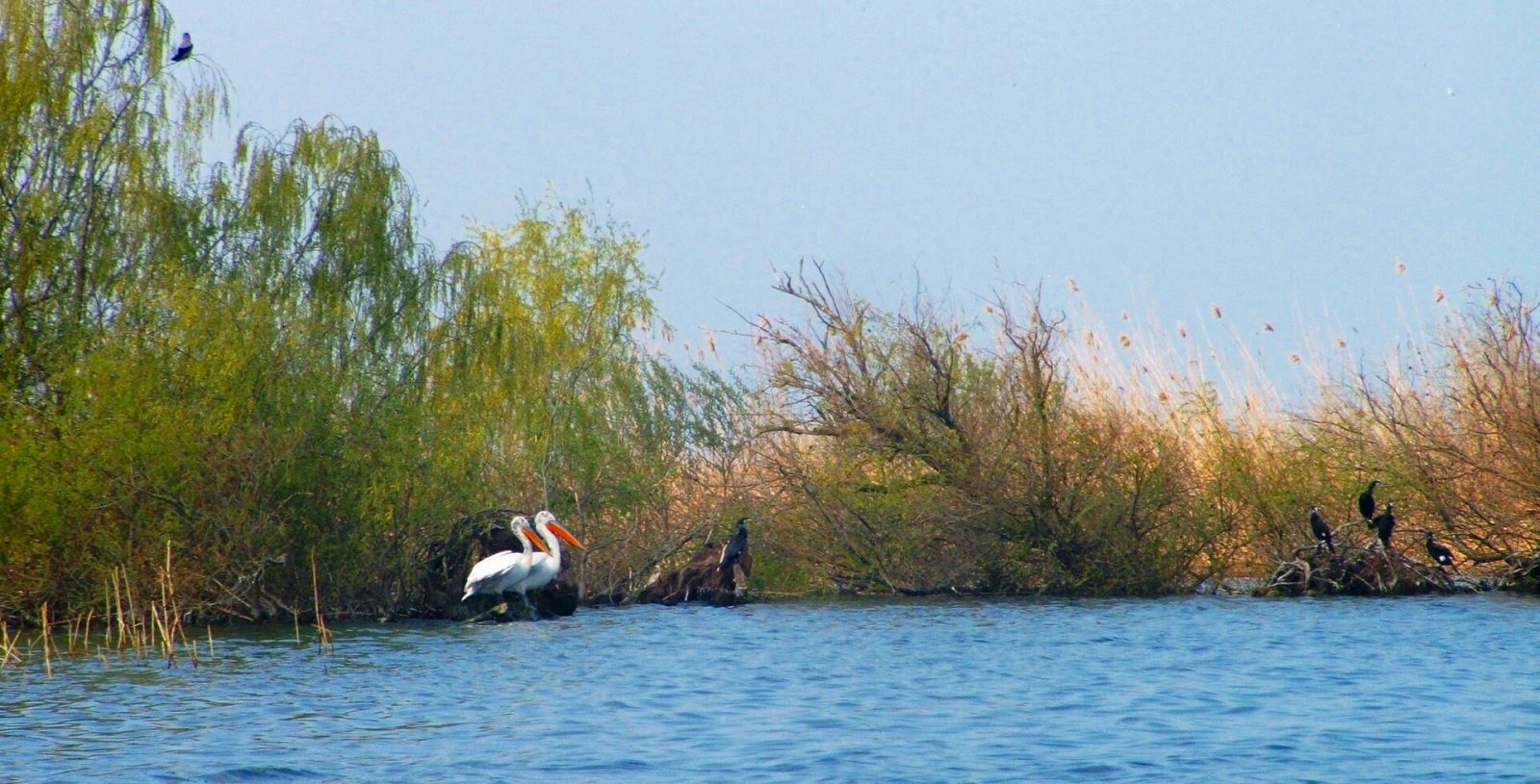
Srebarna holds the only colony of Dalmatian pelicans in Bulgaria. UNESCO also names it as holding the largest breeding populations in Bulgaria of four more globally threatened species: pygmy cormorant, ferruginous duck, white-tailed eagle and corncrake.1
UNESCO listed Srebarna under criterion (x), for its importance to the survival of threatened species. Of the 173 bird species it supports, 78 are of European conservation concern and nine are globally threatened.1
The lake and its reed islands
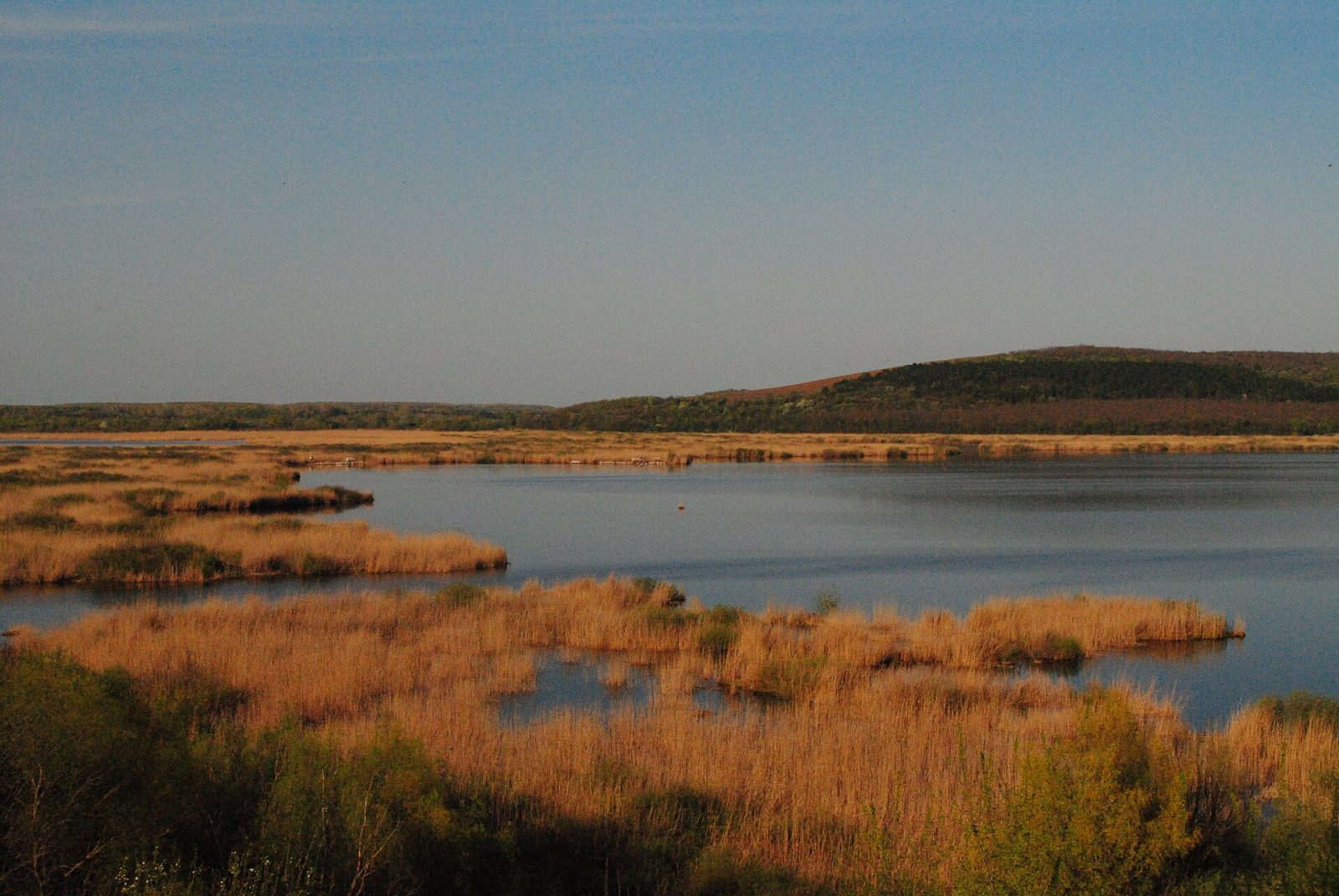
The reserve covers the lake, former farmland north of it, a belt of forest plantations along the Danube, the island of Komluka and the water between the island and the bank. The lake is the largest one left after the marshes along the Danube were drained.1
Its best-known feature is the floating reed islands, which local people call “kochki”. They rise and fall with the water level, so they do not flood, and birds build their nests on them. Reeds cover about two-thirds of the reserve.3,4
The lake was linked to the Danube until a dyke was built in 1949. In 1994 a channel was dug between the lake and the river so that Danube water flows in each spring. UNESCO notes that the lake is therefore not fully natural and depends on water management.1
Birds and wildlife
- Breeding birds include the Dalmatian pelican, pygmy cormorant, glossy ibis, spoonbill, night heron, purple heron, squacco heron, great white egret and three species of tern.
- Winter visitors include the pygmy cormorant and the red-breasted goose, with notable numbers of white-fronted and greylag geese.
- Mammals and reptiles include the otter, the European wildcat and the spur-thighed tortoise.
- Plants: 139 species of higher plants, 11 of them rare or threatened outside Srebarna.
Source: UNESCO World Heritage Centre: Srebarna Nature Reserve; Wikipedia: Сребърна (резерват)1,3
Bird counts differ widely between sources. UNESCO gives 99 nesting species and 173 species in total; the English Wikipedia article says 179 species nest in the reserve; the Bulgarian Wikipedia article says 221 species nest there.1,2,3
History of protection
| Year | Event |
|---|---|
| 1911 | The Bulgarian zoologist Aleksi Petrov visits the lake |
| 1913–1940 | Southern Dobruja, with the lake, is part of Romania |
| 1948 | Declared a reserve to protect its birds |
| 1949 | A dyke cuts the lake off from the Danube |
| 1975 | Listed as a Ramsar wetland of international importance |
| 1977 | Declared a UNESCO Biosphere Reserve |
| 1983 | Added to the UNESCO World Heritage List |
| 1992–2003 | On the List of World Heritage in Danger |
| 1994 | A channel brings Danube water back into the lake |
| 2008 | Boundaries extended and a 673 ha buffer zone created |
Source: UNESCO World Heritage Centre: Srebarna Nature Reserve; Wikipedia: Srebarna Nature Reserve; Wikipedia: Сребърна (резерват)1,2,3
UNESCO says Srebarna was the first wetland in Bulgaria to receive legal protection and the first to win international recognition. Earlier visitors included Felix Kanitz and, in 1880, the Austrian Eduard Hodek; the Bulgarian article also records that hunters led by Leo von Kalbermatten killed thousands of herons for feathers for ladies’ hats.1,3
The museum and eco-trail
The reserve itself is strictly protected, and only controlled research and conservation work is allowed inside it. Visitors start at the natural history museum in Srebarna village, which shows stuffed birds and animals of the reserve. A camera in the heart of the marsh, where the pelicans nest, sends pictures and sound to a screen in the museum.1,3,4
An eco-trail runs around the reserve, with shelters and viewing platforms from which you can watch the birds. The museum is No. 52 among the 100 National Tourist Sites of the Bulgarian Tourist Union, with a stamp.3,4
| Period | Museum hours |
|---|---|
| 1 April to 30 September | 08:00–18:00 |
| 1 October to 30 March | 08:00–16:00, closed on Saturday and Sunday |
Source: Visit Bulgaria: Biosphere Reservation of Srebarna4
Sources differ. Visit Bulgaria gives the hours above and marks Thursday as a free day. The Bulgarian Wikipedia article says the museum opens 08:00–18:00 only in the active season, 1 May to 1 October, with no day off, and that Thursday is the free day for visits. The museum’s phone number is +359 8677 24 69; call before you travel. Checked in November 2026.3,4
Getting there
Srebarna is on the main road from Silistra to Ruse, and the reserve is signposted. The museum’s address is 7587 Srebarna village.4
The distance from Silistra varies by source: the English Wikipedia article gives 18 km west of Silistra, while the Bulgarian article and Visit Bulgaria give 16 km.2,3,4
Frequently Asked Questions
What is Srebarna famous for?
Its birds, above all the only Dalmatian pelican colony in Bulgaria, and the floating reed islands on which many birds nest.
Why is Srebarna on the UNESCO list?
UNESCO listed it in 1983 under criterion (x), as a wetland critical to the survival of threatened bird species, on a major migration route.
Was Srebarna ever on the danger list?
Yes. The Bulgarian Wikipedia article records it on the List of World Heritage in Danger from 1992 to 2003. UNESCO notes that the lake was cut off from the Danube by a dyke in 1949 and that a channel built in 1994 brings river water back each spring.
Can you walk into the reserve?
The reserve is strictly protected. Visitors use the museum in Srebarna village and the eco-trail with viewing platforms around the reserve.
When is the museum open?
Visit Bulgaria gives 08:00 to 18:00 from April to September and 08:00 to 16:00 on weekdays from October to March. Other sources give a shorter season, so call +359 8677 24 69 first.
How far is Srebarna from Silistra?
About 16 to 18 km west of Silistra, depending on the source, on the road to Ruse.
Sources
- UNESCO World Heritage Centre: Srebarna Nature Reserve
- Wikipedia: Srebarna Nature Reserve
- Wikipedia: Сребърна (резерват) (in Bulgarian)
- Visit Bulgaria: Biosphere Reservation of Srebarna
Figures checked 11 November 2026. Information only, not investment, tax or legal advice.