UNESCO World Heritage site
About Thracian Tomb of Sveshtari
At a glance
| Name | Thracian Tomb of Sveshtari (Свещарска гробница) |
|---|---|
| Where | Sboryanovo reserve, 2.5 km south-west of the village of Sveshtari, Isperih Municipality, Razgrad Province |
| Dated | First quarter or first half of the 3rd century BC |
| Built for | Probably the Getic king Dromichaetes and his wife |
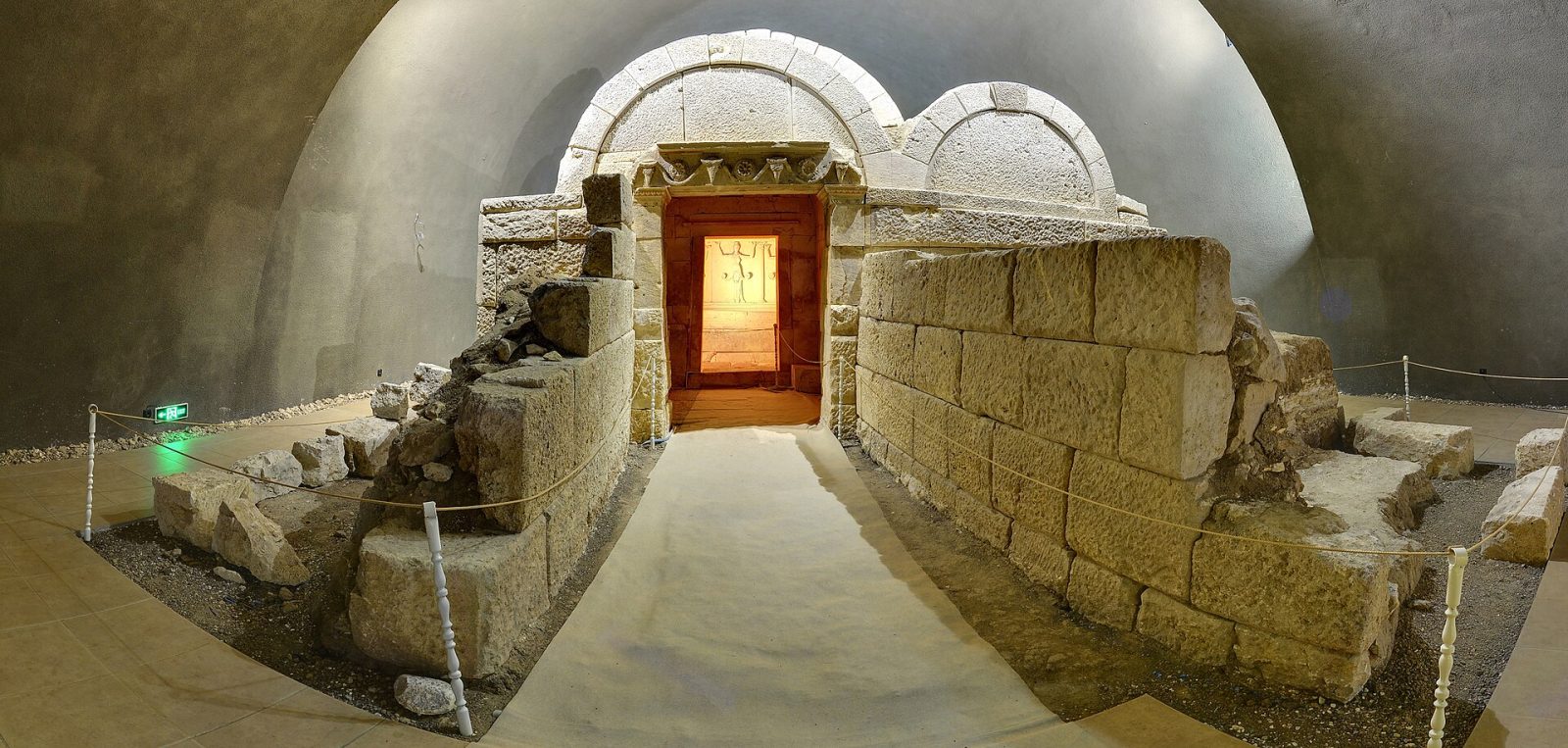
| What it is | A corridor and three square chambers under a barrel vault, with ten caryatids in the burial chamber |
| UNESCO | Inscribed in 1985 under criteria (i) and (iii) |
| Open | Seasonally, from March to November, closed on Mondays and Tuesdays |
| Run by | Isperih Historical Museum |
Source: UNESCO World Heritage Centre: Thracian Tomb of Sveshtari; Wikipedia: Thracian Tomb of Sveshtari; Wikipedia: Свещарска гробница; Bulgarian Tourist Union: Sboryanovo reserve, 100 National Tourist Sites1,2,3,4
Why it matters
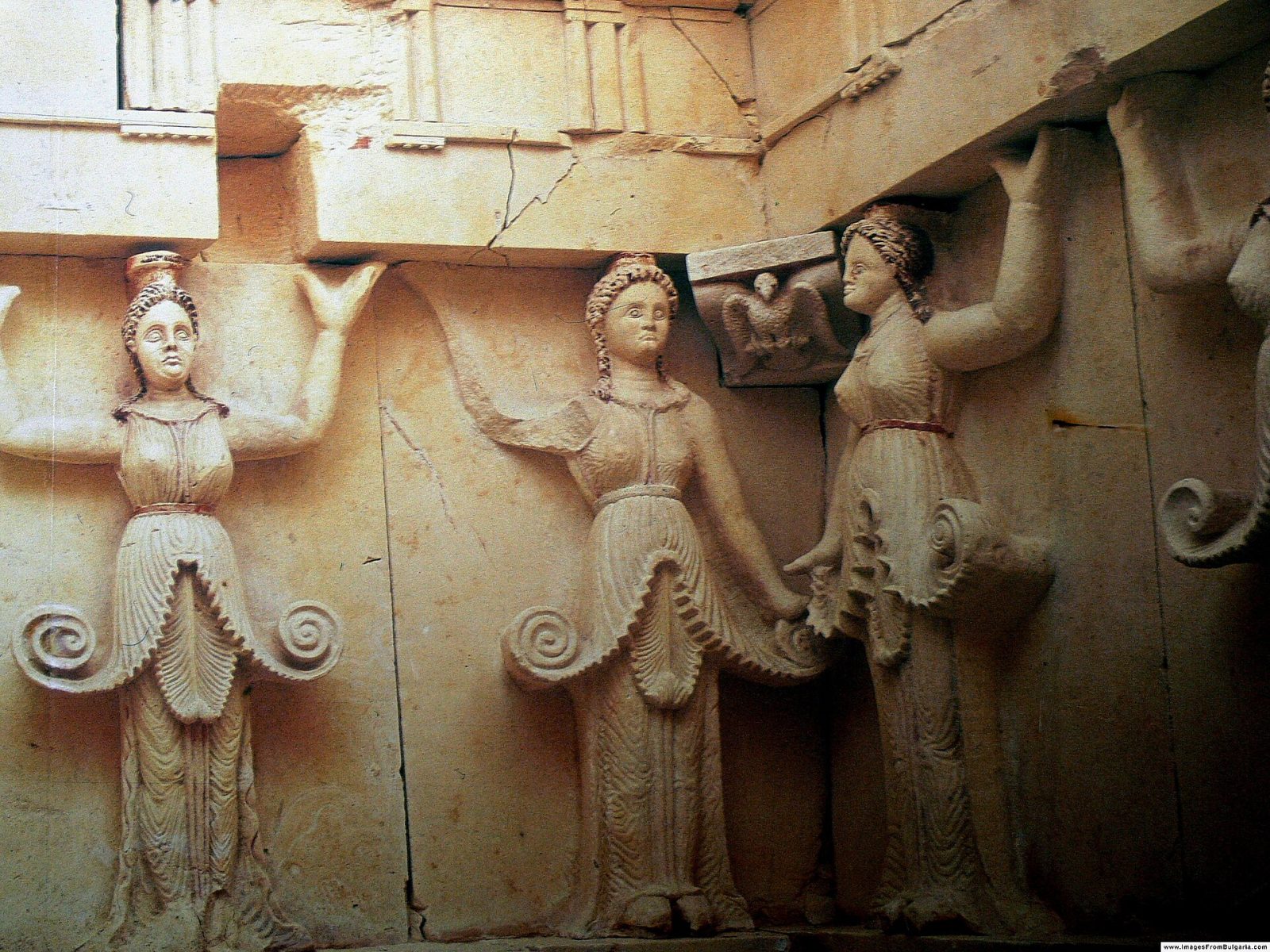
UNESCO calls the tomb an extremely rare and very well preserved monument of tomb architecture. Its ten female figures in high relief and the painted lunette in the vault are, according to UNESCO, the only examples of their type found so far in the Thracian lands.1
The tomb is also a record of the Getae, a Thracian people who lived north of the Haemus, today’s Stara Planina, and who, according to ancient geographers, were in contact with the Greek and Hyperborean worlds. UNESCO describes it as local art inspired by Hellenism and a rare case of an interrupted creative process, because the work was never finished.1
UNESCO listed the tomb under criterion (i), for its half-human, half-plant caryatids and their preserved colours, and criterion (iii), as exceptional evidence of the culture of the Getae.1
Discovery and the royal couple
The tomb was uncovered at the end of August 1982 during excavation of the tall Ginina mound, Mound No. 7 of the eastern necropolis of Sboryanovo. The dig was led by Maria Chichikova, working with Totyu Ivanov, and the find became an archaeological sensation.2,3
The tomb is probably the grave of Dromichaetes, who ruled the Getae on both sides of the lower Danube around 300 BC, and of his wife, a daughter of King Lysimachus, one of the generals and successors of Alexander the Great.2
Two stone beds, human bones and grave goods were found in the burial chamber, beside the bones of five horses killed to follow their master into the afterlife. Everything made of precious metal had been looted in antiquity. A Celtic brooch of the La Tène type was found as well, although the rest of the burial rite is typical of Thrace.3
The identification with Dromichaetes is a probability, not a certainty: the English Wikipedia article says the tomb is “probably” his, and the Bulgarian article says he was “probably” buried there.2,3
Inside the tomb
The tomb is built of smooth blocks of soft limestone. A corridor leads to three square rooms, an antechamber, a side room and the burial chamber, all covered by a semicircular vault. Ionic columns frame the entrance, under a frieze of ox heads, rosettes and garlands.3
- The caryatids: ten women, each 1.20 m tall, with raised arms, in long finely pleated dresses whose hems turn up like the cup of a flower; UNESCO describes them as half human, half plant.
- The colours: ochre, brown, blue, red and lilac shades survive on the figures, according to UNESCO.
- The lunette above the burial chamber shows the ruler on horseback, followed by two armour-bearers, while a goddess offers him a golden wreath, followed by four women with gifts.
- A small temple facade stands beside one of the stone beds, a sign that the dead ruler was to be honoured as a hero.
Source: UNESCO World Heritage Centre: Thracian Tomb of Sveshtari; Wikipedia: Свещарска гробница1,3
Neither the sculptors nor the painters finished their work. Some caryatids’ hands are only roughly cut, and parts of the painting are outlined in black chalk only, which suggests that the ruler died suddenly.3
The Sboryanovo reserve
The tomb lies inside the Sboryanovo historical and archaeological reserve, between the villages of Malak Porovets and Sveshtari, in the canyon of the Krapinets river. People lived here from the end of the Stone Age, and from the 9th–8th century BC the Getae made the area a political, cultural and religious centre, which peaked in the 4th–3rd century BC.4
- More than 40 Thracian mounds, sanctuaries, ancient and medieval villages, a fortress, a mausoleum and an Ottoman-era minaret, according to UNESCO.
- A Getic city on a plateau bordered by the Krapinets ravines, with an outer wall up to 4 m thick around about 10 ha and an inner wall around about 5 ha, lived in from about 335 to about 250 BC.
- Two smaller tombs next to the Sveshtari tomb, which can be visited on a joint ticket.
- The Demir Baba Tekke, a Thracian sanctuary at Kamen Rid and a medieval estate, which can be visited on your own.
Source: UNESCO World Heritage Centre: Thracian Tomb of Sveshtari; Wikipedia: Thracian Tomb of Sveshtari; Bulgarian Tourist Union: Sboryanovo reserve, 100 National Tourist Sites; Sboryanovo reserve: sightseeing1,2,4,5
The Getic city has been suggested as Helis, the capital named in ancient sources. In 2012 archaeologists found a gold ring, 44 depictions of female figures and 100 gold buttons in 150 graves of the 4th century BC near the village.2
Conservation
The tomb is preserved where it was built. When the mound was restored over it, a moisture-isolating protective shell was put in place, and UNESCO says the stone figures and painted parts are in good condition, with conservation done through minimal interference. The tomb is open to visitors within technical conservation limits.1
Opening hours and tickets
| Period | Open |
|---|---|
| 17 March to 30 November | Wednesday to Sunday, 09:30–16:30 |
| Monday and Tuesday | Closed |
| 1 December to 17 March | Closed |
Source: Bulgarian Tourist Union: Sboryanovo reserve, 100 National Tourist Sites4
| Ticket | Price |
|---|---|
| Adult, Sveshtari tomb | €10, guided talk included |
| Pupil or pensioner | €5 |
| Joint ticket with the two smaller tombs, adult | €15 |
| Joint ticket, pupils, students, pensioners and people with a disability over 50% | €7.50 |
Source: Bulgarian Tourist Union: Sboryanovo reserve, 100 National Tourist Sites4
Sources differ. The Bulgarian Tourist Union gives the hours and euro prices above. The reserve’s own page gives 1 March to November, 09:00–12:00 and 12:30–17:00 without Mondays and Tuesdays, and prices of 10 leva and 5 leva. Book on +359 84735 279 or +359 889 00 71 83 before you travel. Checked in November 2026.4,5
The guided talk is part of the visit to the main tomb. The Sboryanovo reserve is No. 49 among the 100 National Tourist Sites of the Bulgarian Tourist Union.4
Getting there
The tomb is 2.5 km south-west of Sveshtari and about 42 km north-east of Razgrad, in north-eastern Bulgaria. The Isperih Historical Museum, which looks after the reserve, is at 6 Tsar Osvoboditel Street, Isperih.2,3,4
Frequently Asked Questions
What is special about the Sveshtari tomb?
Its ten carved caryatids, half woman and half plant, and the painted lunette in the burial chamber, which UNESCO says are the only examples of their type found so far in the Thracian lands.
Who was buried in the Sveshtari tomb?
Probably the Getic king Dromichaetes, who ruled around 300 BC, and his wife, a daughter of King Lysimachus. This is a widely held view, not a certainty.
When was the tomb discovered?
At the end of August 1982, during excavation of the Ginina mound near Sveshtari.
Is the Sveshtari tomb open all year?
No. The Bulgarian Tourist Union lists it as open from 17 March to 30 November, Wednesday to Sunday, and closed from 1 December to 17 March. Book ahead by phone.
How much is a ticket?
The Bulgarian Tourist Union lists €10 for adults and €5 for pupils and pensioners, with a guided talk included, and a joint ticket with the two smaller tombs at €15.
Why is it on the UNESCO list?
UNESCO listed it in 1985 for its unique architectural decoration and as exceptional evidence of the culture of the Getae, a Thracian people.
What else is in the Sboryanovo reserve?
Dozens of Thracian mounds, the remains of a Getic city, sanctuaries, medieval villages and the Demir Baba Tekke.
Sources
- UNESCO World Heritage Centre: Thracian Tomb of Sveshtari
- Wikipedia: Thracian Tomb of Sveshtari
- Wikipedia: Свещарска гробница (in Bulgarian)
- Bulgarian Tourist Union: Sboryanovo reserve, 100 National Tourist Sites (in Bulgarian)
- Sboryanovo reserve: sightseeing (in Bulgarian)
Figures checked 11 November 2026. Information only, not investment, tax or legal advice.