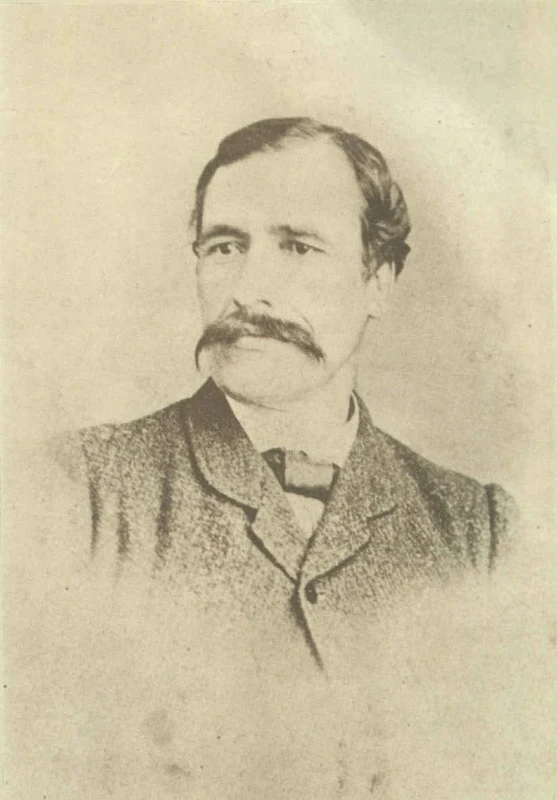
Georgi Rakovski
At a glance
| In Bulgarian | Георги Стойков Раковски |
|---|---|
| Born | 14 April 1821 (2 April Old Style), Kotel, Ottoman Empire, as Sabi Stoykov Popovich |
| Died | 9 October 1867, Bucharest, of tuberculosis |
| Education | Greek school at Kuruçeşme, Constantinople, from the end of 1837 |
| Known for | First Bulgarian Legion, the plan for armed chetas, “The Forest Traveller” |
| Resting place | Pantheon in Kotel, built in 1981 |
Source: Wikipedia (Bulgarian): Георги Раковски1
Early life and first revolts
Rakovski was born Sabi Stoykov Popovich in Kotel, into the family of a merchant and craftsman. The surname Rakovski comes from the village of Rakovo near Sliven. His mother, Ruska, was the sister of Georgi Mamarchev, a revolutionary and captain in the Russian army. At the end of 1837 he went to Constantinople to study at the Greek school at Kuruçeşme.1
In 1841 he went to Brăila, in Wallachia, to prepare a revolt. For his part in the Brăila revolt of February 1842 he was sentenced to death, but he escaped and settled in Marseille for a year and a half. Back in the Ottoman Empire, he spent 1845–1848 in prison in Constantinople. In 1853 he set up a secret society in Svishtov, which adopted the white, green and red tricolour as the flag of a future Bulgarian republic.1
Writer and journalist
In 1857 he began printing his long poem “The Forest Traveller” (“Gorski patnik”). In Belgrade he published the newspaper “Danube Swan” (“Dunavski lebed”) in 1860–1861, and in Bucharest the newspaper “The Future” (“Badushtnost”) in 1864. In 1861 he wrote a pamphlet against the resettlement of Bulgarians in Russia.1
The Legion and the chetas
In 1862 Rakovski set up a Provisional Bulgarian Government and the First Bulgarian Legion in Belgrade. The Legion fought in the clashes at the Kalemegdan fortress in June 1862. Vasil Levski served in the Legion, and it was Rakovski who gave him the nickname “Levski”.1
At the end of 1866 he formed a supreme civil leadership in Bucharest in the form of the Secret Central Bulgarian Committee. On 1 January 1867 he issued the “Provisional law for the forest chetas”, rules for armed bands that would enter Bulgaria from abroad. In 1867 the chetas of Panayot Hitov and Filip Totyu crossed into Bulgarian lands.1
Death and memory
Rakovski died of tuberculosis in Bucharest on 9 October 1867. His remains were brought to Bulgaria in 1885 and moved to Kotel in 1942. His sarcophagus is now in the Pantheon of Georgi Rakovski in Kotel, built in 1981 for the 1300th anniversary of the Bulgarian state. The town of Rakovski, streets in Sofia and Varna, and the Georgi Rakovski Military Academy in Sofia bear his name.1,2
Sources
Facts checked 10 November 2026. Prepared by InvestBulgaria for general information.