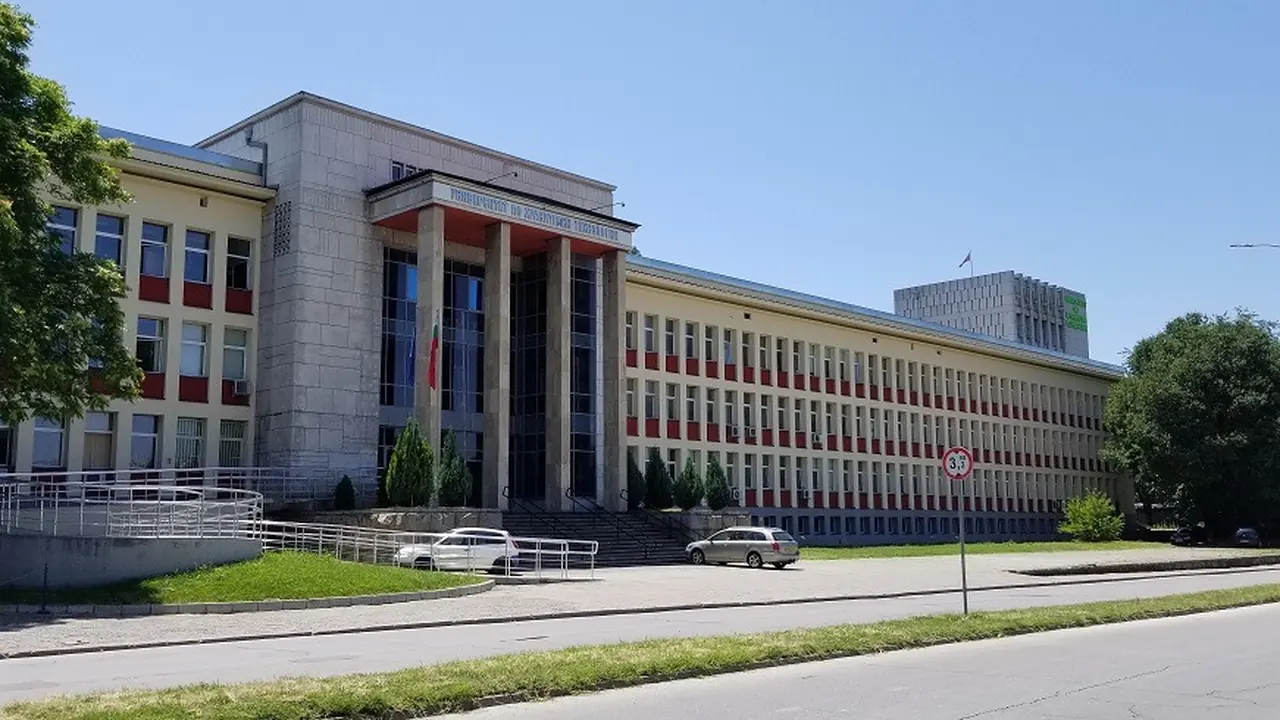
University of Food Technologies – Plovdiv
At a glance
| Bulgarian name | Университет по хранителни технологии – Пловдив |
|---|---|
| Motto | Alma Mater Alimentorum |
| Founded | 1953, as the Higher Institute of Food and Flavour Industries |
| University since | 23 January 2003 |
| Type | State university |
| Rector | Prof. Galin Ivanov, elected December 2023 |
| Faculties | Technology, Engineering, Economics |
| Bachelor’s degree | Four years, full-time or part-time |
| Website | uft-plovdiv.bg |
Source: Wikipedia (Bulgarian): Университет по хранителни технологии; University of Food Technologies: History and rectors; University of Food Technologies: Admissions handbook for bachelor’s degrees 2023/24 (PDF, in Bulgarian); Official website: University of Food Technologies – Plovdiv1,2,3,5
Sources give different dates for the founding decree, No. 230 of the Presidium of the National Assembly. Bulgarian Wikipedia and the university’s admissions handbook give 10 July 1953; the university’s history page cites the decree as published in State Gazette No. 47 of 12 June 1953.1,2,3
History
| Year | Event |
|---|---|
| 1948 | Department of Agricultural Technology opens at the Faculty of Agronomy and Forestry of Plovdiv University |
| 1950 | The department becomes the Faculty of Food and Flavour Industry of the new Higher Agricultural Institute, with 14 departments and 4 specialities |
| 1952 | First 28 engineer-technologists graduate |
| 1953 | The faculty becomes an independent school, the Higher Institute of Food and Flavour Industries (VIHVP) |
| 2001 | Institutional accreditation, renewed in 2006 with a “very good” rating and again in 2011 |
| 2003 | The 39th National Assembly turns the institute into the University of Food Technologies |
Source: Wikipedia (Bulgarian): Университет по хранителни технологии; University of Food Technologies: History and rectors1,2
The first four specialities, in 1950, were the canning of fruit, vegetables, meat and fish; tobacco technology; wine technology; and milk and dairy products. The university says this was where higher education in food technology began in Bulgaria, and describes itself as the only school of its kind in the Balkans.2,4
Faculties and programmes
| Faculty | Bachelor’s programmes, 2023/24 |
|---|---|
| Technology | Biotechnology; food technology and quality (meat and fish, dairy, fruit and vegetables); perfumery, cosmetic and flavour products; cereal, feed, bread and confectionery products; wine and beer; food analysis, control and ecology; fermentation products (taught in French) |
| Engineering | Computer-aided engineering design; food machinery; computer control and automation; computer systems and technologies; heating, refrigeration and air-conditioning engineering |
| Economics | Economics of the food industry; tourism; hotel and restaurant management; catering; food, nutrition and dietetics; nutrition and tourism; industrial management; industrial business and entrepreneurship |
Source: University of Food Technologies: Admissions handbook for bachelor’s degrees 2023/24 (PDF, in Bulgarian)3
The 2023/24 admissions handbook lists tourism, computer systems and technologies, food and beverage technology and industrial management as programmes taught in English, and fermentation products as taught in French. Bachelor’s degrees take four years, full-time or part-time; the university also offers master’s and doctoral programmes.3,4
The university also has a Centre for Francophone Education and a Department of Language Teaching, Physical Education and Sport.3
Campus and facilities
| Facility | Size |
|---|---|
| Teaching buildings | 4, with 17,000 m² of floor space |
| Great hall | 450 seats |
| Lecture halls | 3, with 300 seats each |
| Teaching laboratories | More than 50 |
| Central library | More than 150,000 volumes; reading room with 98 seats |
| Student halls | 5, with 1,500 beds |
| Sport | Indoor swimming pool, sports halls and tennis courts; a sports camp by the Batak reservoir |
Source: University of Food Technologies: Admissions handbook for bachelor’s degrees 2023/24 (PDF, in Bulgarian)3
A training restaurant in the first building serves students and staff, and the university has several training and production units.3
Bulgarian Wikipedia says the university’s halls have more than 1,000 beds; the 2023/24 admissions handbook gives 1,500 beds in five halls.1,3
Rectors
| Rector | Term |
|---|---|
| Prof. Iliya Pashev, the first rector | 1953–1957 |
| Prof. Georgi Valchev | 2003–2011 |
| Prof. Kolyo Dinkov | 2011–2019 |
| Prof. Plamen Mollov | 2019–2023 |
| Prof. Galin Ivanov | Elected December 2023 |
Source: University of Food Technologies: History and rectors2
The university’s history page lists 15 rectors since 1953.2
Frequently Asked Questions
When was the University of Food Technologies in Plovdiv founded?
Its teaching began in 1948 as a department of Plovdiv University. It became the independent Higher Institute of Food and Flavour Industries in 1953, by Decree No. 230, and the University of Food Technologies on 23 January 2003.
What faculties does the University of Food Technologies have?
It has three faculties: Technology, Engineering and Economics. Programmes range from wine and beer, dairy and biotechnology to computer systems, food machinery, tourism and industrial management.
Does the University of Food Technologies teach in English?
Yes. Its 2023/24 admissions handbook lists tourism, computer systems and technologies, food and beverage technology and industrial management as taught in English, and fermentation products as taught in French.
How long is a bachelor’s degree at the University of Food Technologies?
Bachelor’s degrees take four years, full-time or part-time. The university also offers master’s and doctoral programmes.
Does the University of Food Technologies have student accommodation?
Yes. The 2023/24 admissions handbook lists five student halls with 1,500 beds; Bulgarian Wikipedia says more than 1,000 beds.
Sources
- Wikipedia (Bulgarian): Университет по хранителни технологии
- University of Food Technologies: History and rectors (in Bulgarian)
- University of Food Technologies: Admissions handbook for bachelor’s degrees 2023/24 (PDF, in Bulgarian)
- University of Food Technologies: 73rd International Scientific Conference, short history (in Bulgarian)
- Official website: University of Food Technologies – Plovdiv
Facts checked 11 November 2026. Prepared by InvestBulgaria for general information. Check admissions, fees and programmes with the university before applying or recruiting.


