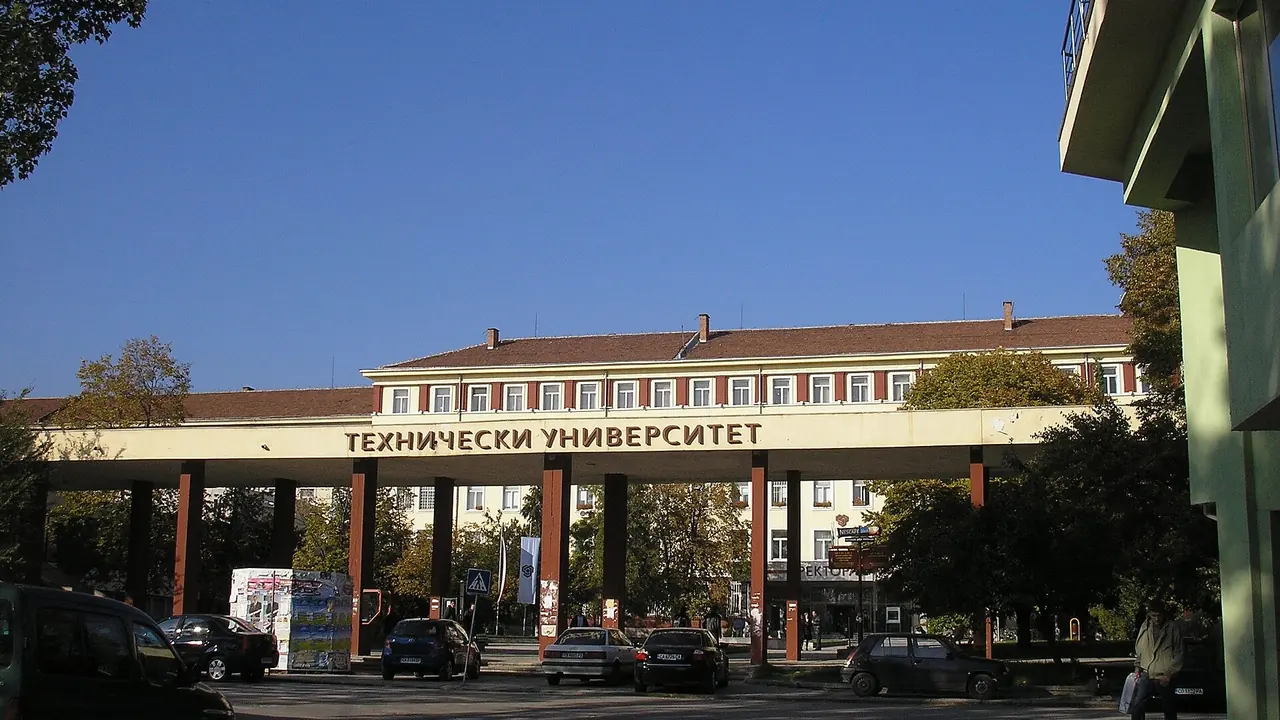
Technical University of Sofia
At a glance
| Bulgarian name | Технически университет – София |
|---|---|
| Founded | 1945 |
| City | Sofia |
| Type | Public |
| Rector | Georgi Venkov (from 2025) |
| Students | 10,724: 8,812 undergraduates and 1,912 postgraduates (2023–24) |
| Campuses | Sofia, Plovdiv, Sliven, Botevgrad and Kazanlak |
| Website | tu-sofia.bg |
Source: Wikipedia: Technical University, Sofia; Wikipedia (Bulgarian): Технически университет – София; Official website: Technical University of Sofia1,2,3
History
The institution was established in 1945 as part of the Higher Technical School, later known as the State Polytechnic. In 1953, the Polytechnic was divided into separate technical institutes, and the Institute of Mechanical and Electrical Engineering became an independent institution. It adopted the name Technical University of Sofia in 1991 and received university status on 21 July 1995.1,2
Its academic structure expanded over time with faculties in fields including transport, communications, automation and management. The university also established teaching in German, English and French.1,2
Faculties and programmes
The university’s teaching is focused on engineering and related disciplines. Its faculties are located in Sofia, Plovdiv and Sliven, with additional provision for education in foreign languages.1
- Automation
- Electronic Engineering and Technology
- Electrical Engineering
- Power Engineering and Power Machines
- Computer Systems and Technologies
- Communications and Communications Technologies
- Mechanical Engineering and Industrial Technologies
- Management, Transport, Applied Mathematics and Informatics, and Applied Physics
- Electronics and Automation, and Mechanical and Device Engineering, in Plovdiv
- Engineering and Pedagogy, in Sliven
Source: Wikipedia: Technical University, Sofia1
Foreign-language teaching units in Sofia provide engineering education in German, English and French. The university’s educational structure also includes technical colleges and secondary technical schools.1,2
Research and international links
The university’s applied research activity includes a research sector with 15 research laboratories and 20 applied research laboratories. It is also one of the institutions in the European University of Technology alliance, known as EUt+.1,2
Campuses
The university has campuses in Sofia, Plovdiv, Sliven, Botevgrad and Kazanlak. Its central campus in Sofia includes 14 buildings. Facilities there include a university publishing house, an information resources centre, a language centre and a sports centre with an Olympic-size swimming pool.1
Sources
- Wikipedia: Technical University, Sofia
- Wikipedia (Bulgarian): Технически университет – София
- Official website: Technical University of Sofia
Facts checked 13 October 2026. Prepared by InvestBulgaria for general information. Check admissions, fees and programmes with the university before applying or recruiting.
