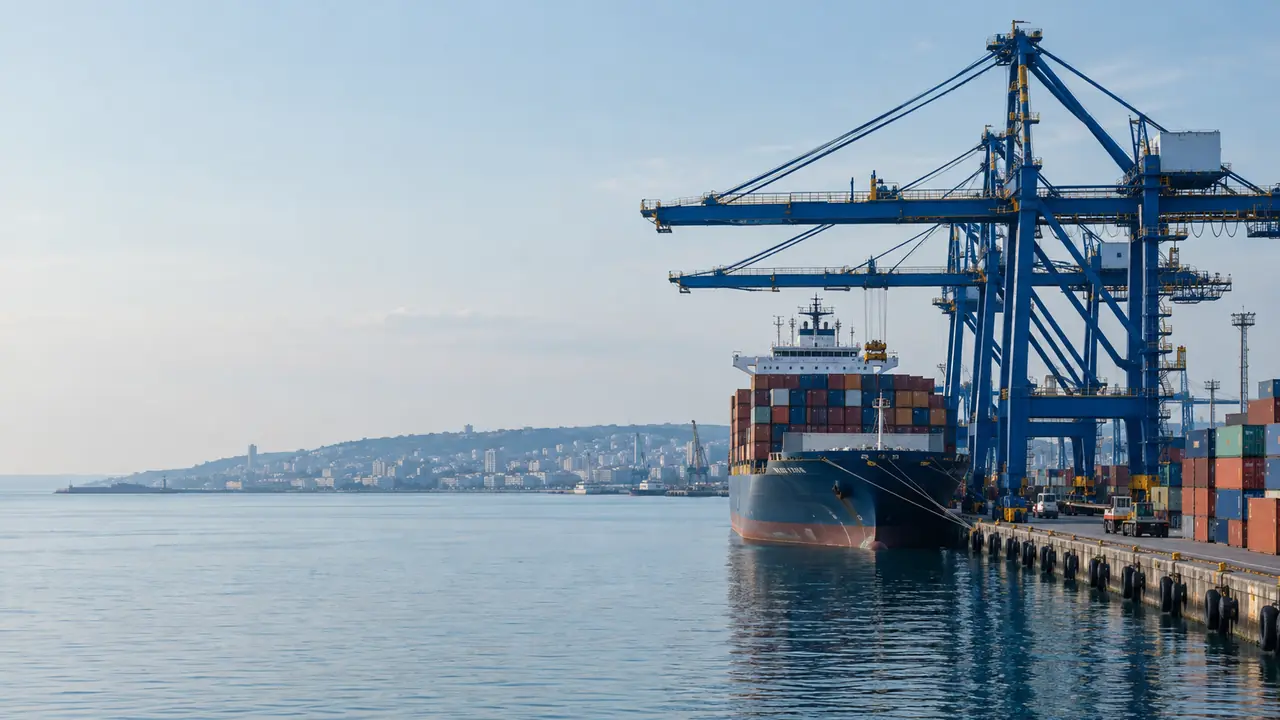
Ports in Bulgaria
How the ports are run
Bulgaria’s public ports follow a landlord model. The state-owned Bulgarian Ports Infrastructure Company owns and maintains the basic infrastructure and manages vessel traffic on the Black Sea and the Danube, from Burgas, Varna, Lom and Ruse. Terminals are run by concessionaires or state companies.1,3
Burgas
- About 19 million tonnes in 2024: oil and oil products about 9–10 million tonnes, dry bulk about 4.5 million and containers roughly 200,000 TEU.
- BMF Port Burgas holds concessions until 2059 for the Burgas East-2 and Burgas West terminals. It handled 7.3 million tonnes and 156,000 TEU in 2025.
- The new Berth 28 container terminal, 270 m long with 15.5 m of water, has been working since May 2025 and lifts container capacity from 200,000 to 350,000 TEU a year.
- New rail sidings at Burgas West and East-2 were finished in April 2026; Burgas West can take up to 10 block trains a day. A Ro-Ro terminal serves truck traffic, including planned routes to Turkish Black Sea ports.
- The state moved in 2023 to end Lukoil’s concession of the Rosenets oil terminal and take it back.
Source: Netherlands Enterprise Agency: Market study, ports in Romania and Bulgaria (November 2025, PDF); BMF Port Burgas: Strengthening Black Sea connectivity, presentation (June 2026, PDF)1,2
Varna
- About 11 million tonnes in 2024, about two-thirds dry bulk such as grain and fertilisers, with containers making up 15–20% of tonnage.
- The state-owned Port of Varna EAD runs the Varna East and Varna West terminals. A concession of the main terminals was being studied.
- Varna East has 14 berths and depths of up to 11.5 m.
- A new grain terminal is planned at Beloslav, west of Varna, by Agria Group.
Source: Netherlands Enterprise Agency: Market study, ports in Romania and Bulgaria (November 2025, PDF)1
Danube ports
Ruse, Lom, Vidin and Silistra are the main Bulgarian river ports on the Danube, part of the Rhine–Danube corridor to Central Europe. Bulgaria, Romania and Greece plan to finish FAST2 Danube, deepening the shared stretch of the river, by 2028.4,5
Frequently Asked Questions
How much cargo do Bulgaria’s Black Sea ports handle?
Burgas and Varna, Bulgaria’s two Black Sea ports, handled about 30 million tonnes of cargo in 2024. Burgas handled about 19 million tonnes and Varna about 11 million tonnes.
How much cargo does the Port of Burgas handle?
The Port of Burgas handled about 19 million tonnes in 2024. Oil and oil products accounted for about 9–10 million tonnes, dry bulk for about 4.5 million tonnes, and containers for roughly 200,000 TEU.
What is the container capacity of the Port of Burgas?
The Port of Burgas has container capacity of 350,000 TEU a year from 2026. Its new Berth 28 container terminal, which has been working since May 2025, increases capacity from 200,000 TEU a year; the berth is 270 metres long with 15.5 metres of water.
What is the Port of Varna used for?
The Port of Varna handled about 11 million tonnes in 2024 and is Bulgaria’s main port for grain. About two-thirds of its cargo was dry bulk, including grain and fertilisers, while containers made up 15–20% of tonnage.
How are Bulgaria’s public ports operated?
Bulgaria’s public ports follow a landlord model: the state-owned Bulgarian Ports Infrastructure Company owns and maintains basic infrastructure and manages vessel traffic on the Black Sea and the Danube. Terminals are operated by concessionaires or state companies.
Which are Bulgaria’s main Danube ports, and what is planned for the river?
Ruse, Lom, Vidin and Silistra are Bulgaria’s main Danube ports and form part of the Rhine–Danube corridor to Central Europe. Bulgaria, Romania and Greece plan to complete FAST2 Danube, which will deepen the shared stretch of the river, by 2028.
Sources
- Netherlands Enterprise Agency: Market study, ports in Romania and Bulgaria (November 2025, PDF)
- BMF Port Burgas: Strengthening Black Sea connectivity, presentation (June 2026, PDF)
- Bulgarian Ports Infrastructure Company: About us
- Central Commission for the Navigation of the Rhine: Market insight, inland navigation 2025 (PDF)
- Ministry of Transport and Communications: Action plan for 25 key projects on the Aegean–Danube–Black Sea axis (29 September 2026)
Figures checked 13 October 2026. Prepared by InvestBulgaria for general information. It is not investment, tax or legal advice; please confirm details with a qualified adviser before acting.
