The Climate of Bulgaria
Climate zones
For a small country, Bulgaria’s climate varies a lot. Cold continental air reaches the open Danubian Plain in the north, Mediterranean weather pushes up the southern valleys, and the Balkan Mountains, Rila, Pirin and the Rhodopes block or channel the air between them.1
- Continental: the Danubian Plain and the north, with cold winters and plenty of snow.
- Transitional: the Upper Thracian Plain around Plovdiv and the lower Struma and Mesta valleys.
- Continental-Mediterranean: the far south, including the southern Struma and Mesta valleys, the eastern Rhodopes, Sakar and Strandzha, with hot, dry summers.
- Black Sea: a strip along the coast reaching 30–40 km inland, where sea breezes are strongest in summer.
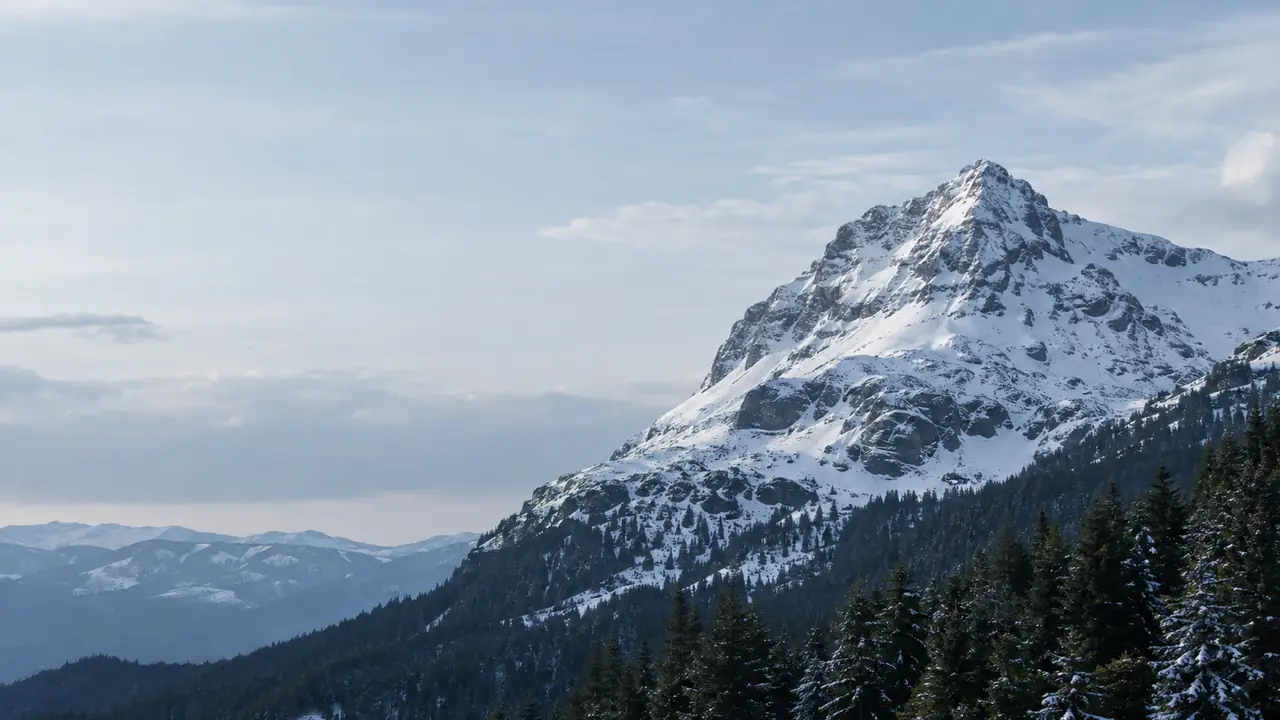
- Alpine: the mountains above about 1000 m, including Rila, Pirin and the high Balkan Mountains.
Източник: Wikipedia: Geography of Bulgaria, climate1
Sofia through the year
Sofia sits in a valley at about 550 m, at the foot of Vitosha. Winters are cold and often snowy, summers warm and sunny, and spring and autumn short and changeable. Heat waves can push юли and август temperatures to 35 °C or more.2
| Month | Average high | Average low |
|---|---|---|
| януари | 3,5 °C | −3,9 °C |
| април | 16,7 °C | 5,3 °C |
| юли | 27,8 °C | 15,3 °C |
| октомври | 17,6 °C | 6,3 °C |
Източник: Wikipedia: Sofia, climate (1991–2020 normals)2
Rain and snow
The plains get about 450–850 mm of rain and snow a year and the mountains 850–1200 mm. The wettest months are май and юни in the north and the winter months in the south; Dobrudzha and the Burgas plain are among the driest areas. Snow lies for 20–30 days a year in the lowlands but for up to nine months on the highest peaks. For winter sports, see the ski resorts.1
Summer on the coast
The Black Sea’s influence is limited to the coast and is strongest in summer, when daily sea breezes take the edge off the heat. In the second half of summer the Mediterranean influence brings hot, dry weather to the south. For the resorts, see the Black Sea coast.1
Често задавани въпроси
What is Bulgaria’s climate like?
Bulgaria has four distinct seasons and a mean annual temperature of 10.6 °C. Most of the country has a continental climate, the south has Mediterranean influence, and the Black Sea coast is cooled by sea breezes in summer.
How much precipitation does Bulgaria get each year?
Bulgaria receives an average of 670 mm of precipitation a year. The plains get about 450–850 mm annually, while the mountains get 850–1,200 mm.
What is the highest temperature ever recorded in Bulgaria?
The highest temperature recorded in Bulgaria was 45.2 °C in Sadovo in 1916.
Източници
Фактите са проверени 13 октомври 2026. Изготвено от InvestBulgaria с общоинформационна цел.
