The European Commission has accepted 53 of the 59 milestones and targets behind Bulgaria's fifth and final Recovery and Resilience Facility payment request of €1.82 billion. Deputy Prime Minister Atanas Pekanov expects more than €1.7 billion, while the six unmet items, including industrial zones and public procurement, could reduce the payment.
What happened
On 20 November the European Commission partly approved Bulgaria's fifth and final payment request under the Recovery and Resilience Facility (RRF), the core of the EU's NextGenerationEU programme. The request, submitted on 30 September, is worth €1.82 billion. The Commission found that Bulgaria had satisfactorily completed 53 of the 59 milestones and targets attached to it, and said that if its view on the remaining six is confirmed, the payment will be reduced in proportion. Deputy Prime Minister Atanas Pekanov said Bulgaria is slated to receive more than €1.7 billion from this request.
The figures and background
Bulgaria's total RRF allocation is €6.17 billion, according to The Sofia Globe. Pekanov said that this year's two payment requests take the amount received to between 98.7% and 99% of the allocated funding. The fifth request follows €1.1 billion granted by the Commission in June. The change has been fast: Pekanov told reporters that until the spring Bulgaria had received only a little over 50% of the money under the plan and that the risk of losing funds had been real, Sega reports. The Sofia Globe links the earlier delays to political instability.
The Commission has not said how large the reduction will be. It says the amount will be calculated later, using the methodology set out in its guidance on payment suspensions, which gives particular weight to milestones linked to reforms. If Pekanov's figure of more than €1.7 billion proves accurate, the cut would be less than about €120 million out of the €1.82 billion requested.
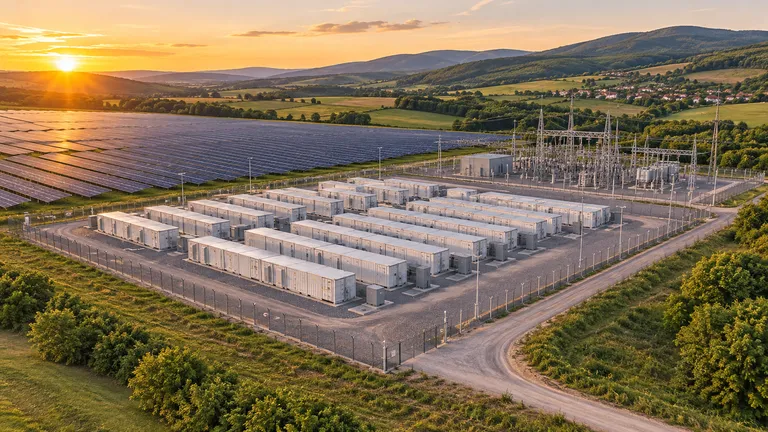
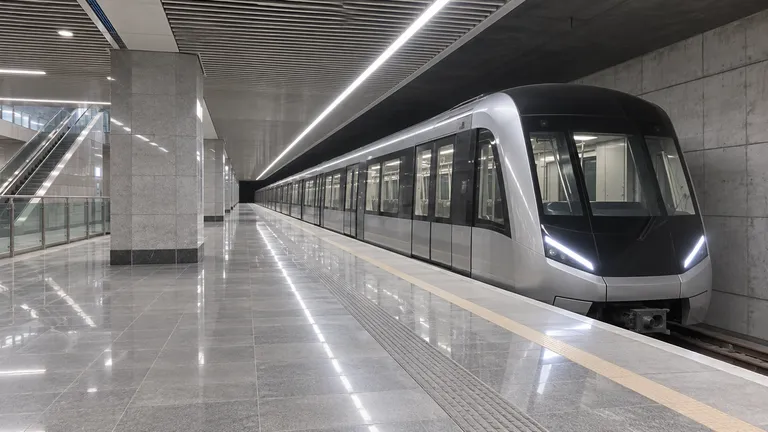
The approved measures are heavily weighted towards energy. They include energy-efficient renovation of buildings, electricity transmission networks, solar installations and energy storage, with storage capacity increased by 16 GWh. The Commission also notes improved transparency and competitiveness at Bulgarian Energy Holding (BEH) through the separation of its coal-related assets. Other completed measures include a mandatory corruption-risk management system in state-owned enterprises, integrity checks for civil servants in high-risk posts, modernised trains, cleaner public transport, new sections of the Sofia metro, and investments in healthcare and e-health.
The six items the Commission does not consider fulfilled are the renovation or construction of educational buildings, infrastructure in industrial parks and zones, the appointment or election of five members of the Anti-Corruption Commission, reducing the share of public procurement procedures with a single bidder, digital services of the Employment Agency, and digital skills training.
Pekanov tied the energy measures to a wider agreement on the coal region around Stara Zagora. According to Sega, he said a consensus had been reached that it was better for Bulgaria not to lose half a billion euros under the recovery plan and more than €1 billion under the Just Transition Fund, and that agreement had also been reached on restructuring BEH. He also said that work on the Anti-Corruption Commission had unlocked €400 million that had been blocked.
How Bulgaria compares
Bulgaria was one of several countries whose requests the Commission assessed on the same day. It approved Greece's eighth and ninth requests, worth €11.32 billion, confirming that Greece had completed all the reforms and investments in its plan. Belgium's final request of €1.38 billion was, like Bulgaria's, only partly approved, while Slovenia's request of €271.8 million was approved. Together with a €1.7 billion decision for the Netherlands, the Commission's approvals that day exceeded €16 billion.
Romania is in a position similar to Bulgaria's. On 16 November the Commission partly approved its fifth request of €2.67 billion, finding that 34 of 37 milestones and 35 of 38 targets had been met, and it is still assessing Romania's sixth and final request, The Brussels Times reports. Romania's open items include rules on using state land for renewable energy and support for renewable hydrogen. Its plan totals €19.6 billion, of which €13.1 billion is grants and €6.5 billion loans. Across the EU, the Commission said on 1 October that €450 billion of the €573 billion facility had been disbursed. The sources reviewed contained no comparable final-payment data for Croatia, Serbia or North Macedonia.
What it means for investors and companies
For contractors, equipment suppliers and energy developers, the approved measures mean that funding linked to storage, grids, rail and the Sofia metro is close to being paid. This is also the last large RRF flow: member states had to complete their milestones by the end of August 2026 and the facility ends this year. The end of the plan matters for public investment. The Ministry of Finance has said that the completion of recovery plan projects was one of the reasons much of this year's capital spending was concentrated in the last quarter, as our report on the budget deficit noted. Companies that have relied on RRF-funded contracts will need to look to other sources, such as the Just Transition Fund that Pekanov mentioned, or national budget spending.
The six missed items point to areas that matter directly to business. Infrastructure for industrial parks and zones affects how quickly sites can be offered to manufacturing investors. The single-bidder target concerns competition in public contracts, which affects every company bidding for state work. The Anti-Corruption Commission appointments are a governance issue that the Commission has now tied directly to money. For the BEH group and the Stara Zagora coal complex, the separation of coal assets is a step whose practical effects on the restructuring will become clearer only as the agreement Pekanov described is implemented.
For public finances, receiving most of the €1.82 billion before the end of the year would support the budget's cash position. The main risk is the size of the final reduction, which the Commission has not yet calculated.
What to watch next
The Economic and Financial Committee, made up of senior officials from national administrations and central banks, the European Central Bank and the Commission, has four weeks to give its opinion. The Commission said in October that it expected payment decisions towards the end of December and that all payments must be made by 31 December 2026. On the six disputed items, Bulgaria will receive the Commission's reasons and then have two months to submit observations before the final assessment, which will set the size of any reduction. Other points to watch are the next steps in the BEH restructuring, Just Transition Fund projects around Stara Zagora, and the outcome of Romania's final request.
 Analysis