Sirni Zagovezni: Bulgaria’s Day of Forgiveness
At a glance
| Date | Seventh Sunday before Easter; 22 февруари in 2026 |
|---|---|
| Also called | Proshka, Prochka, Sirni pokladi and Pokladi |
| Where | Bulgaria |
| Bulgarian name | Сирни заговезни |
Източник: Сирни заговезни1
Before the fast
Sirni Zagovezni comes immediately before the Great Lent and falls on the seventh Sunday before Easter. Its date changes with Easter; for Orthodox churches in 2026, it was 22 февруари. The feast is also known by names including Proshka, Prochka and Sirni pokladi, linked to the customs of asking forgiveness and preparing to fast.1
Meat is no longer eaten during the week before the feast. On Sirni Zagovezni, dairy products, eggs and fish are still permitted as the final foods of these kinds before the fast. The next day is called Clean Monday. Cheesefare Sunday is the final day before the Orthodox Great Lent, and Clean Monday is the first day of the fast.1,2
Asking forgiveness
Forgiveness is central to the observance. Younger family members traditionally visit older relatives and close relations, such as godparents, to ask them to forgive past wrongs. Before the evening meal, family members ask forgiveness of one another. In church, a special rite follows Vespers: clergy and worshippers bow before the cross and icons, then ask forgiveness of one another. The practice is preparation for Lent and reconciliation.1
Maslenitsa, an Eastern Slavic religious and folk holiday, also marks its final day as Forgiveness Sunday. People may bow to one another and ask forgiveness at Vespers. This practice is shared with Sirni Zagovezni, though Maslenitsa is a separate regional celebration.2
Home and village
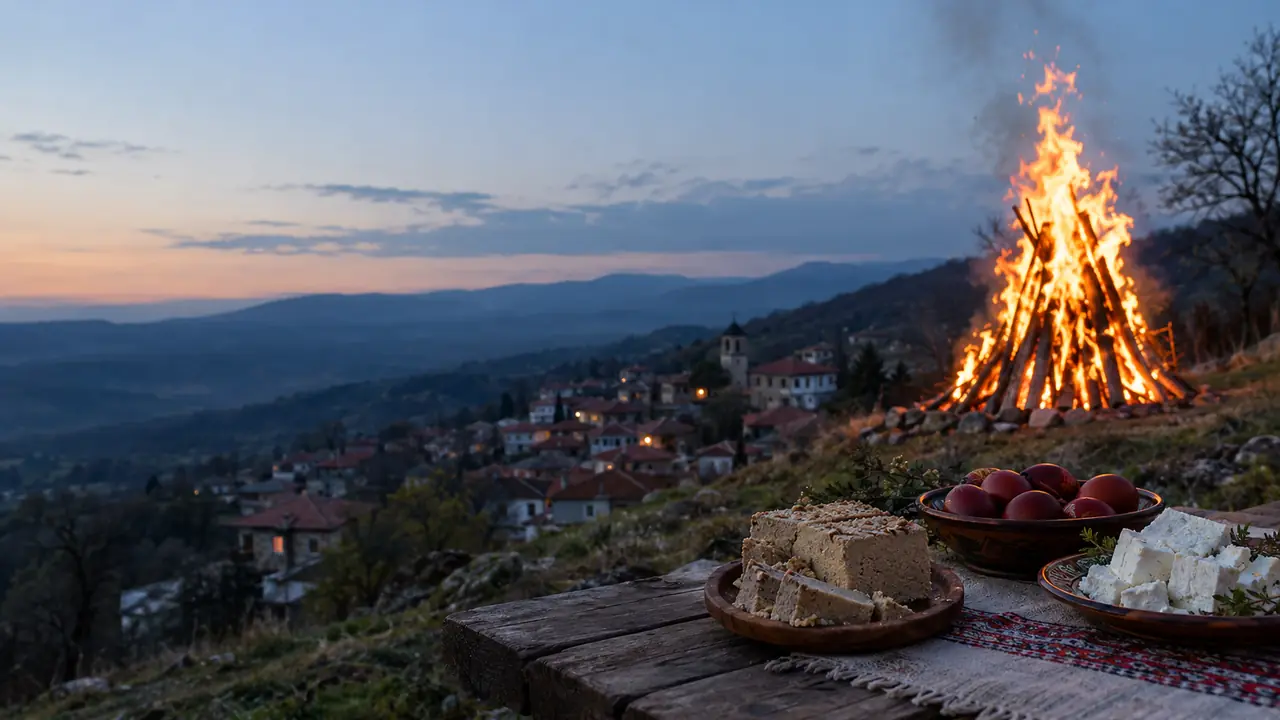
The evening combines a family meal with local customs. After supper, many communities have traditionally held fires, known by names such as oratnik and olelia. Young people might jump over the flames, while people gathered nearby danced. In some areas, the fires were accompanied by shouted verses or the launching of small flaming arrows, practices that varied from place to place.1
- Hamkane: children try to catch a hanging piece of food with their mouths.
- A red thread used in hamkane may be lit for fortune-telling.
- Families share the final meal with dairy foods, eggs and fish.
- Kukeri customs are also associated with this period.
Източник: Сирни заговезни1
Източници
Фактите са проверени 13 октомври 2026 г. Изготвено от InvestBulgaria с общоинформационна цел.
