Bulgaria's trade with the United Arab Emirates grew by 17.2% to $303.9 million in 2025, with exports up 36.2%. As the EU and the UAE try to finish their free trade agreement this year, Bulgarian makers of cars, electrical equipment and machinery have the most at stake.
What happened
The European Union and the United Arab Emirates (UAE) held the eighth round of their free trade agreement (FTA) negotiations in Brussels from 5 to 9 October, according to the agenda of the EU Trade Policy Committee. UAE Minister of Foreign Trade Thani bin Ahmed Al Zeyoudi said the round had been more positive than earlier ones, AGBI reported on 23 October. In July he had told Bloomberg that the talks were moving more slowly than the UAE's other negotiations because the EU insisted on including non-trade matters.
Both sides still aim to conclude the agreement in 2026. The EU ambassador to the UAE, Lucie Berger, said in August that the EU used to take 10 to 20 years to negotiate such agreements with one or two rounds a year, while the talks with the UAE had six rounds in their first year. It would be the EU's first free trade agreement with a Gulf country. Other partners are moving faster: Canada signed a Comprehensive Economic Partnership Agreement (CEPA) with the UAE in Ottawa on 27 October, which is expected to take effect in 2027.
The figures and background
For Bulgaria the stakes are modest in size but growing quickly. Trade with the UAE reached $303.9 million in 2025, 17.2% more than a year earlier and more than twice the 2021 level, according to the Ministry of Economy and Industry. Bulgarian exports rose by 36.2% to $224.9 million, while imports fell by 16.0% to $79.0 million, leaving Bulgaria with a surplus of $145.9 million.
| Year |
Bulgarian exports |
Bulgarian imports |
Total trade |
Balance |
| 2021 |
$94.2m |
$43.5m |
$137.7m |
+$50.7m |
| 2022 |
$146.3m |
$50.9m |
$197.2m |
+$95.4m |
| 2023 |
$188.8m |
$53.9m |
$242.7m |
+$134.9m |
| 2024 |
$165.1m |
$94.1m |
$259.2m |
+$71.0m |
| 2025 |
$224.9m |
$79.0m |
$303.9m |
+$145.9m |
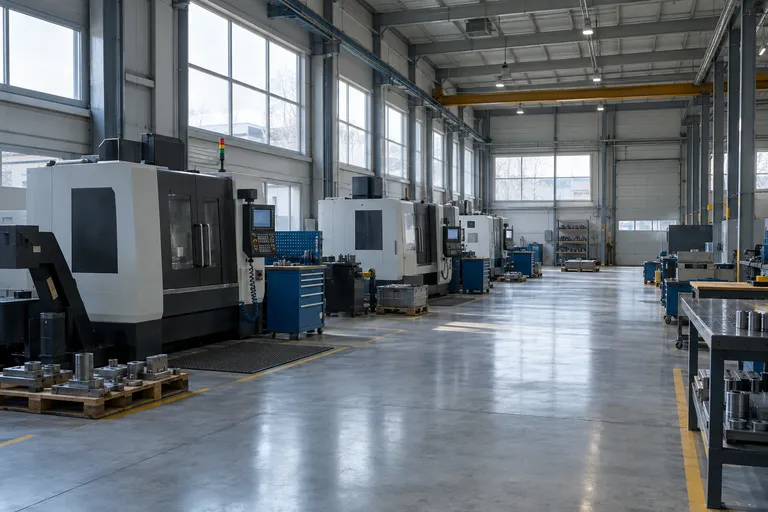
Bulgaria sells mostly manufactured goods to the Emirates. Passenger cars were the largest export item in 2025 at $18.9 million (8.4%), followed by switchboards and control panels at $13.9 million (6.2%), electrical switching and protection equipment at $7.9 million (3.5%), machinery for working rubber and plastics at $7.3 million and medical instruments at $6.6 million. Imports are far more concentrated: unwrought aluminium accounted for $33.4 million, or 42.3% of everything Bulgaria bought from the UAE, ahead of spraying equipment (13.5%) and perfumes (8.6%).
Investment is smaller still. The stock of UAE direct investment in Bulgaria was €156.7 million at the end of 2025, according to Bulgarian National Bank data cited by the ministry. Bulgarian companies are more visible in the other direction: by the end of the third quarter of 2025, 243 Bulgarian companies were active members of Dubai Chambers, Bulgaria's consul general in Dubai, Stanislav Dimitrov, said in June. A Bulgarian Business Council in Dubai was set up at the end of 2025 by 22 companies working in the UAE, Investor.bg reported.
The UAE has been signing trade deals at speed. Since September 2021 it has signed 38 CEPAs, and 18 concluded agreements were in force by July 2026, according to Invest Emirates' overview of the UAE's trade agreements. Its non-oil foreign trade grew by 13% in the first half of 2026 to AED 1.9 trillion ($517 billion), AGBI reported, despite the war with Iran that began on 28 February and disrupted shipping through the Strait of Hormuz. For the EU as a whole, the UAE is the largest export market and investment partner in the region, with goods trade of about €57 billion.
How Bulgaria compares
Bulgaria and the UAE both compete for internationally mobile companies with low taxes, but they do so from different positions. The table compares the main rates.
| Tax |
Bulgaria |
UAE |
| Corporate tax |
10% |
0% up to AED 375,000 of profit, 9% above |
| Free zone companies |
No equivalent |
0% on qualifying income |
| Personal income tax |
10% flat |
None |
| VAT |
20% standard rate |
5% |
| Double tax treaties |
71 in force |
137 |
The Bulgarian figures come from InvestBulgaria's overview of taxes in Bulgaria and the UAE figures from the UAE tax regime guide on Invest-Emirates.ae. Large multinational groups with global revenue of €750 million or more pay a top-up to an effective 15% in the UAE.
The two countries already have a tax treaty, signed in Sofia on 26 June 2007 and in force since 16 November 2008. It caps withholding tax at 5% on dividends, 2% on interest and 5% on royalties, with 0% for governments and certain state investment bodies, as shown in InvestBulgaria's table of double tax treaties. What is still missing is an investment protection agreement: the ministry says one is being negotiated, and the joint economic commission created by a 2016 cooperation agreement has not yet held a session.
What it means for investors and companies
For Bulgarian exporters, the main gain from an EU deal would be lower duties. Most goods entering the UAE pay a 5% customs duty on their CIF value (cost, insurance and freight), although basic foods and some other goods are exempt, according to the Dubai business setup firm Shuraa. If the standard rate applied to all of Bulgaria's 2025 exports, duties would come to roughly $11 million a year; the real figure is lower because of exemptions and goods sold through free zones. Car exporters, electrical equipment makers and machinery producers, which lead the export list, would see the largest direct effect, and Canada's agreement is expected to reduce or remove UAE tariffs on more than 99% of Canadian goods.
For importers, the agreement would also cover EU duties on goods from the UAE. Because aluminium makes up 42.3% of Bulgaria's imports from the Emirates, the treatment of metals and the rules of origin will matter more to Bulgarian buyers than the headline tariff cuts.
For investment, the comparison with Bulgaria's neighbours is striking. The UAE announced €15 billion of new investment in Greece in October, on top of a €4 billion joint investment initiative, and pledged €40 billion for Germany earlier in the month, while its total investment in Bulgaria stands at €156.7 million. A free trade agreement with investment chapters, together with a bilateral investment protection agreement, would give Bulgaria a stronger case for attracting UAE capital into energy, logistics and technology, which Bulgarian officials named as priority areas at the Bulgaria-UAE Business Forum in June.
For Bulgarian companies weighing a base in the Emirates, the tax table is only part of the picture. Lower rates in the UAE come with licence, visa and office costs, and the 0% free zone rate applies only to qualifying income. Companies that keep their customers and staff in the EU may find that Bulgaria's 10% rates and full access to the single market remain the simpler choice.
What to watch next
The first signal will be whether the EU and the UAE announce a ninth round or a political conclusion before the end of the year, and whether the European Commission publishes its report on the October round. After that, the legal text would need approval in Brussels and in the UAE before any tariff cuts take effect. In Bulgaria, the signature of the investment protection agreement, a first session of the joint economic commission and the 2026 trade figures, which will show whether the 36.2% export growth of 2025 continued, are the next markers.
 Analysis