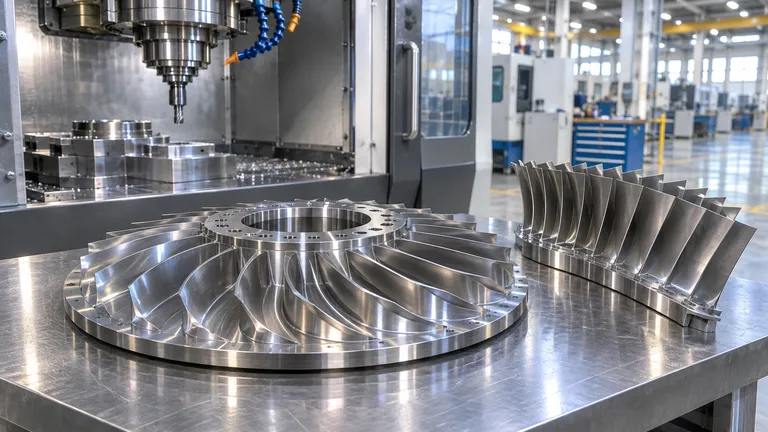
Turkish aero-engine maker TEI, in which GE Aerospace holds 46.2%, plans to invest US$90m in a high-precision engine components plant in Plovdiv with 170 skilled jobs, its first manufacturing site outside Turkey. The project adds high-technology manufacturing to a country where such jobs are still a smaller share of employment than the EU average.
What happened
On 25 November Bulgaria's Deputy Prime Minister and Minister of Economy, Investments and Industry, Alexander Pulev, announced that Tusas Engine Industries (TEI) will invest US$90m in a plant producing high-precision aircraft engine components in Plovdiv, BTA reported. The project is to create 170 highly skilled jobs and will be the company's first manufacturing facility outside Turkey. Pulev said Bulgaria had won the project against two alternative destinations; Aviation Week describes them as two other locations in Europe and calls the plant TEI's first step towards a footprint in the European Union.
The figures and the background
TEI was founded in 1985 as a joint venture between the Turkish aviation industry and the company now called GE Aerospace. According to BGNES, Turkish Aerospace Industries holds 50.5%, GE Aerospace 46.2% and two Turkish institutional shareholders the remaining 3.3%. The company makes components for more than 50 engine programmes, including the CFM LEAP, GEnx and GE9X engines used in commercial aircraft. BGNES notes that the Turkish side valued the Plovdiv project at nearly US$100m in its own statement, against the US$90m given by the ministry. Bulgarian media reported that the plant should be operational within 18 months, according to Aviation Week.
The investor's stated reasons are practical. TEI's vice-president for product management and sales, Ahmet Kain, cited proximity to Turkey, the availability of skilled labour and state incentives, BTA reported. In its statement TEI said a European base would give it direct access to customers and financing opportunities in the EU. A company representative told the briefing that the plant would supply both civil aviation and the military sector, including the needs of NATO's aviation fleet, Novinite reported; BGNES writes that it has not been officially confirmed whether the plant will make parts for specific military programmes.
In the context of the Bulgarian economy, 170 jobs is a small number, but in a segment where the country is thin. Eurostat data show that high-technology manufacturing accounted for 0.8% of total employment in Bulgaria in 2025, down from 0.9% in 2019, against 1.1% for the EU in both years. Romania was at 0.8%, Croatia at 0.9%, Greece at 0.6%, Serbia at 0.8% and North Macedonia at 1.0%, the latter up from 0.6% in 2019. Bulgaria's neighbours have therefore been catching up or holding steady while its own share has slipped.
The project is part of a wider pattern. BGNES points out that within a week the government also designated a gunpowder plant near Dimitrovgrad, worth more than €250m with 110 permanent jobs, as a project of national significance, and links it through corporate records to Turkish defence-industry shareholders. Pulev said the investment screening mechanism had recorded a 65% increase and that the Bulgarian Investment Agency had certified new projects worth €700m, expected to create 3,500 jobs over two years, Novinite reported. He also said foreign direct investment had doubled since the start of the year, without giving the baseline; our analysis of the January-September balance of payments looked at the official FDI data.
What it means for investors and companies
For Plovdiv and the surrounding industrial zones, a precision aerospace plant could create demand for machining, heat treatment, inspection, tooling and logistics services, and for engineers and CNC operators. The competition for that labour is a risk for other manufacturers in the region, which may see wage pressure for scarce skills. Suppliers hoping to join an aerospace supply chain will need to meet the quality and certification standards of the aero-engine industry.
For Bulgaria as an investment destination, TEI's choice is a reference case that the government is already using in its pitch. Turkish Ambassador Mehmet Sait Uyanik expressed hope that the project would encourage other Turkish companies to consider Bulgaria, BTA reported. Pulev said Bulgaria should seek capital from strategic partners including Turkey and the United States and named talks with Saudi Arabia, China, Indonesia, South Korea and Vietnam, according to Novinite. He also said the state is preparing a new coordination framework with a single point of contact between businesses and institutions, intended to speed up administrative procedures.
The open questions concern terms. BGNES notes that the incentives offered, any use of state assets or infrastructure, and the investor's commitments to Bulgarian industry have not been made public, and that EU rules set conditions for companies controlled from third countries, including investment screening. It adds that setting up in the EU does not by itself give access to the bloc's SAFE defence loans, and that there is no official information that either the Plovdiv or the Dimitrovgrad project has received SAFE funding. How far the plant is integrated with local suppliers, rather than importing semi-finished parts, will decide how much value stays in Bulgaria.
What to watch next
The next steps to follow are the certification of the project by the Bulgarian Investment Agency and the publication of any incentive package, the choice of site and start of construction, and hiring, given the target of being operational within about 18 months. For the wider strategy, watch whether the promised coordination framework for investment projects is adopted, how the Dimitrovgrad gunpowder plant proceeds, and whether official foreign direct investment data in the coming months confirm the minister's claim of strong growth.
 Analysis