The transport and agriculture ministers met grain producers, traders and BDZ Cargo to cut transport costs for farmers in the northwest and improve links to the Port of Varna.
Bulgaria is looking at ways to move more grain by rail, with potential volumes of more than 2.3 million tonnes a year, the Ministry of Transport and Communications said on Friday 30 October after a meeting between Transport Minister Georgi Peev, Agriculture and Food Minister Plamen Abrovski, the National Grain Producers Association, the Bulgarian Association of Grain and Feed Traders and the state freight operator BDZ Cargo, BTA reported.
The talks focused on improving logistics and making it easier to move grain from northern Bulgaria to the Port of Varna and other destinations. Producers pointed to the difficulties faced by farmers in the Vidin, Vratsa and Montana regions. Their distance from the main ports and high road transport costs limit competition among traders and affect the prices farmers receive, industry representatives said.
The producers' association also called for better organisation of rail transport, including pooling grain from individual farms into larger consignments. The participants discussed rail freight prices, available capacity and the investment needed in terminals in the Vidin, Vratsa and Montana regions.
Abrovski proposed starting with an assessment of available grain volumes by region, first in Vidin, Vratsa, Montana and Pleven, so that the authorities and operators can work out routes, volumes, schedules and rail capacity. Peev said his ministry would provide information on stations, technical capabilities and freight capacity, while businesses would need to give specific estimates of volumes and deadlines so operators can plan and seek more competitive prices.
As a first step, the authorities will review which railway stations are equipped for loading and unloading grain and share the information with producers and traders. Reopening some small freight stations that are currently unused will also be considered. In the longer term, the government plans intermodal terminals that allow cargo to move between road and rail.
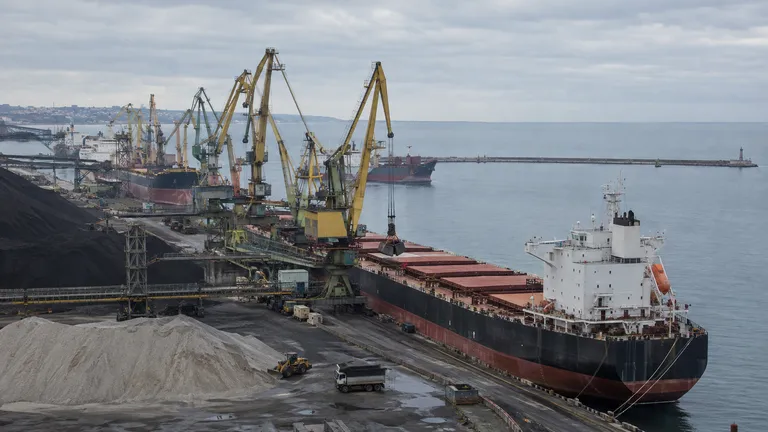
Peev said the state had so far invested too little in railway stations as logistics hubs. Better intermodal links could bring BDZ Cargo more orders and give grain producers more options for selling their crops, he said. He added that operations at the ports of Varna and Burgas were unchanged and that recent incidents with merchant ships in the Black Sea had happened outside Bulgarian territorial waters.

 Infrastructure