 Investments
Kaufland invests EUR 25 million in its 21st Sofia hypermarket and creates 90 jobs
The new store in Ovcha Kupel II has 2,812 sq m of sales space and takes the retailer's workforce in the capital to nearly 1,800.
Type at least two letters to see matching pages.
2 min read
 Investments
Early results show even the strongest models complete only about a third of the hardest multi-step tasks, while Google has made a new USD 1 million donation to the institute.
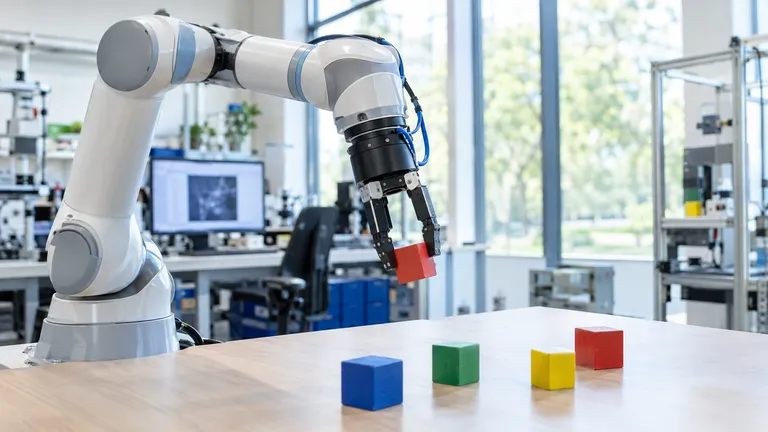
The technology company NVIDIA and the Institute for Computer Science, Artificial Intelligence and Technology (INSAIT) at Sofia University have developed a platform called LADDER that lets researchers assess and compare how well leading artificial intelligence models control robots performing sequences of actions, BTA reported on 26 October, citing the Ministry of Education and Science.
The project is in the field of Physical AI, in which AI systems must not only process information but also interact with the real world. Moving a single object is relatively easy for a robot, but when it has to move several objects in sequence, the likelihood of errors increases significantly, the ministry said. INSAIT's research in this area attracted NVIDIA's attention, and the company joined the effort to develop it further.
The first results show that even the most powerful systems are still far from controlling robots reliably. The leading models in the rankings include GPT-6 Astra, Claude Opus 5.5 and Gemini 4 Argon, but they fail to complete a substantial share of the tasks. In the hardest tests, with eight to ten consecutive actions, even the best models succeed in only about one-third of attempts. Models designed specifically for robot control do even worse: one of the leading models in that category can move a single object but almost never completes five or more consecutive actions.
The study also points to the cost of using the most powerful models. For some of them, the average cost of completing a single task successfully exceeds USD 6, and a full evaluation involving nearly 2,000 attempts would cost around USD 8,000. The platform is public and will be updated with results for new models; the rankings, videos and the full paper are available at ladderrobotics.ai.
On 23 October Google made a new USD 1 million donation to INSAIT, taking its total support for the institute to more than USD 7 million, the university said. INSAIT is a unit of Sofia University founded in partnership with ETH Zurich and EPFL in Switzerland.
For investors following Bulgaria's technology sector, the collaboration is a sign that research from Sofia is feeding into work by major global AI companies, and it adds to the institute's track record in attracting international funding.
Investments
The new store in Ovcha Kupel II has 2,812 sq m of sales space and takes the retailer's workforce in the capital to nearly 1,800.
 Investments
The SVAROG project would process about 30,000 tonnes of low-grade copper scrap a year at the company's site in Sofia.
 Investments
12 July 12, 2017, Sofia. Miss Hosting (one of the largest Scandinavian hosting providers) announced that it has chosen Sofia as it global center of operations. The compan...
InvestBulgaria Assistant
Guides, regions and companies for your plans in Bulgaria
What are you looking to do in Bulgaria today?
Answers are written by AI and can be wrong: check the linked pages. Please do not enter personal details.